









 |
|
 |
|
 |
|
 |
|
 |
|
 |
|
 |
|
 |
|
 |
|
 |
|
 |
|
 |
|
 |
|
 |
|
 |
|
Cryptocurrency News Articles
New study casts doubt on common technique used in the conservation of ancient metal artefacts
Apr 26, 2025 at 11:30 pm
Polymer coatings – including epoxy, polyurethane, and acrylics – are commonly used to protect metal artifacts from long-term exposure to light, heat, oxygen and humidity. They are lightweight, transparent, watertight, and can adhere strongly to the materials they preserve.
A new study has cast into doubt a common technique used in the integration of old metal artifacts.
The "momentous and concerning" findings, which are published in American Chemical Society (ACS) Focal Point, indicate that some transparent resin coatings react with iron-containing metals and can cause damage.
A crew from China's Beijing University of Chemical Technology created a non-invasive fluorescence imaging technique that reveals the early signs of the harmful chemical reactions. It could be used to decide on the integration state and possible dangers for other artifact preservation, decreasing the harm to the valuable artifacts.
Polymeric coatings, together with epoxy, polyurethane, and acrylics, are commonly used to shield metal artifacts from long-term exposure to mild, heat, oxygen, and humidity. They are lightweight, transparent, watertight, and can adhere powerfully to the materials they preserve.
However, there has been restricted analysis of what occurs to the coatings as they age and how this impacts the metal artifacts. This is because it is challenging to monitor what is happening at the boundary where the materials make contact.
The new 3-dimensional fluorescence imaging technique, which is described in ACS Focal Point, indicates early signs of corrosion on iron-containing metal.
The researchers coated forged iron with the acrylic resin B72—the most widely used polymer in metal artifacts—and sped up its ageing method by applying UV and warmth for 30 hours. They observed no fluorescence on freshly coated forged iron, but the fluorescence depth at the resin-metal interface increased steadily after 3 hours.
"It is surprising to acknowledge that the aged polymers can generate hazardous carboxyl teams and responsive hydroxyl radicals, inducing the oxidation and corrosion of the metal artifacts," the researchers write.
"In turn, the generated metallic ions could further worsen the ageing of polymer coatings."
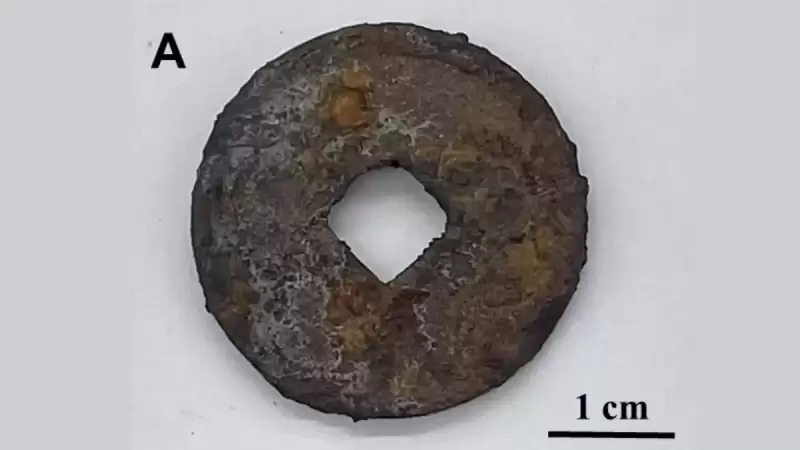
They carried out the same experiment on a rusty iron coin about 1000 years old, from the Chinese Northern Tune Dynasty, and found that the aged polymer coating made the artifact rustier.
"These findings raised a timely alarm for the integration potential and possible menace of polymer coatings on metal artifacts," the authors write.
They advise that more analysis must be done to decide on how coatings can be optimised for artifact integration.
"We should strengthen the analysis on the modification of polymer coatings, together including the structural design and preparation optimisation, to exclude the existence of defects or pores in the polymers," they write.
"Employment of a particular stabiliser, or anti-ageing additives, into polymer coatings is also needed. These actions would advertise the protective potential of polymer coatings and decrease the secondary harm to cultural artifacts."output: When precious relics are unearthed by archaeologists, it’s the job of conservators to ensure they’re passed on to future generations by protecting them from further degradation.
But a new study has cast into doubt a common technique used in the conservation of ancient metal artefacts.
The “significant and alarming” findings, which are published in American Chemical Society (ACS) Central Science, indicate that some clear resin coatings react with iron-containing metals and can cause damage.
A team from China’s Beijing University of Chemical Technology developed a non-invasive fluorescence imaging strategy that reveals the early signs of the damaging chemical reactions.
They say it could be used to determine the “conservation state and potential risks for other artifact preservation, minimising the damage to the valuable artifacts.”
Polymer coatings – including epoxy, polyurethane, and acrylics – are commonly used to protect metal artifacts from long-term exposure to light, heat, oxygen and humidity. They are lightweight, transparent, watertight, and can adhere strongly to the materials they preserve.
However, there has been limited research on what happens to polymer coatings as they age and how this affects iron-containing metals. This is because it is difficult to monitor what is happening at the boundary where the materials contact each other.
The new 3-dimensional fluorescence imaging technique, which is described in ACS Central Science, indicates early signs of corrosion and rust on iron-containing metal.
The researchers coated cast iron with the acrylic resin B72 – the most widely used polymer in metal artifacts – and sped up its ageing process by applying UV and warmth for 30 hours. They observed no fluorescence on freshly coated cast iron, but the fluorescence intensity at the resin-metal interface increased steadily after 3 hours.
“It is surprising to acknowledge that the aged polymers can generate hazardous carboxyl groups and reactive hydroxyl radicals, inducing the oxidation and corrosion of the metal artifacts,” ,” the researchers write.
“In turn, the generated metallic ions could further aggravate the aging of polymer coatings.”
They carried out the same experiment on a rusty iron coin about 1000 years old, from the Chinese Northern Song Dynasty, and found that the aged polymer coating made the artifact rustier.
“These findings raised a timely alarm for the conservation ability and potential threat of polymer coatings on metal artifacts,” the authors write.
They suggest more research must be done to determine
Disclaimer:info@kdj.com
The information provided is not trading advice. kdj.com does not assume any responsibility for any investments made based on the information provided in this article. Cryptocurrencies are highly volatile and it is highly recommended that you invest with caution after thorough research!
If you believe that the content used on this website infringes your copyright, please contact us immediately (info@kdj.com) and we will delete it promptly.
-

- Unconfirmed Buzz: Chainlink Whales, 10M LINK, and the 17% Correction – What's Really Going On?
- Sep 13, 2026 at 04:05 pm
- Whispers of Chainlink whales scooping up 10M LINK after a 17% dip are making waves, but the data is as murky as a New York City alley in the rain. Let's dive into the unconfirmed claims and separate fact from fiction.
-
- Cardano Price Prediction, Analysis, and Movement: Navigating Market Volatility and Future Potential
- Sep 13, 2026 at 04:05 pm
- Cardano's ADA faces key support at $0.20 amidst market volatility. Analysis reveals mixed technicals, but fundamental strengths and future developments offer long-term optimism.
-
-
-
- Ripple RLUSD Circulation Hits $2.4 Billion: A Closer Look at the Stablecoin's Trajectory
- Sep 13, 2026 at 04:05 am
- Ripple's RLUSD stablecoin circulation has reached a reported $2.4 billion, a significant milestone, though discerning its true impact requires a nuanced understanding of metrics and market dynamics.
-
-
- Reform UK's Crypto Funding: A Deep Dive into the £72M Donation and Its Ripple Effects
- Sep 13, 2026 at 03:55 am
- Reform UK has secured a colossal £72 million in crypto-linked donations, sparking debate over campaign finance and the growing influence of digital assets in British politics. This unprecedented funding reshapes the electoral landscape and intensifies regulatory scrutiny.
-
- Teucrium Inverse XRP ETF Sets October 11th Effective Date: What Investors Need to Know About the ETF Launch Date
- Sep 13, 2026 at 03:45 am
- Teucrium's inverse XRP ETF has a new proposed effective date of October 11, 2026. Here's a breakdown of what this means for investors and the broader ETF landscape.
-
- CPEN Network Ink Token: A Deep Dive into Mobile Mining, Tokenomics, and Its Evolving Legacy
- Sep 12, 2026 at 04:05 pm
- Explore the journey of CPEN Network Ink Token, from its innovative mobile mining approach and unique tokenomics to its planned succession by HATN, reflecting the dynamic nature of crypto projects.


