





![Jeudi noir ! L'indice des semi-conducteurs a chuté de près de 7 %, le Bitcoin est tombé en dessous de 81 000 et les ETF au comptant ont enregistré une sortie nette de 635 millions de dollars américains [Vic TALK Issue 1830]](/uploads/2026/10/23/cryptocurrencies-news/videos/origin_6adb210210914_image_500_375.webp "Jeudi noir ! L'indice des semi-conducteurs a chuté de près de 7 %, le Bitcoin est tombé en dessous de 81 000 et les ETF au comptant ont enregistré une sortie nette de 635 millions de dollars américains [Vic TALK Issue 1830]")






 |
|
 |
|
 |
|
 |
|
 |
|
 |
|
 |
|
 |
|
 |
|
 |
|
 |
|
 |
|
 |
|
 |
|
 |
|
A new report has shown the wide adoption of digital currencies in Nigeria despite efforts by the authorities to discourage the use of crypto.
The Central Bank of Nigeria (CBN) has yet to lift the ban of crypto transactions through the banking system in the country after almost five years.
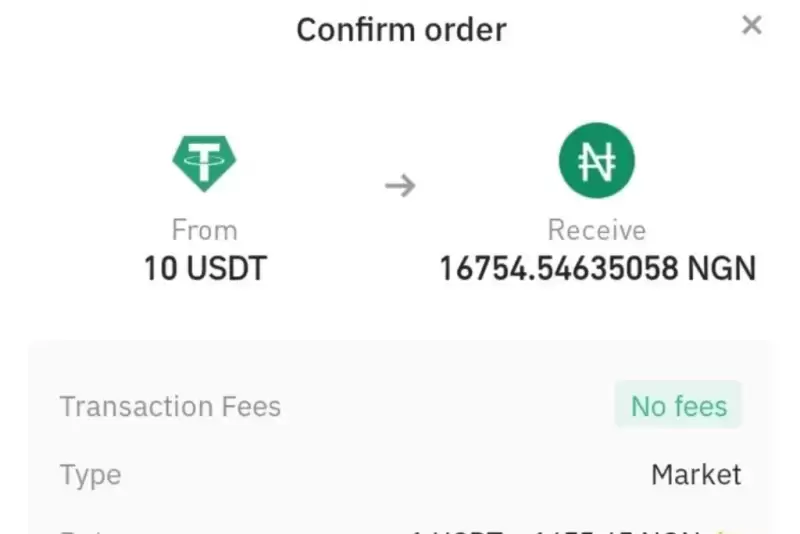
In a report made available to Business Post by a venture capital firm, Hashed Emergent, it was stated that the USDT/Naira stablecoin pair has become the most traded on centralized exchanges, with stablecoin transfers in Nigeria nearing $3 billion in the first quarter of 2024, signalling the practical adoption of blockchain for real-world challenges like inflation and cross-border payments.
Last year, Nigeria ranked second globally for crypto adoption, according to Chainalysis, with $59 billion in crypto value received—$24 billion of that in stablecoins.
Stablecoin trading has overtaken Bitcoin trading on centralized exchanges, reflecting changing behaviour: for many, crypto is not speculative—it’s practical; it is how people hedge against inflation, send money, and make real-world payments.
According to the report, national agencies and multiple state governments are already implementing blockchain-based solutions across areas like identity verification, land registries, education records, and healthcare systems.
These aren’t pilots; they’re operational systems designed to improve transparency, efficiency, and trust in public services.
However, integration into existing public infrastructure is a key challenge. Many legacy systems lack the technical readiness or interoperability needed for seamless adoption, and institutional capacity gaps—such as limited digital skills and fragmented procurement processes—are slowing implementation.
Without addressing these bottlenecks, the long-term impact of public sector blockchain adoption may be limited despite early momentum.
Clause de non-responsabilité:info@kdj.com
Les informations fournies ne constituent pas des conseils commerciaux. kdj.com n’assume aucune responsabilité pour les investissements effectués sur la base des informations fournies dans cet article. Les crypto-monnaies sont très volatiles et il est fortement recommandé d’investir avec prudence après une recherche approfondie!
Si vous pensez que le contenu utilisé sur ce site Web porte atteinte à vos droits d’auteur, veuillez nous contacter immédiatement (info@kdj.com) et nous le supprimerons dans les plus brefs délais.
-

- Les données du réseau de Kaspa surpassent les problèmes de prix : une analyse des actifs cryptographiques
- Oct 24, 2026 at 04:05 am
- Malgré la nervosité du marché, l'activité du réseau de Kaspa, mesurée par le volume des transactions, fait preuve d'une résilience remarquable, ce qui incite à un examen plus approfondi des fondamentaux de ses actifs cryptographiques.
-
- Ripple Swell 2026 met en lumière les actifs numériques de BlackRock et l'adoption du Stablecoin par le FMI
- Oct 24, 2026 at 12:05 am
- Ripple Swell 2026 rassemble les meilleurs esprits financiers pour discuter des stratégies d'actifs numériques et de l'adoption du stablecoin, avec des intervenants clés de BlackRock et du FMI, signalant une nouvelle ère pour l'engagement institutionnel dans la cryptographie.
-
- Réclamations de piratage de l'Indian Exchange : CoinDCX nie les sorties suspectes de 16 millions de dollars au milieu d'un examen en chaîne
- Oct 23, 2026 at 08:05 pm
- Le plus grand échange de crypto-monnaie d'Inde, CoinDCX, est mêlé à une controverse alors que les enquêteurs de la blockchain signalent 16 millions de dollars de sorties suspectes, déclenchant un débat houleux sur un potentiel piratage de l'échange indien et des violations antérieures.
-
- Bitcoin fait face à des vents contraires macro alors que le prix du brut Brent se maintient au-dessus de 100 $, la dynamique liée au pétrole et au Bitcoin sous surveillance
- Oct 23, 2026 at 04:09 pm
- La dynamique haussière du Bitcoin fait face à des vents contraires persistants alors que le pétrole brut Brent reste au-dessus de 100 $, signalant des frictions macroéconomiques.
-
- HSBC RedCoin enflamme les paiements numériques à Hong Kong : une nouvelle ère pour les Stablecoins HKD ?
- Oct 23, 2026 at 04:05 pm
- HSBC RedCoin est désormais disponible sur PayMe, offrant des paiements stables en dollars de Hong Kong à des millions de personnes, marquant un moment charnière pour la finance numérique dans la région.
-
- Piratage cryptographique par l’IA : plus de battage médiatique que de mal ?
- Oct 23, 2026 at 12:05 pm
- CZ, co-fondateur de Binance, affirme que les craintes d'un piratage cryptographique basé sur l'IA sont exagérées, affirmant que les infrastructures bancaires et Internet traditionnelles sont confrontées à des vulnérabilités cryptographiques comparables, sinon plus grandes.
-
- Le projet de loi cryptographique de la Corée du Sud progresse, Bybit obtient la licence de Dubaï et les flux d'ETF Bitcoin atteignent de nouveaux sommets
- Oct 23, 2026 at 11:55 am
- Le projet de loi cryptographique de la Corée du Sud avance, Bybit obtient une licence de Dubaï et les ETF Bitcoin connaissent des afflux massifs, signalant des changements majeurs dans le paysage cryptographique.
-
- Bybit obtient une licence VARA historique à Dubaï : un changement de donne pour le paysage des échanges cryptographiques
- Oct 23, 2026 at 11:45 am
- La licence VASP complète de Bybit à Dubaï marque une étape importante, offrant des transactions au comptant réglementées à tous les types d'investisseurs et ouvrant la voie à une future expansion des produits dérivés sur le marché dynamique de la cryptographie de l'émirat.
-
- CZ met en garde les utilisateurs de crypto : les vulnérabilités PHP déclenchent une ruée sur la sécurité mondiale et les entreprises de crypto en état d'alerte élevée
- Oct 23, 2026 at 12:05 am
- Le fondateur de Binance, CZ, lance un avertissement sévère aux utilisateurs de crypto, car des vulnérabilités PHP critiques (CVE-2026-109618, CVE-2026-109619) déclenchent des millions de tentatives d'exploitation dans le monde, obligeant à des correctifs rapides et soulevant des inquiétudes dans le paysage des actifs numériques.


