














-
 bitcoin
 $81612.250889 USD
0.11% - ethereum
$2407.486334 USD
-0.97% - tether
$0.998640 USD
0.00% - bnb
$719.696060 USD
-0.25% - xrp
$1.294367 USD
-0.99% - usd-coin
$0.999828 USD
-0.01% - solana
$103.496387 USD
-1.26% - tron
$0.332930 USD
-0.65% - hyperliquid
$78.374598 USD
-1.92% - zcash
$1129.661269 USD
-2.89% - dogecoin
$0.079119 USD
-1.63% - monero
$583.056386 USD
4.19% - chainlink
$11.990192 USD
-2.05% - unus-sed-leo
$9.031374 USD
0.06% - cardano
$0.219634 USD
-1.68%











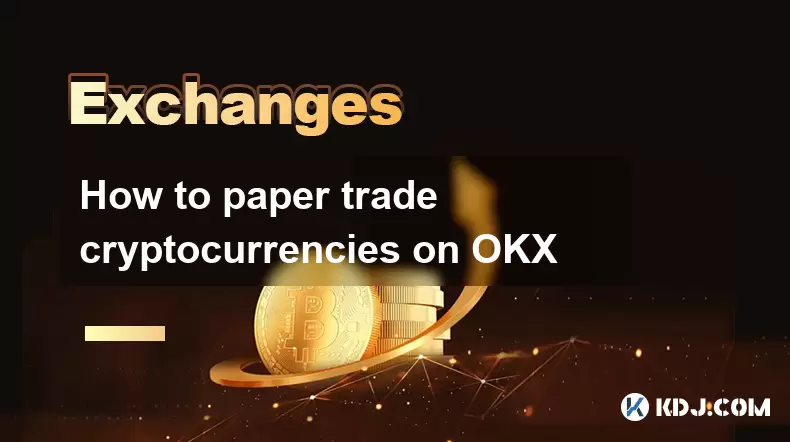
How to paper trade cryptocurrencies on OKX
OKX's paper trading feature lets users practice crypto trading with virtual funds, testing strategies risk-free in a realistic environment.
Aug 07, 2025 at 06:01 pm
Understanding Paper Trading in the Cryptocurrency Context
Paper trading, also known as simulated or virtual trading, allows users to practice buying and selling cryptocurrencies without risking real funds. This method is especially useful for beginners who want to familiarize themselves with trading platforms, test strategies, or gain confidence before entering live markets. On OKX, one of the world’s leading cryptocurrency exchanges, paper trading is available through its demo trading feature, which mirrors the real trading environment using up-to-date market data. This simulation enables traders to experience the full interface, order types, and tools without financial exposure.
The demo account on OKX is funded with virtual currency, typically 10,000 USDT or equivalent, depending on the selected trading pair. All price movements, order executions, and portfolio changes reflect actual market conditions, offering a realistic experience. This functionality is particularly valuable for testing complex strategies such as limit orders, stop-loss placements, and leverage trading, all within a risk-free environment.
Accessing the OKX Demo Trading Platform
To begin paper trading on OKX, users must first access the demo trading section. This feature is available on both the web and mobile versions of the platform. Here’s how to get started:
- Navigate to the official OKX website or open the OKX mobile app
- Log in to your existing account or create a new one if you don’t have one
- Once logged in, locate the 'Trade' section in the main navigation menu
- Click on 'Demo Trade', usually found near the top-right corner of the trading interface
- Select the trading mode—Spot, Futures, or Perpetual Contracts—depending on your learning goals
Upon selection, the system automatically allocates virtual funds to your demo wallet. The interface will look identical to the live trading platform, including real-time price charts, order books, and trade history. This ensures that users gain hands-on experience with the tools they’ll use in real trading scenarios.
Setting Up Your Paper Trading Environment
After accessing the demo mode, it’s essential to configure your trading environment to match your intended strategy. This includes customizing the chart settings, selecting preferred trading pairs, and understanding the order types available.
- Choose a trading pair such as BTC/USDT or ETH/USDT from the market list
- Adjust the chart timeframe (e.g., 1-minute, 4-hour, daily) using the dropdown menu
- Apply technical indicators like Moving Averages, RSI, or Bollinger Bands by clicking the “Indicators” button
- Toggle between light and dark mode for visual comfort
- Use the drawing tools to annotate support and resistance levels
These settings allow traders to simulate real decision-making processes. For instance, placing a limit buy order at a specific price point based on technical analysis helps reinforce strategy execution. The order panel on the right side of the screen displays available order types, including market, limit, stop-limit, and trailing stop, all of which can be tested without risk.
Executing Simulated Trades on OKX
Once your environment is set up, you can begin executing simulated trades. The process mirrors live trading but uses virtual funds. Here’s how to place a basic limit order in demo mode:
- In the order panel, select 'Limit' as the order type
- Enter the desired price at which you want to buy or sell
- Input the quantity of the cryptocurrency you wish to trade
- Review the estimated cost and available virtual balance
- Click 'Buy' or 'Sell' to submit the order
If the market reaches your specified price, the order will execute automatically. You can monitor open orders in the 'Open Orders' tab, and once filled, they will appear in your 'Order History'. For futures or perpetual contracts, you can also set leverage levels, take-profit, and stop-loss parameters during order placement.
It’s important to note that while the prices are real-time, order fills may be simulated based on historical liquidity data. This means slippage and partial fills might not perfectly replicate live market conditions, but they are close enough for educational purposes.
Monitoring and Analyzing Your Paper Trading Performance
After executing several trades, it’s crucial to review your performance to identify strengths and weaknesses in your strategy. OKX provides a Portfolio section in demo mode where you can track your virtual balance, P&L (profit and loss), and trade history.
- Check the 'Positions' tab to view open futures or perpetual contracts
- Examine the 'Orders' tab to analyze filled, canceled, and pending orders
- Use the 'P&L' column to assess the profitability of each trade
- Export trade history for external analysis if needed
This data helps refine your approach. For example, if multiple stop-loss orders are triggered prematurely, you might reconsider your risk management settings. Similarly, consistently missing entry points could indicate the need for better timing or improved chart analysis.
Switching Between Demo and Live Trading Modes
OKX allows seamless switching between demo and live trading environments. This flexibility enables users to test a strategy in simulation and then apply it with real capital when confident.
- Click on the account balance display at the top of the trading interface
- Select 'Switch to Live Account' or 'Switch to Demo Account'
- Confirm the switch; no data is lost between modes
- Ensure you’re in the correct mode before placing any orders
This feature prevents accidental live trading while learning. However, users should always double-check their current mode, as the interfaces are nearly identical.
Frequently Asked Questions
Can I use API keys for paper trading on OKX?No, OKX does not currently support API access for demo trading. The paper trading environment is designed for manual use through the web or mobile interface only. API trading is restricted to live accounts with real funds.
Is the virtual balance in OKX demo trading refillable?Yes, if your virtual balance drops to zero, you can reset the demo account. Look for the 'Reset Demo Balance' option in the Portfolio section. This action restores the initial virtual funds, allowing you to start fresh.
Do I need KYC verification to use OKX paper trading?No, KYC (Know Your Customer) verification is not required to access the demo trading feature. You can use paper trading immediately after account registration, regardless of verification status.
Are all trading pairs available in OKX demo mode?Most major trading pairs, including BTC/USDT, ETH/USDT, and popular altcoins, are available in demo mode. However, some newly listed or low-liquidity pairs may not be accessible in the simulation environment.
Disclaimer:info@kdj.com
The information provided is not trading advice. kdj.com does not assume any responsibility for any investments made based on the information provided in this article. Cryptocurrencies are highly volatile and it is highly recommended that you invest with caution after thorough research!
If you believe that the content used on this website infringes your copyright, please contact us immediately (info@kdj.com) and we will delete it promptly.


- Chainalysis Report Highlights Massive Bitcoin Theft from Ledger Hardware Vulnerability; Even Scammers Aren't Safe
- 2026-10-19 04:50:02
- Dogecoin News, DOGE Price, and the Rise of Pepeto: A Tale of Two Markets
- 2026-10-19 04:50:02
- Market Strategist Predicts XRP Price Surge to $15: Analysis and Community Reaction
- 2026-10-19 04:55:01
- XRP Price Prediction, Binance Buy Orders, and Pepeto 1000x: Unpacking the Latest Crypto Dynamics
- 2026-10-19 04:50:02
- Dormant Bitcoin Wallets Awaken: 417 BTC Moves After 12 Years, Sparking Market Curiosity
- 2026-10-18 13:02:11
- US Bitcoin ETFs Fueling BTC's Trajectory: Decoding the ETF Buying Trend
- 2026-10-18 04:40:43
Related knowledge
How to Export Spot Trading Records From Gate.io
Oct 18,2026 at 03:20am
Accessing Spot Trading Records via Web Interface1. Log in to your Gate.io account and navigate to the Spot Trading section. 2. Select the desired trad...
How to Check the APR of USDT Flexible Savings on OKX
Oct 15,2026 at 10:00pm
Understanding APR in OKX Flexible Savings1. APR stands for Annual Percentage Rate and reflects the nominal yearly return on USDT deposits without comp...
How to Stop Copying a Trader on Bitget
Oct 16,2026 at 02:59am
Market Volatility Patterns1. Bitcoin price swings often exceed 15% within a 24-hour window during major macroeconomic announcements. 2. Altcoin indice...
How to Check Your Copy Trading Profit Share on Bybit
Oct 16,2026 at 10:19am
Bitcoin Halving Mechanics1. Bitcoin’s protocol enforces a fixed schedule where block rewards are cut in half approximately every 210,000 blocks, or ro...
How to Change the USDT Withdrawal Network on Bybit
Oct 18,2026 at 05:24am
Accessing Withdrawal Settings1. Log in to your Bybit account using verified credentials and two-factor authentication. 2. Navigate to the Assets secti...
How to Check Whether a Binance Spot Order Is Partially Filled
Oct 16,2026 at 07:40am
Understanding Order Status Fields1. The status field in Binance’s order response indicates the current lifecycle stage: NEW, PARTIALLY_FILLED, FILLED,...
How to Export Spot Trading Records From Gate.io
Oct 18,2026 at 03:20am
Accessing Spot Trading Records via Web Interface1. Log in to your Gate.io account and navigate to the Spot Trading section. 2. Select the desired trad...
How to Check the APR of USDT Flexible Savings on OKX
Oct 15,2026 at 10:00pm
Understanding APR in OKX Flexible Savings1. APR stands for Annual Percentage Rate and reflects the nominal yearly return on USDT deposits without comp...
How to Stop Copying a Trader on Bitget
Oct 16,2026 at 02:59am
Market Volatility Patterns1. Bitcoin price swings often exceed 15% within a 24-hour window during major macroeconomic announcements. 2. Altcoin indice...
How to Check Your Copy Trading Profit Share on Bybit
Oct 16,2026 at 10:19am
Bitcoin Halving Mechanics1. Bitcoin’s protocol enforces a fixed schedule where block rewards are cut in half approximately every 210,000 blocks, or ro...
How to Change the USDT Withdrawal Network on Bybit
Oct 18,2026 at 05:24am
Accessing Withdrawal Settings1. Log in to your Bybit account using verified credentials and two-factor authentication. 2. Navigate to the Assets secti...
How to Check Whether a Binance Spot Order Is Partially Filled
Oct 16,2026 at 07:40am
Understanding Order Status Fields1. The status field in Binance’s order response indicates the current lifecycle stage: NEW, PARTIALLY_FILLED, FILLED,...
See all articles


