












![(A1-A2) Jail Escape & Sister Rescue 💣 Easy English Comprehensible Input | Lost in Play #6 [FINAL]](/uploads/2026/10/21/cryptocurrencies-news/videos/origin_6ad85799dab32_image_500_375.webp "(A1-A2) Jail Escape & Sister Rescue 💣 Easy English Comprehensible Input | Lost in Play #6 [FINAL]")






-
 bitcoin
 $82739.818212 USD
1.41% - ethereum
$2442.246456 USD
2.06% - tether
$0.998809 USD
0.02% - bnb
$743.632934 USD
1.96% - xrp
$1.334188 USD
2.65% - usd-coin
$0.999850 USD
0.01% - solana
$106.110116 USD
1.64% - tron
$0.330701 USD
-0.18% - zcash
$1263.385742 USD
11.36% - hyperliquid
$81.231212 USD
3.22% - dogecoin
$0.081594 USD
2.92% - monero
$585.313707 USD
-3.86% - chainlink
$12.328299 USD
2.86% - unus-sed-leo
$9.031474 USD
0.19% - cardano
$0.223538 USD
3.09%











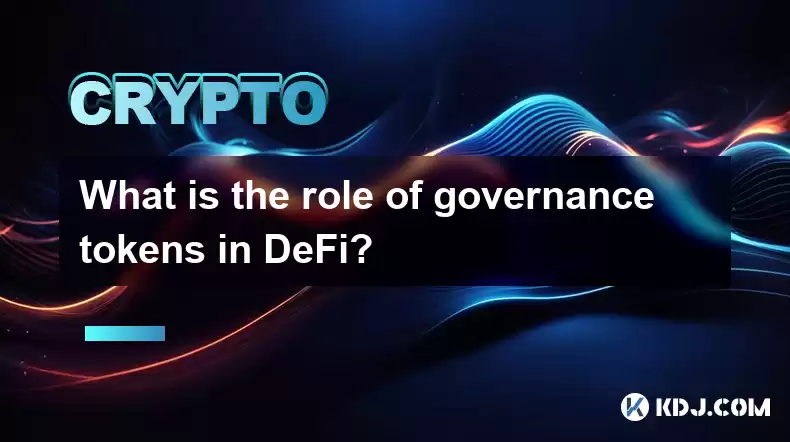
What is the role of governance tokens in DeFi?
Governance tokens in DeFi grant holders voting rights on platform decisions, influencing everything from protocol upgrades to fee adjustments, fostering decentralized decision-making but risking manipulation by large token holders.
Mar 13, 2025 at 07:10 pm
- Governance tokens grant holders voting rights on platform decisions.
- They incentivize community participation and platform development.
- Voting power is typically proportional to token holdings.
- Governance proposals can range from protocol upgrades to fee adjustments.
- They are crucial for decentralized decision-making in DeFi.
- Risks include manipulation by large holders and potential for inefficient outcomes.
Decentralized Finance (DeFi) aims to rebuild traditional financial systems on blockchain technology, prioritizing decentralization and transparency. Governance tokens are a cornerstone of this decentralization, acting as the mechanism through which users participate in the decision-making processes of DeFi protocols. They represent ownership and influence within the platform’s ecosystem. Without them, DeFi platforms would be reliant on centralized entities, negating the core principles of the space.
How do governance tokens work?Governance tokens operate by granting holders voting rights on various aspects of the platform. The amount of voting power usually correlates directly with the number of tokens held. This means larger token holders exert more influence over platform decisions. This system allows for a democratic approach to platform development and evolution, ensuring the platform's direction aligns with the desires of its community.
What can users vote on using governance tokens?The scope of governance token voting rights varies depending on the specific DeFi protocol. However, common areas of influence include:
- Protocol upgrades: Voting on proposed improvements to the platform’s codebase, features, and security measures.
- Parameter adjustments: Altering key parameters of the protocol, such as transaction fees, interest rates, or liquidity provision rewards.
- Treasury management: Deciding how funds held in the protocol's treasury are allocated (e.g., for development, marketing, or community initiatives).
- Listing of new assets: Voting on whether to integrate new cryptocurrencies or assets into the platform's ecosystem.
- Community fund allocation: Determining how funds dedicated to community development projects are distributed.
Governance tokens offer several significant advantages for both the DeFi platform and its users:
- Decentralized decision-making: Shifts control from centralized entities to the community, ensuring a more democratic and transparent governance structure.
- Community engagement: Incentivizes users to actively participate in the platform's development and growth, fostering a sense of ownership and responsibility.
- Improved platform governance: Allows for the implementation of timely updates and improvements based on community feedback, leading to a more responsive and efficient platform.
- Potential for increased value: The success of the DeFi protocol often translates into increased demand and value for its governance token.
Despite their benefits, governance tokens also present some potential risks:
- Manipulation by large holders: Individuals or groups holding a significant portion of the tokens could potentially manipulate voting outcomes to serve their own interests, potentially undermining the decentralization goals.
- Inefficient outcomes: Community voting can sometimes lead to decisions that are not optimal for the long-term success of the protocol, especially if driven by short-term gains or lack of expertise.
- Security risks: The governance system itself can be a target for malicious actors seeking to exploit vulnerabilities and influence the platform's direction.
- Token value volatility: The value of governance tokens can be highly volatile, subject to market fluctuations and changes in the platform’s popularity.
Participation typically involves holding the governance token on a compatible wallet and connecting it to the DeFi platform’s governance interface. The exact process varies based on the platform. Here are some general steps:
- Acquire the governance token through exchanges or other means.
- Ensure your wallet is compatible with the platform's governance system.
- Connect your wallet to the platform's governance interface.
- Review and understand proposed governance proposals.
- Cast your votes according to your preferences.
While both types of tokens exist within DeFi, their functions differ significantly. Utility tokens grant access to specific services or functionalities within a platform, while governance tokens provide voting rights in platform decisions. One token can sometimes have both utility and governance functionalities.
Frequently Asked Questions:Q: Are governance tokens always valuable?A: No, the value of a governance token is directly tied to the success and adoption of the underlying DeFi platform. A poorly performing or abandoned platform will likely see its governance token's value decline.
Q: Can I lose my governance tokens?A: Yes, you can lose your governance tokens through theft (if your wallet is compromised), through selling them at a loss, or if the platform collapses.
Q: How do I choose which DeFi platform to participate in?A: Research the platform's track record, team, community, and the overall health of its ecosystem before participating in its governance. Examine the governance structure itself and look for transparency and robustness.
Q: What if I don't agree with a governance proposal?A: You can vote against the proposal, or abstain from voting altogether. Your voting power will still be counted. However, your voice may be more impactful if you actively participate in community discussions surrounding the proposal.
Q: Is it always best to vote according to the majority?A: Not necessarily. While the majority vote typically prevails, it's crucial to conduct your own research and make informed decisions based on your understanding of the proposal and its potential impact on the platform.
Disclaimer:info@kdj.com
The information provided is not trading advice. kdj.com does not assume any responsibility for any investments made based on the information provided in this article. Cryptocurrencies are highly volatile and it is highly recommended that you invest with caution after thorough research!
If you believe that the content used on this website infringes your copyright, please contact us immediately (info@kdj.com) and we will delete it promptly.





- Altcoin Market Rising: Quack AI (Q) and Privacy Coins Attract Attention with Altcoin Rising
- 2026-10-21 16:55:01
- Binance US and Blockchain.com Eye Crypto Prediction Markets Amidst Industry Shift
- 2026-10-21 16:45:01
- Qubic Network Rises from the Ashes: QU Theft Recovery and Claims Now Open!
- 2026-10-21 12:35:01
- US Bitcoin ETFs See Massive Inflows, BlackRock's IBIT Leads the Pack Amidst Shifting Crypto Sentiment
- 2026-10-21 08:35:02
- Aerodrome Finance (AERO) Price Surge: What's Fueling the Latest Rally?
- 2026-10-21 08:45:01
- Bitcoin Holders Accumulate Big: BTC Sees Major Inflows Amidst Shifting Market Dynamics
- 2026-10-21 04:55:02
Related knowledge
What is a delta-neutral strategy in DeFi?
Jan 04,2026 at 03:20am
Understanding Delta-Neutral Positioning1. A delta-neutral strategy in DeFi refers to a portfolio configuration where the overall sensitivity to price ...

How to track DeFi activity on a block explorer
Sep 04,2025 at 05:36pm
Bitcoin's Role in Decentralized Finance1. Bitcoin remains the cornerstone of the cryptocurrency ecosystem, serving as both a store of value and a benc...
What is the difference between DeFi and CeFi? An article analyzing the advantages and disadvantages of both
Jun 13,2025 at 03:57am
Understanding the Foundations of DeFi and CeFiTo fully grasp the difference between DeFi (Decentralized Finance) and CeFi (Centralized Finance), it’s ...
What is DeFi? How to balance risks and returns?
May 31,2025 at 12:22pm
What is DeFi? How to Balance Risks and Returns? Decentralized Finance, commonly known as DeFi, represents a revolutionary shift in the financial ecosy...
How does DeFi lending work? What is the difference from traditional bank loans?
May 29,2025 at 05:36pm
Introduction to DeFi LendingDeFi lending, or decentralized finance lending, represents a revolutionary shift in the way borrowing and lending are cond...
Is DeFi safe? The opportunities and challenges of decentralized finance
May 27,2025 at 02:28pm
Decentralized Finance, commonly known as DeFi, has revolutionized the financial landscape by offering a range of financial services without the need f...
What is a delta-neutral strategy in DeFi?
Jan 04,2026 at 03:20am
Understanding Delta-Neutral Positioning1. A delta-neutral strategy in DeFi refers to a portfolio configuration where the overall sensitivity to price ...
How to track DeFi activity on a block explorer
Sep 04,2025 at 05:36pm
Bitcoin's Role in Decentralized Finance1. Bitcoin remains the cornerstone of the cryptocurrency ecosystem, serving as both a store of value and a benc...
What is the difference between DeFi and CeFi? An article analyzing the advantages and disadvantages of both
Jun 13,2025 at 03:57am
Understanding the Foundations of DeFi and CeFiTo fully grasp the difference between DeFi (Decentralized Finance) and CeFi (Centralized Finance), it’s ...
What is DeFi? How to balance risks and returns?
May 31,2025 at 12:22pm
What is DeFi? How to Balance Risks and Returns? Decentralized Finance, commonly known as DeFi, represents a revolutionary shift in the financial ecosy...
How does DeFi lending work? What is the difference from traditional bank loans?
May 29,2025 at 05:36pm
Introduction to DeFi LendingDeFi lending, or decentralized finance lending, represents a revolutionary shift in the way borrowing and lending are cond...
Is DeFi safe? The opportunities and challenges of decentralized finance
May 27,2025 at 02:28pm
Decentralized Finance, commonly known as DeFi, has revolutionized the financial landscape by offering a range of financial services without the need f...
See all articles


