










![[Ripple Forecast] Trump's shocking remarks against Ripple tonight, if true, will all my XRP become a piece of paper?](/uploads/2026/09/25/cryptocurrencies-news/videos/origin_6ab6108c74ee2_image_500_375.webp "[Ripple Forecast] Trump's shocking remarks against Ripple tonight, if true, will all my XRP become a piece of paper?")






-
 bitcoin
 $83805.883570 USD
-0.30% - ethereum
$2668.994877 USD
-0.50% - tether
$0.999764 USD
0.00% - bnb
$772.274408 USD
0.02% - xrp
$1.528343 USD
2.01% - usd-coin
$0.999872 USD
0.01% - solana
$116.029741 USD
1.13% - tron
$0.338529 USD
-1.43% - zcash
$1541.065275 USD
1.74% - hyperliquid
$92.086635 USD
-0.29% - dogecoin
$0.094822 USD
0.75% - monero
$571.713251 USD
2.16% - chainlink
$13.383146 USD
8.07% - cardano
$0.247245 USD
2.90% - unus-sed-leo
$8.791211 USD
-2.28%











Risk of Bitcoin contract liquidation
Bitcoin contract liquidations occur when a trader's collateral value falls below a predefined threshold, triggering an automatic position closure due to insufficient funds to cover losses.
Nov 24, 2024 at 06:41 am
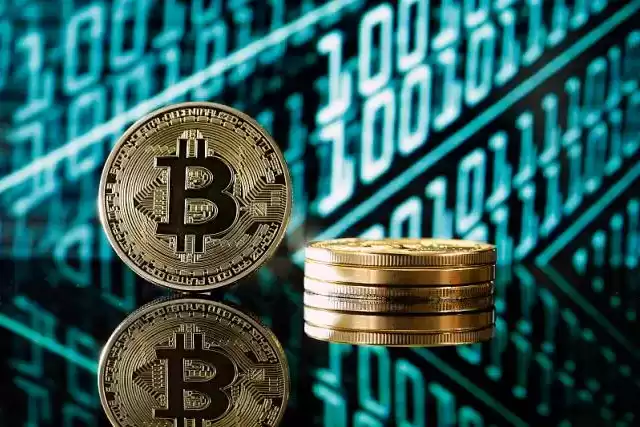
In the world of cryptocurrency trading, liquidations occur when a trader's position is forcibly closed due to insufficient funds to cover losses. This can happen when the market price of the underlying asset moves against the trader's position, causing the value of their collateral to fall below a certain threshold. In the case of Bitcoin (BTC) contracts, liquidations can have significant financial implications for traders who are not adequately prepared.
1. Understanding the Mechanisms of Bitcoin Contract Liquidation- Margin Trading: Bitcoin contracts are typically traded using margin, which allows traders to leverage their positions with borrowed funds. This can amplify both profits and losses.
- Margin Call: When a trader's margin balance falls below a certain level, they will receive a margin call. This is a warning that the trader needs to deposit more funds or reduce their position size to avoid liquidation.
- Liquidation Threshold: The liquidation threshold is the point at which the trader's margin balance becomes insufficient to cover losses. Once this threshold is reached, the trader's position will be automatically liquidated.
- Market Volatility: The volatility of the Bitcoin market can increase the risk of liquidation. Sudden price swings can rapidly erode the value of a trader's collateral.
- Leverage: The higher the leverage used, the greater the risk of liquidation. Leverage amplifies both profits and losses, increasing the potential for catastrophic losses.
- Market Conditions: Volatile market conditions can make it difficult to predict price movements. This can lead to traders making poor trading decisions that increase their exposure to liquidation risk.
- Trading Psychology: Emotional trading and a lack of risk management can lead to poor decision-making, increasing the likelihood of liquidations.
- Technological Issues: Platform outages or other technical issues can prevent traders from managing their positions effectively, leaving them vulnerable to liquidations.
- Proper Risk Management: Implement strict risk management strategies, such as setting stop-loss orders and position sizing based on available capital.
- Leverage Management: Use leverage cautiously and within manageable limits. Avoid excessive leverage that can magnify losses.
- Market Monitoring: Continuously monitor market conditions and adjust trading strategies accordingly. Stay informed about news and events that may impact Bitcoin prices.
- Emotional Control: Practice emotional control and avoid making impulsive trades based on fear or greed. Focus on logical analysis and rational decision-making.
- Platform Selection: Choose reputable trading platforms that offer robust risk management tools and provide reliable execution.
- Stop-Loss Orders: Place stop-loss orders to automatically close positions when the price reaches a predetermined level, limiting losses.
- Market Limit Orders: Use market limit orders to define the maximum loss you are willing to accept on each trade.
- Position Sizing: Adjust position sizes based on your risk tolerance and available capital. Avoid overtrading or holding excessive positions that can increase liquidation risk.
- Hedging Strategies: Consider using hedging strategies to reduce the risk of large losses in the event of unfavorable market movements.
- High Leverage Utilization: When the average leverage used in the market increases, it indicates a higher risk of liquidations.
- Low Funding Rates: Negative or extremely low funding rates can signal that a significant number of traders are holding short positions, increasing the likelihood of a short squeeze and subsequent liquidations.
- Overcrowded Trades: When a large number of traders are concentrated in the same direction, it can create a situation where a sudden reversal in the market can trigger a wave of liquidations.
- Technical Overbought/Oversold Conditions: Indicators such as the Relative Strength Index (RSI) and the Stochastic Oscillator can provide insights into potential overbought or oversold market conditions, increasing the risk of liquidations.
- Influx of New Traders: A sudden influx of new and inexperienced traders can lead to increased volatility and a higher likelihood of irrational trading decisions, potentially resulting in liquidations.
Disclaimer:info@kdj.com
The information provided is not trading advice. kdj.com does not assume any responsibility for any investments made based on the information provided in this article. Cryptocurrencies are highly volatile and it is highly recommended that you invest with caution after thorough research!
If you believe that the content used on this website infringes your copyright, please contact us immediately (info@kdj.com) and we will delete it promptly.






- KelpDAO vs. LayerZero: The $292M rsETH Exploit Blame Game Heats Up in Court
- 2026-09-25 16:35:01
- BlackRock and Ondo Finance Pioneer Tokenization: A New Era for Accessible Digital Assets
- 2026-09-25 08:45:01
- Asia's Crypto Surge Amidst Global Scrutiny: Key Trends in Adoption, Security Breaches, and Regulatory Shifts
- 2026-09-25 08:45:01
- Expert Warning for XRP Holders: Retest Imminent Amidst Geopolitical Turmoil, Analyst Urges Caution
- 2026-09-25 00:35:01
- Ethereum ETF Inflow Sees Grayscale Bitwise Divergence Amidst Modest Net Inflow: A NYC Take
- 2026-09-25 00:35:01
- Pepeto vs. The Giants: Unveiling the Next 100x Crypto Amidst ADA and CRO's Steady Climb
- 2026-09-24 08:35:01
Related knowledge

How to Adjust HYPEUSDT Futures Leverage?
Sep 21,2026 at 03:40pm
Understanding HYPEUSDT Futures Leverage Mechanics1. HYPEUSDT is a perpetual futures contract traded on several decentralized and centralized exchanges...
How to Find HYPEUSDT Futures Trading Volume?
Sep 24,2026 at 09:00am
Accessing HYPEUSDT Futures Trading Volume Data1. Visit major cryptocurrency derivatives exchanges such as Bybit, OKX, and Binance that list HYPEUSDT p...

How to Check HYPEUSDT Perpetual Mark Price?
Sep 21,2026 at 03:00am
Understanding Mark Price in Perpetual Contracts1. Mark price is a calculated reference value used to prevent manipulation of settlement and liquidatio...
How to Calculate HYPEUSDT Futures PnL?
Sep 24,2026 at 12:00am
Understanding HYPEUSDT Futures Contract Specifications1. HYPEUSDT is a perpetual futures contract traded on decentralized and centralized exchanges su...
How to View HYPEUSDT Contract Liquidation Data?
Sep 25,2026 at 05:19am
Accessing HYPE/USDT Contract Liquidation Data1. Navigate to a reputable derivatives analytics platform such as Coinglass, Bybit Analytics, or OKX Insi...

How to Find HYPEUSDT Futures Long Short Ratio?
Sep 21,2026 at 08:40pm
Market Volatility Patterns1. Price swings exceeding 15% within a 24-hour window occur regularly across major altcoins during low-liquidity periods. 2....
How to Adjust HYPEUSDT Futures Leverage?
Sep 21,2026 at 03:40pm
Understanding HYPEUSDT Futures Leverage Mechanics1. HYPEUSDT is a perpetual futures contract traded on several decentralized and centralized exchanges...
How to Find HYPEUSDT Futures Trading Volume?
Sep 24,2026 at 09:00am
Accessing HYPEUSDT Futures Trading Volume Data1. Visit major cryptocurrency derivatives exchanges such as Bybit, OKX, and Binance that list HYPEUSDT p...
How to Check HYPEUSDT Perpetual Mark Price?
Sep 21,2026 at 03:00am
Understanding Mark Price in Perpetual Contracts1. Mark price is a calculated reference value used to prevent manipulation of settlement and liquidatio...
How to Calculate HYPEUSDT Futures PnL?
Sep 24,2026 at 12:00am
Understanding HYPEUSDT Futures Contract Specifications1. HYPEUSDT is a perpetual futures contract traded on decentralized and centralized exchanges su...
How to View HYPEUSDT Contract Liquidation Data?
Sep 25,2026 at 05:19am
Accessing HYPE/USDT Contract Liquidation Data1. Navigate to a reputable derivatives analytics platform such as Coinglass, Bybit Analytics, or OKX Insi...
How to Find HYPEUSDT Futures Long Short Ratio?
Sep 21,2026 at 08:40pm
Market Volatility Patterns1. Price swings exceeding 15% within a 24-hour window occur regularly across major altcoins during low-liquidity periods. 2....
See all articles


