










![※Breaking News※ [Ripple XRP] $4 will go first this year!! Exceeded 5,500 won per piece!! Market capitalization is a whopping 543 trillion won!! It was crazy!!](/uploads/2026/09/28/cryptocurrencies-news/videos/origin_6aba3643acb8c_image_500_375.webp "※Breaking News※ [Ripple XRP] $4 will go first this year!! Exceeded 5,500 won per piece!! Market capitalization is a whopping 543 trillion won!! It was crazy!!")






-
 bitcoin
 $83069.738644 USD
-1.71% - ethereum
$2647.234855 USD
-2.15% - tether
$0.999549 USD
-0.01% - bnb
$763.231625 USD
-1.53% - xrp
$1.480335 USD
-2.74% - usd-coin
$0.999917 USD
0.01% - solana
$118.627399 USD
-2.28% - tron
$0.333784 USD
0.19% - zcash
$1546.788972 USD
-6.91% - hyperliquid
$89.122220 USD
-3.89% - dogecoin
$0.092894 USD
-4.17% - chainlink
$13.780821 USD
-3.63% - monero
$533.616649 USD
-4.01% - cardano
$0.245086 USD
-4.10% - unus-sed-leo
$9.072685 USD
0.08%











How to play Bitcoin contracts
Bitcoin contracts offer traders the ability to speculate on the future price of the cryptocurrency through exchanges with pre-determined settlement dates, enabling hedging against risk or speculating on volatility.
Nov 12, 2024 at 05:30 pm
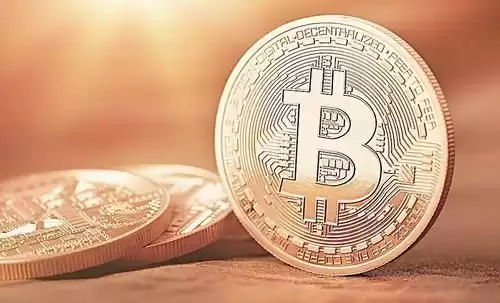
Bitcoin contracts, also known as Bitcoin futures contracts, are financial instruments that allow traders to speculate on the future price of Bitcoin. These contracts are traded on exchanges, and they settle at a predetermined date in the future.
There are a few different ways to play Bitcoin contracts. The most common way is to simply buy or sell a contract, which will give you the right to buy or sell Bitcoin at a specific price on a specific date. You can also use Bitcoin contracts to hedge against risk, or to speculate on the volatility of Bitcoin.
If you're new to Bitcoin contracts, it's important to understand the risks involved. These contracts can be volatile, and you could lose your entire investment if the price of Bitcoin moves against you. It's also important to understand the terms of the contract before you enter into it, so that you know exactly what you're getting into.
How to Get StartedIf you're interested in playing Bitcoin contracts, the first step is to open an account with an exchange that offers these contracts. Once you have an account, you can deposit funds into it and start trading.
There are a few different types of Bitcoin contracts, each with its own unique features. The most common type of contract is the futures contract, which settles at a predetermined date in the future. Other types of contracts include perpetual contracts, which never expire, and options contracts, which give you the right to buy or sell Bitcoin at a specific price.
Once you've chosen the type of contract you want to trade, you need to decide how much you want to risk. The amount of risk you take will depend on your trading strategy and your personal financial situation.
How to Place an OrderOnce you've decided how much you want to risk, you need to place an order. To do this, you'll need to specify the type of contract you want to buy or sell, the quantity of the contract, and the price at which you want to execute the order.
You can place an order using the exchange's website or its mobile app. Once you've placed an order, it will be filled when the market price reaches the price you specified.
How to Manage Your PositionOnce you've placed an order, you need to manage your position. This involves monitoring the market price and making adjustments to your position as needed.
There are a few different ways to manage your position. One way is to use stop orders, which are orders that are triggered when the market price reaches a certain level. Stop orders can be used to limit your losses or to protect your profits.
Another way to manage your position is to use limit orders, which are orders that are executed only when the market price reaches a certain level. Limit orders can be used to enter or exit a position at a specific price.
How to Close Your PositionWhen you're ready to close your position, you need to place an order to sell your contract. This will close out your position and you will receive the proceeds from the sale.
You can close your position at any time, but it's important to remember that the market price can fluctuate, so you may not be able to close your position at the same price as you entered it.
Here are some additional tips for playing Bitcoin contracts:- Don't trade with more money than you can afford to lose.
- Understand the risks involved before you enter into a contract.
- Use stop orders and limit orders to manage your risk.
- Monitor the market price and make adjustments to your position as needed.
- Close your position when you're ready to take profits or limit losses.
Disclaimer:info@kdj.com
The information provided is not trading advice. kdj.com does not assume any responsibility for any investments made based on the information provided in this article. Cryptocurrencies are highly volatile and it is highly recommended that you invest with caution after thorough research!
If you believe that the content used on this website infringes your copyright, please contact us immediately (info@kdj.com) and we will delete it promptly.





- Top Trader Predicts XRP Price Spike, Citing S-Curve Adoption and Utility
- 2026-09-29 04:45:01
- US SEC, Crypto Staff Guidance, CFTC Approach: A Regulatory Duet in the Digital Wild West
- 2026-09-29 04:45:01
- MemeToro Presale Surges Past $155K, Poised for 2026-27 Crypto Watchlists Amidst AI-Driven Innovation
- 2026-09-29 04:50:01
- Cardano News: ADA's Architectural Strength, Often Overlooked by Investors, Sets It Apart
- 2026-09-29 04:50:01
- Coinbase Unveils Expansive AI Agent Capabilities for Crypto, Stocks, and Derivatives Trading
- 2026-09-29 04:40:02
- Vitalik Buterin's Vision: Ethereum Evolves into a Cryptographic World Computer
- 2026-09-29 04:35:02
Related knowledge

How to Adjust HYPEUSDT Futures Leverage?
Sep 21,2026 at 03:40pm
Understanding HYPEUSDT Futures Leverage Mechanics1. HYPEUSDT is a perpetual futures contract traded on several decentralized and centralized exchanges...
How to Find HYPEUSDT Futures Trading Volume?
Sep 24,2026 at 09:00am
Accessing HYPEUSDT Futures Trading Volume Data1. Visit major cryptocurrency derivatives exchanges such as Bybit, OKX, and Binance that list HYPEUSDT p...

How to Check HYPEUSDT Perpetual Mark Price?
Sep 21,2026 at 03:00am
Understanding Mark Price in Perpetual Contracts1. Mark price is a calculated reference value used to prevent manipulation of settlement and liquidatio...
How to Calculate HYPEUSDT Futures PnL?
Sep 24,2026 at 12:00am
Understanding HYPEUSDT Futures Contract Specifications1. HYPEUSDT is a perpetual futures contract traded on decentralized and centralized exchanges su...
How to View HYPEUSDT Contract Liquidation Data?
Sep 25,2026 at 05:19am
Accessing HYPE/USDT Contract Liquidation Data1. Navigate to a reputable derivatives analytics platform such as Coinglass, Bybit Analytics, or OKX Insi...

How to Find HYPEUSDT Futures Long Short Ratio?
Sep 21,2026 at 08:40pm
Market Volatility Patterns1. Price swings exceeding 15% within a 24-hour window occur regularly across major altcoins during low-liquidity periods. 2....
How to Adjust HYPEUSDT Futures Leverage?
Sep 21,2026 at 03:40pm
Understanding HYPEUSDT Futures Leverage Mechanics1. HYPEUSDT is a perpetual futures contract traded on several decentralized and centralized exchanges...
How to Find HYPEUSDT Futures Trading Volume?
Sep 24,2026 at 09:00am
Accessing HYPEUSDT Futures Trading Volume Data1. Visit major cryptocurrency derivatives exchanges such as Bybit, OKX, and Binance that list HYPEUSDT p...
How to Check HYPEUSDT Perpetual Mark Price?
Sep 21,2026 at 03:00am
Understanding Mark Price in Perpetual Contracts1. Mark price is a calculated reference value used to prevent manipulation of settlement and liquidatio...
How to Calculate HYPEUSDT Futures PnL?
Sep 24,2026 at 12:00am
Understanding HYPEUSDT Futures Contract Specifications1. HYPEUSDT is a perpetual futures contract traded on decentralized and centralized exchanges su...
How to View HYPEUSDT Contract Liquidation Data?
Sep 25,2026 at 05:19am
Accessing HYPE/USDT Contract Liquidation Data1. Navigate to a reputable derivatives analytics platform such as Coinglass, Bybit Analytics, or OKX Insi...
How to Find HYPEUSDT Futures Long Short Ratio?
Sep 21,2026 at 08:40pm
Market Volatility Patterns1. Price swings exceeding 15% within a 24-hour window occur regularly across major altcoins during low-liquidity periods. 2....
See all articles


