












 |
|
 |
|
 |
|
 |
|
 |
|
 |
|
 |
|
 |
|
 |
|
 |
|
 |
|
 |
|
 |
|
 |
|
 |
|
探索人工智能基礎設施的未來、主要趨勢和不斷發展的技術前景,重點關注分佈式推理、多模式數據工程和資源管理。
AI Infrastructure: Navigating Future Trends and the Evolving Technology Landscape
人工智能基礎設施:引領未來趨勢和不斷發展的技術格局
The dynamics of AI infrastructure, future trends, and the technology landscape are rapidly evolving. This article synthesizes key findings and trends, focusing on distributed inference, multimodal data engineering, and efficient resource management.
人工智能基礎設施的動態、未來趨勢和技術格局正在迅速發展。本文綜合了主要發現和趨勢,重點關注分佈式推理、多模式數據工程和高效資源管理。
Distributed Inference: The New Standard
分佈式推理:新標準
Serving large and mixture-of-experts models has transformed into a distributed systems challenge. "Distributed inference" involves intricate orchestration, splitting computation between prompt processing and token generation, routing requests to different expert models, and managing key-value cache transfers. This complexity is now the baseline for deploying frontier models in production.
為大型混合專家模型提供服務已轉變為分佈式系統挑戰。 “分佈式推理”涉及復雜的編排、在提示處理和令牌生成之間拆分計算、將請求路由到不同的專家模型以及管理鍵值緩存傳輸。這種複雜性現在是在生產中部署前沿模型的基線。
Ray Tie-in: Ray's actor model allows precise placement and communication between different model parts running on separate hardware, enabling advanced routing and parallelism.
Ray 配合:Ray 的參與者模型允許在單獨的硬件上運行的不同模型部件之間進行精確的放置和通信,從而實現高級路由和並行性。
Post-Training and Reinforcement Learning Take Center Stage
訓練後和強化學習成為焦點
The most significant improvements now occur after pre-training, including alignment, fine-tuning, and reinforcement learning. AI teams focus on reward modeling, data curation from live traffic, and rapid iteration of small variants, rather than solely on pre-training compute.
現在最顯著的改進發生在預訓練之後,包括對齊、微調和強化學習。人工智能團隊專注於獎勵建模、實時流量的數據管理以及小變體的快速迭代,而不僅僅是預訓練計算。
Ray Tie-in: Ray manages complex compute patterns inherent in reinforcement learning, coordinating data generation, reward modeling, and model updates. Nearly every major open-source post-training framework is built on Ray.
Ray 配合:Ray 管理強化學習中固有的複雜計算模式、協調數據生成、獎勵建模和模型更新。幾乎所有主要的開源後訓練框架都是基於 Ray 構建的。
Multimodal Data Engineering Becomes First-Class
多模態數據工程成為一流
AI data pipelines are evolving beyond text-only workloads to process diverse data types like images, video, audio, and sensor data. This transition complicates the initial data processing stage, requiring CPUs for general transformations and GPUs for specialized tasks like generating embeddings. Data processing is now a sophisticated, heterogeneous distributed computing problem.
人工智能數據管道正在發展超越純文本工作負載,以處理圖像、視頻、音頻和傳感器數據等多種數據類型。這種轉變使初始數據處理階段變得複雜,需要 CPU 進行一般轉換,需要 GPU 來執行生成嵌入等專門任務。數據處理現在是一個複雜的異構分佈式計算問題。
Ray Tie-in: Ray orchestrates tasks across heterogeneous CPU and GPU clusters, essential for building efficient data pipelines. The Ray Data library is enhanced to handle large tensors and diverse data formats.
Ray 配合:Ray 跨異構 CPU 和 GPU 集群編排任務,這對於構建高效的數據管道至關重要。射線數據庫得到增強,可以處理大張量和不同的數據格式。
Agentic Workflows and Continuous Loops
代理工作流程和連續循環
Applications are shifting to systems that plan, invoke tools/models, check results, and learn from feedback continuously. These loops span data collection, post-training, deployment, and evaluation. Infrastructure must support coordinating long-running workflows across these stages for faster product learning cycles.
應用程序正在轉向能夠規劃、調用工具/模型、檢查結果並不斷從反饋中學習的系統。這些循環涵蓋數據收集、訓練後、部署和評估。基礎設施必須支持協調跨這些階段的長期運行的工作流程,以加快產品學習週期。
Ray Tie-in: Ray’s actor model supports long-lived agents, coordinating tool use and evaluations. The same cluster runs data preparation, training, and serving, avoiding the need to integrate multiple platforms.
Ray 配合:Ray 的參與者模型支持長壽命代理、協調工具使用和評估。同一集群運行數據準備、訓練和服務,避免了集成多個平台的需要。
Global GPU Scheduling and Cost Control
全局GPU調度和成本控制
Efficient GPU utilization is crucial. Policy-driven schedulers preempt low-priority jobs during traffic spikes, resuming them later, leading to higher utilization, lower costs, and faster developer startup times.
GPU 的高效利用至關重要。策略驅動的調度程序會在流量高峰期間搶占低優先級作業,並在稍後恢復它們,從而提高利用率、降低成本並縮短開發人員的啟動時間。
Ray Tie-in: Anyscale’s platform uses a global resource scheduler built on Ray, providing a centralized system for managing constrained resources across an organization.
Ray 搭配:Anyscale 的平台使用基於 Ray 構建的全局資源調度程序,提供集中式系統來管理整個組織內的受限資源。
Cloud-Native and Multi-Cloud Strategies
雲原生和多雲策略
GPU scarcity drives enterprises to multi-cloud strategies, distributing workloads across AWS, Google Cloud, Azure, and specialized GPU clouds. This addresses availability and avoids vendor lock-in but introduces complexity.
GPU 稀缺促使企業採取多雲戰略,在 AWS、Google Cloud、Azure 和專用 GPU 雲之間分配工作負載。這可以解決可用性問題並避免供應商鎖定,但會帶來複雜性。
Ray Tie-in: Ray/Anyscale provides a common runtime across multiple clouds, allowing teams to chase capacity without rebuilding systems.
Ray 搭配:Ray/Anyscale 提供跨多個雲的通用運行時,允許團隊在不重建系統的情況下追逐容量。
Evaluation-Driven Operations for Non-Deterministic Systems
非確定性系統的評估驅動操作
AI models are non-deterministic systems whose behavior can drift in production. Continuous evaluations tied to product metrics and feedback into post-training are essential. Iteration speed—collect, retrain, redeploy, re-measure—is critical.
人工智能模型是非確定性系統,其行為可能在生產中發生變化。與產品指標相關的持續評估和培訓後反饋至關重要。迭代速度(收集、重新訓練、重新部署、重新測量)至關重要。
Ray Tie-in: Ray hosts the full loop on one substrate, reusing the same primitives for data collection, evaluation jobs, training runs, and rollouts. Ray actors maintain state across evaluation runs, enabling sophisticated monitoring patterns.
Ray 捆綁:Ray 在一個基板上託管完整的循環,重複使用相同的基元進行數據收集、評估作業、訓練運行和部署。射線參與者在評估運行中維護狀態,從而實現複雜的監控模式。
Reliability at Scale on Unreliable Hardware
在不可靠的硬件上實現大規模可靠性
Operating AI infrastructure at scale requires designing for failure. Production systems must incorporate robust fault tolerance, including automatic retries, job checkpointing, and graceful handling of worker failures.
大規模運營人工智能基礎設施需要針對失敗進行設計。生產系統必須具有強大的容錯能力,包括自動重試、作業檢查點以及對工作故障的妥善處理。
Ray Tie-in: Ray has invested significantly in reliability and fault tolerance. Its internal state management system is re-architected for high availability, and system processes are isolated from application resource pressure. Ray’s support for checkpointing is critical for long-running training jobs.
Ray 配合:Ray 在可靠性和容錯能力方面投入了大量資金。其內部狀態管理系統經過重新架構以實現高可用性,並且系統進程與應用程序資源壓力隔離。 Ray 對檢查點的支持對於長期運行的訓練作業至關重要。
Heterogeneous Clusters: The Baseline
異構集群:基線
Pipelines blend CPUs (parsing, aggregation) with GPUs (embeddings, vision/audio transforms) across many nodes.
管道將 CPU(解析、聚合)與 GPU(嵌入、視覺/音頻轉換)跨多個節點混合在一起。
Ray Tie-in: Ray handles dynamic orchestration across heterogeneous hardware, allowing developers to specify resource requirements declaratively.
Ray 配合:Ray 處理跨異構硬件的動態編排,允許開發人員以聲明方式指定資源需求。
Accelerators and Fast Interconnects Determine Throughput
加速器和快速互連決定吞吐量
Specialized AI data centers with purpose-built accelerators connected via high-speed networking technologies are becoming standard, shifting from general-purpose cloud computing to specialized infrastructure.
具有通過高速網絡技術連接的專用加速器的專業人工智能數據中心正在成為標準,從通用雲計算轉向專業基礎設施。
Ray Tie-in: Ray Direct Transport enables direct GPU-to-GPU transfers, improving utilization for RL, distributed inference, and multimodal training.
Ray Tie-in:Ray Direct Transport 可實現 GPU 到 GPU 的直接傳輸,從而提高 RL、分佈式推理和多模式訓練的利用率。
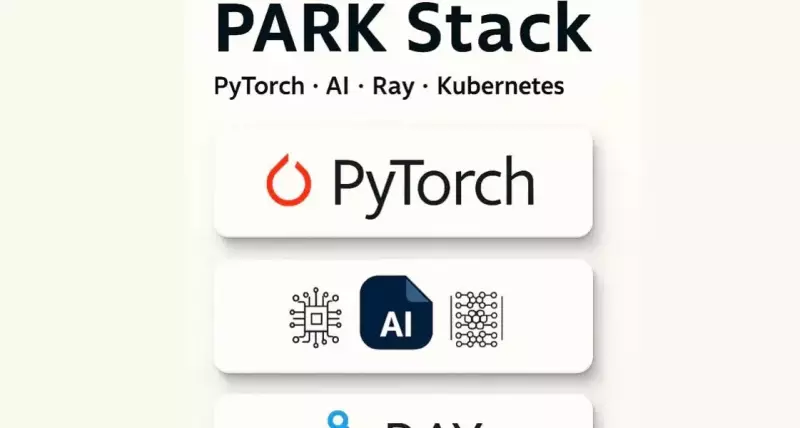
The PARK Stack
公園堆棧
A stack is coalescing into clear layers: Kubernetes for provisioning resources, Ray for scaling applications, foundation models, and high-level frameworks like PyTorch.
堆棧正在合併成清晰的層:用於配置資源的 Kubernetes、用於擴展應用程序的 Ray、基礎模型以及 PyTorch 等高級框架。
Ray Tie-in: Ray unifies data processing, training, and distributed inference into one operational substrate and plugs into model stacks and Kubernetes. Joining the PyTorch Foundation signals tighter integration with the training/serving ecosystem.
Ray 搭配:Ray 將數據處理、訓練和分佈式推理統一到一個操作基底中,並插入模型堆棧和 Kubernetes。加入 PyTorch 基金會標誌著與訓練/服務生態系統的更緊密集成。
Decentralized AI Infrastructure
去中心化人工智能基礎設施
Initiatives like Pi Network's proof-of-concept with OpenMind explore decentralized node architectures for AI training, potentially democratizing access to AI infrastructure.
Pi Network 與 OpenMind 的概念驗證等舉措探索了用於人工智能訓練的去中心化節點架構,有可能使人工智能基礎設施的訪問民主化。
Final Thoughts
最後的想法
The future of AI infrastructure is dynamic and exciting, with trends pointing toward more efficient, scalable, and accessible systems. Keep experimenting and pushing the boundaries – the possibilities are endless!
人工智能基礎設施的未來是充滿活力和令人興奮的,趨勢指向更高效、可擴展和可訪問的系統。不斷嘗試並突破界限——可能性是無限的!
免責聲明:info@kdj.com
所提供的資訊並非交易建議。 kDJ.com對任何基於本文提供的資訊進行的投資不承擔任何責任。加密貨幣波動性較大,建議您充分研究後謹慎投資!
如果您認為本網站使用的內容侵犯了您的版權,請立即聯絡我們(info@kdj.com),我們將及時刪除。
-

-
-
-
-
-
- XRP Ledger 透過重大更新擁抱原生借貸和交易捆綁
- 2026-09-18 12:05:01
- XRP Ledger 的最新更新引入了鏈上借貸和批量交易功能,標誌著 DeFi 的重大演變。
-
-
-


