








![[Multi SUB] (Épisode complet) En 1994, Chen Ye était en difficulté à son retour chez lui. Ses biens familiaux ont été détournés par son cousin. Sa fiancée a changé d'avis. La cloche de la bête a ouvert les chaînes d'outre-mer. Il comprenait le langage des bêtes et ramassait les produits de la montagne pour devenir riche. Il a refusé de se remettre avec son ex-petite amie ! #Recommandation de courts métrages dramatiques les plus populaires#Collection complète de courts métrages dramatiques#Merveilleux courts métrages dramatiques du continent](/uploads/2026/10/04/cryptocurrencies-news/videos/origin_6ac1ee0c8f3c7_image_500_375.webp "[Multi SUB] (Épisode complet) En 1994, Chen Ye était en difficulté à son retour chez lui. Ses biens familiaux ont été détournés par son cousin. Sa fiancée a changé d'avis. La cloche de la bête a ouvert les chaînes d'outre-mer. Il comprenait le langage des bêtes et ramassait les produits de la montagne pour devenir riche. Il a refusé de se remettre avec son ex-petite amie ! #Recommandation de courts métrages dramatiques les plus populaires#Collection complète de courts métrages dramatiques#Merveilleux courts métrages dramatiques du continent")
![[Multi SUB] |Un jackpot de loterie a révélé la laideur de la nature humaine. Il a été enfermé dans une cage à l'épreuve des requins par sa femme et ses frères et a coulé dans la mer. La fille dragon confère un pouvoir divin, utilise le pouvoir de la mer pour accumuler des richesses, venge les malfaiteurs et s'empare des droits contractuels sur la zone maritime de Golden Bay pour contre-attaquer la vie. #剧energychargestation#MiniDrama#Merveilleux court métrage dramatique du continent](/uploads/2026/10/04/cryptocurrencies-news/videos/origin_6ac1e6e7dd764_image_500_375.webp "[Multi SUB] |Un jackpot de loterie a révélé la laideur de la nature humaine. Il a été enfermé dans une cage à l'épreuve des requins par sa femme et ses frères et a coulé dans la mer. La fille dragon confère un pouvoir divin, utilise le pouvoir de la mer pour accumuler des richesses, venge les malfaiteurs et s'empare des droits contractuels sur la zone maritime de Golden Bay pour contre-attaquer la vie. #剧energychargestation#MiniDrama#Merveilleux court métrage dramatique du continent")






 |
|
 |
|
 |
|
 |
|
 |
|
 |
|
 |
|
 |
|
 |
|
 |
|
 |
|
 |
|
 |
|
 |
|
 |
|
Articles d’actualité sur les crypto-monnaies
Solana Foundation Has Tightened Its Validator Strategy to Boost Network Decentralization
Apr 28, 2025 at 03:36 am
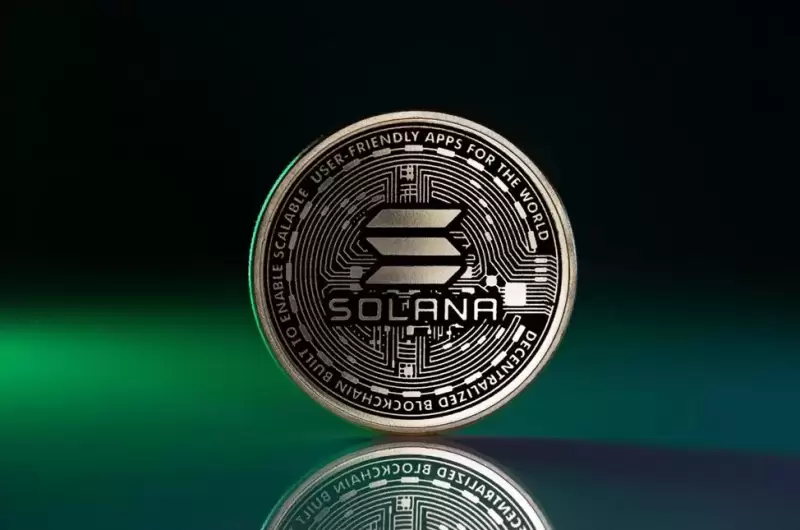
Solana Foundation has adjusted its validator strategy to promote network decentralization and reduce reliance on its support. As of April 2025, the Foundation introduced a policy where, for every new validator added to its Delegation Program (SFDP), three existing validators are removed if they meet specific criteria.
This policy, which began with the addition of Blockfolio to the SFDP, will see three existing validators removed. The departing validators are NodeReal, CCVC, and STiC Pay, leaving the SFDP with 15 validators.
To be removed from the program, validators must have been in the SFDP for over 18 months and have less than 1,000 SOL in external stake. Moreover, they must not be a Node as they transition out of the program.
This move aims to encourage validators to attract independent stake and operate self-sufficiently. Concerns have been raised about many validators, in some cases up to 90-100% of their stake, relying heavily on Foundation backing.
Research from Helius indicates that over half of Solana’s validators could become unprofitable without this support, highlighting the challenge of high on-chain governance costs. At present, smaller validators may struggle to maintain profitability and attract independent stake, potentially leading to consolidation or exits.
The policy is part of a broader effort to improve the Nakamoto Coefficient, a measure of decentralization, by reducing stake concentration. However, the Foundation has not yet responded to ongoing discussions about the policy’s impact.
By prioritizing validators with independent stake and phasing out those overly reliant on Foundation support, the policy aims to improve the Nakomoti Coefficient, reducing the risk of centralized control and enhancing network resilience.
Smaller validators, defined as those with less than 1,000 SOL in external stake, will be removed from the program after 18 months, which could render many unprofitable.
With over half of validators potentially unviable without Foundation backing, according to Helius data, smaller validators may struggle to attract independent stake, leading to consolidation or exits.
This policy change is part of a broader shift in cryptocurrency toward on-chain governance, where token holders vote on network policies and upgrades.
Cardano introduced on-chain governance with the Chang hard fork in September 2024, establishing a model with separate governance branches, a legislative body, and a constitutional committee. ADA holders can delegate voting power to Delegate Representatives (DReps), who influence network decisions, including validator (stake pool) policies.
Cardano’s stake pools are community-operated, with rewards tied to delegation from ADA holders. The governance model encourages decentralization by allowing token holders to choose stake pools, reducing reliance on centralized entities.
Unlike Solana’s Foundation-driven staking, Cardano’s approach empowers the community to incentivize validators through delegation, fostering a competitive validator ecosystem.
This democratic model enhances decentralization but risks low voter turnout, potentially concentrating influence among active DReps or large ADA holders. Compared to Solana, Cardano’s governance is less centralized, as it lacks a foundation dictating validator inclusion, but it faces challenges in ensuring broad participation.
Polkadot’s OpenGov model, implemented in 2023, uses on-chain governance where proposals are written in code, voted on transparently, and executed automatically upon approval. Token holders vote on network upgrades and validator policies, increasing trust through deterministic processes.
Validators in Polkadot are selected based on stake and performance, with nominators (token holders) choosing validators to back. The system incentivizes validators to attract independent stake, similar to Solana’s push for self-sufficiency. However, Polkadot’s governance is fully on-chain, contrasting with Solana’s off-chain Foundation-led decisions.
Polkadot’s transparent, community-driven model reduces centralized control compared to Solana’s Foundation policy. However, it requires active community participation, and “whale” token holders could dominate voting, mirroring Solana’s concern about stake concentration. Polkadot’s approach offers a more decentralized alternative but demands robust engagement to avoid governance capture.
Ethereum relies on off-chain governance through Ethereum Improvement Proposals (EIPs), discussed in forums, conferences, and GitHub. Core developers, node operators, and miners (pre-Merge) or validators (post-Merge) reach consensus informally, with no formal on-chain voting.
Since transitioning to Proof-of-Stake in 2022, Ethereum’s validators stake 32 ETH to participate, with rewards tied to performance. Unlike Solana’s Foundation staking, Ethereum has no central entity allocating stake; validators compete for community-driven delegation.
The ecosystem encourages decentralization through protocols like Lido, though concerns persist about Lido’s dominance (controlling ~30% of staked ETH). Ethereum’s decentralized validator model avoids Solana’s centralized Foundation control but faces risks of stake concentration in large staking pools. Its off-chain governance allows flexibility but can be slow and contentious, as
Clause de non-responsabilité:info@kdj.com
Les informations fournies ne constituent pas des conseils commerciaux. kdj.com n’assume aucune responsabilité pour les investissements effectués sur la base des informations fournies dans cet article. Les crypto-monnaies sont très volatiles et il est fortement recommandé d’investir avec prudence après une recherche approfondie!
Si vous pensez que le contenu utilisé sur ce site Web porte atteinte à vos droits d’auteur, veuillez nous contacter immédiatement (info@kdj.com) et nous le supprimerons dans les plus brefs délais.
-

- Prédiction du prix de l'argent : le marché se prépare à la volatilité au milieu de prévisions sauvages et de niveaux de support clés
- Oct 05, 2026 at 12:05 am
- L'argent évolue dans un paysage volatil, avec un analyste prévoyant une hausse audacieuse jusqu'à 1 100 $ d'ici 2031, tandis que l'attention à court terme reste sur le support critique entre 46 et 50 $ et la résistance à 67,543 $, suite à la récente faiblesse des données sur l'emploi aux États-Unis et à une vente de métaux précieux de 850 milliards de dollars.
-
- Shiba Inu (SHIB) connaît une reprise après la vague de septembre, mais une résistance clé se profile
- Oct 04, 2026 at 03:55 pm
- Explorez le récent rebond du Shiba Inu (SHIB) en septembre, ses obstacles techniques et la prochaine étape pour la pièce mème populaire. Une plongée dans les réserves de change et le sentiment du marché.
-
- Détournement de compte Microsoft X : le faux retour de Clippy alimente l'arnaque cryptographique au milieu d'une vague de fraude liée à l'IA
- Oct 04, 2026 at 03:55 pm
- Le compte X officiel de Microsoft a récemment été piraté, faisant la promotion d'un jeton Clippy frauduleux via une fausse promesse de relance, mettant en évidence une tendance alarmante d'escroqueries cryptographiques sophistiquées et de fraude par usurpation d'identité par l'IA.
-
- Les Philippines sévissent : les portefeuilles cryptographiques sont gelés lors d'une enquête sur un scandale d'inondation historique
- Oct 04, 2026 at 03:55 pm
- Les autorités philippines gèlent les portefeuilles cryptographiques dans le cadre d'une enquête majeure sur la corruption, marquant une étape importante dans la réglementation des actifs numériques et les efforts de lutte contre le blanchiment d'argent.
-
- Crypto Crossroads : prévisions de prix Bitcoin et Ethereum au milieu des afflux d'ETF et de l'évolution de la dynamique du marché
- Oct 04, 2026 at 03:55 pm
- Bitcoin et Ethereum évoluent dans un paysage complexe de demande institutionnelle et de résistance technique. Les afflux récents d'ETF signalent un sentiment haussier, mais les prévisions du marché restent prudentes, mettant l'accent sur les principaux niveaux de support et de résistance pour la semaine à venir.
-
- Les réserves de la Réserve fédérale fluctuent : les données H.4.1 révèlent une baisse des soldes des réserves bancaires lors de l'instantané de mercredi et des hausses moyennes
- Oct 04, 2026 at 12:05 pm
- L'analyse des données H.4.1 de la Réserve fédérale montre que les soldes des réserves bancaires ont diminué de manière significative un mercredi spécifique, mais que la moyenne hebdomadaire a légèrement augmenté, mettant en évidence les nuances des mesures.
-
- XRP Traders, Dark Defender et l'ascension du vol X589 : une plongée approfondie dans la trajectoire de XRP
- Oct 04, 2026 at 12:05 am
- Les dernières informations de l'analyste crypto Dark Defender révèlent que XRP est sur le « vol X589 », gravissant la vague 3 après avoir brisé une tendance de résistance d'un an, ciblant des niveaux de prix importants.
-
- Casinos cryptographiques axés sur la confidentialité : navigation dans les données, vérification et choix de plate-forme
- Oct 04, 2026 at 12:05 am
- Explorer le paysage évolutif des casinos cryptographiques soucieux de la confidentialité, en se concentrant sur la collecte de données, les processus de vérification et les offres de plateforme.
-
- L'ETF ZEC Spot fait face à d'importantes sorties de capitaux de 93,56 millions de dollars : un examen plus approfondi de la dynamique du marché
- Oct 03, 2026 at 04:05 pm
- L'ETF ZEC Spot a connu des sorties nettes importantes de 93,56 millions de dollars sur une seule semaine, suscitant des conversations sur le sentiment des investisseurs et les implications plus larges du marché pour les produits d'investissement liés à Zcash.


