














-
 bitcoin
 $80321.174057 USD
-0.96% - ethereum
$2575.142223 USD
-2.03% - tether
$0.999663 USD
0.00% - bnb
$750.959081 USD
-1.45% - xrp
$1.382579 USD
-2.63% - usd-coin
$0.999883 USD
0.00% - solana
$108.705042 USD
-2.93% - tron
$0.340225 USD
0.75% - zcash
$1451.991806 USD
-7.40% - hyperliquid
$91.224900 USD
-2.16% - dogecoin
$0.085240 USD
-2.20% - monero
$522.519180 USD
-7.67% - chainlink
$11.986918 USD
-2.91% - unus-sed-leo
$8.886381 USD
0.12% - cardano
$0.220224 USD
-1.38%











How to invest in cryptocurrency?
By investing in cryptocurrency through a reliable exchange, securely storing your assets, and monitoring market trends, you can take advantage of the potential growth opportunities in the digital currency landscape.
Oct 08, 2024 at 10:32 am
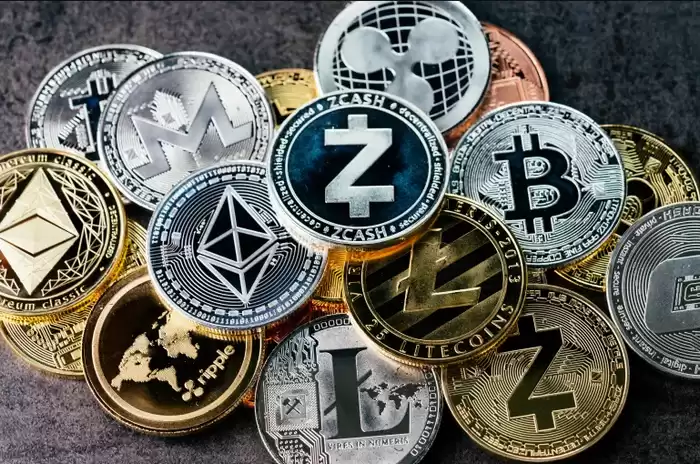
Cryptocurrency is a digital or virtual currency secured by cryptography.
Blockchain is a decentralized ledger system that records cryptocurrency transactions.
Centralized exchanges (e.g., Binance, Coinbase) offer a user-friendly platform.
Decentralized exchanges (e.g., Uniswap, PancakeSwap) provide anonymity but have limited liquidity.
Provide personal information, such as name, email, and address.
Verify your identity with government-issued ID or passport.
Link your bank account or debit/credit card to the exchange.
Transfer funds to the exchange's wallet.
Identify cryptocurrencies based on market capitalization, technology, and use cases.
Read whitepapers and analyze price charts to make informed decisions.
Select the cryptocurrency you want to invest in.
Specify the amount you want to purchase.
Choose the order type (market order, limit order, etc.).
Use a hardware wallet for secure offline storage.
Consider storing some cryptocurrency on the exchange for convenience.
Track the performance of your cryptocurrencies using exchange dashboards.
Rebalance your portfolio as needed based on market conditions.
Invest a fixed amount of money into cryptocurrency at regular intervals.
Helps reduce the impact of market volatility and potentially increase average returns.
Consult with a financial advisor experienced in cryptocurrency to develop a personalized investment strategy.
Disclaimer:info@kdj.com
The information provided is not trading advice. kdj.com does not assume any responsibility for any investments made based on the information provided in this article. Cryptocurrencies are highly volatile and it is highly recommended that you invest with caution after thorough research!
If you believe that the content used on this website infringes your copyright, please contact us immediately (info@kdj.com) and we will delete it promptly.






- One Attacker, Multiple Tokens: Inside the Fetch.ai Breach - A New York Minute
- 2026-09-20 20:50:02
- MultiversX Halts Mainnet: Unraveling the 'Invalid State' Incident
- 2026-09-20 20:45:01
- Bitcoin, Altcoins, & Crypto-currency: A Market Surge Driven by Regulation and Innovation, Not Just Memes
- 2026-09-20 20:50:02
- Dash Price Prediction: Will DASH Cryptocurrency Hit $100 Soon?
- 2026-09-20 20:55:01
- Pundits Weigh In: XRP's Future Role as Digital Currency Infrastructure and Potential Price Surges
- 2026-09-20 20:55:01
- XRP Holders Cheer Crypto Market Resilience Amid Evolving Regulatory Developments
- 2026-09-20 16:55:02
Related knowledge

What Is DAI and How Is It Different From USDT?
Sep 08,2026 at 05:00pm
Market Volatility Patterns1. Price swings exceeding 15% within a 24-hour window have occurred in over 68% of Bitcoin’s trading days since 2021. 2. Eth...

USDT, USDC and DAI: How Are These Stablecoins Different?
Sep 20,2026 at 05:59am
Bitcoin Halving Mechanics1. Bitcoin’s protocol enforces a fixed issuance schedule where block rewards are cut in half approximately every 210,000 bloc...

Why Can a Stablecoin Lose Its $1 Peg?
Sep 08,2026 at 02:00am
Reserve Composition and Transparency Gaps1. Many stablecoins claim to be fully backed by cash or short-duration US Treasuries, yet reserve disclosures...

What Is Self-Custody in Crypto and Why Does It Matter?
Sep 10,2026 at 04:19am
Definition and Core Mechanics1. Self-custody refers to the practice where individuals retain full control over their private keys without delegating t...

Custodial vs Non-Custodial Wallets: What’s the Difference?
Sep 17,2026 at 03:19am
Custodial Wallets Defined1. A custodial wallet is a digital asset storage solution where a third-party service provider holds and manages users’ priva...

What Is a Multisig Wallet and When Is It Useful?
Sep 12,2026 at 02:20pm
Definition and Core Architecture1. A multisig wallet is a cryptographic construct that requires multiple private keys to authorize a single blockchain...
What Is DAI and How Is It Different From USDT?
Sep 08,2026 at 05:00pm
Market Volatility Patterns1. Price swings exceeding 15% within a 24-hour window have occurred in over 68% of Bitcoin’s trading days since 2021. 2. Eth...
USDT, USDC and DAI: How Are These Stablecoins Different?
Sep 20,2026 at 05:59am
Bitcoin Halving Mechanics1. Bitcoin’s protocol enforces a fixed issuance schedule where block rewards are cut in half approximately every 210,000 bloc...
Why Can a Stablecoin Lose Its $1 Peg?
Sep 08,2026 at 02:00am
Reserve Composition and Transparency Gaps1. Many stablecoins claim to be fully backed by cash or short-duration US Treasuries, yet reserve disclosures...
What Is Self-Custody in Crypto and Why Does It Matter?
Sep 10,2026 at 04:19am
Definition and Core Mechanics1. Self-custody refers to the practice where individuals retain full control over their private keys without delegating t...
Custodial vs Non-Custodial Wallets: What’s the Difference?
Sep 17,2026 at 03:19am
Custodial Wallets Defined1. A custodial wallet is a digital asset storage solution where a third-party service provider holds and manages users’ priva...
What Is a Multisig Wallet and When Is It Useful?
Sep 12,2026 at 02:20pm
Definition and Core Architecture1. A multisig wallet is a cryptographic construct that requires multiple private keys to authorize a single blockchain...
See all articles


