















![Ultra Paracosm by IlIRuLaSIlI [3 coin] | Easy demon | Geometry dash](/uploads/2026/01/31/cryptocurrencies-news/videos/origin_697d592372464_image_500_375.webp "Ultra Paracosm by IlIRuLaSIlI [3 coin] | Easy demon | Geometry dash")








-
 bitcoin
 $87959.907984 USD
1.34% - ethereum
$2920.497338 USD
3.04% - tether
$0.999775 USD
0.00% - xrp
$2.237324 USD
8.12% - bnb
$860.243768 USD
0.90% - solana
$138.089498 USD
5.43% - usd-coin
$0.999807 USD
0.01% - tron
$0.272801 USD
-1.53% - dogecoin
$0.150904 USD
2.96% - cardano
$0.421635 USD
1.97% - hyperliquid
$32.152445 USD
2.23% - bitcoin-cash
$533.301069 USD
-1.94% - chainlink
$12.953417 USD
2.68% - unus-sed-leo
$9.535951 USD
0.73% - zcash
$521.483386 USD
-2.87%











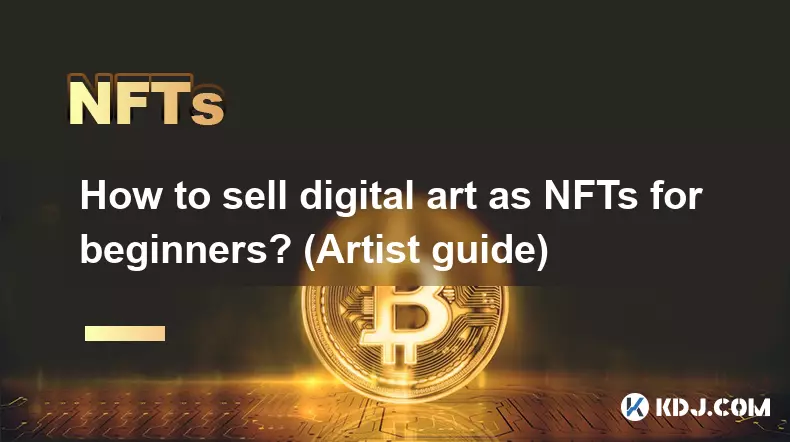
How to sell digital art as NFTs for beginners? (Artist guide)
Artists mint NFTs on blockchains like Ethereum or Solana via marketplaces (e.g., OpenSea, Magic Eden), using wallets like MetaMask, optimizing files, setting royalties, and leveraging social strategies for visibility—no coding required.
Jan 24, 2026 at 05:40 am
Understanding NFT Marketplaces
1. Artists must select a blockchain-compatible platform where digital art can be minted and traded. Ethereum remains the most widely adopted network for NFTs, though alternatives like Polygon, Solana, and Tezos offer lower gas fees and faster transactions.
2. OpenSea, Blur, and Magic Eden serve as primary marketplaces, each supporting different blockchains and offering distinct fee structures. OpenSea supports Ethereum, Polygon, and Klaytn, while Magic Eden focuses heavily on Solana-based collections.
3. Wallet integration is mandatory before listing any artwork. MetaMask, Phantom, and Trust Wallet are commonly used, with setup requiring secure seed phrase backup and network configuration alignment.
4. Verification processes vary across platforms—some require creator verification badges to increase buyer trust, while others allow anonymous listings but limit visibility in curated sections.
5. Platform-specific royalties settings let artists define resale percentages. Ethereum-based contracts support up to 10% royalties, enforced via smart contract logic upon secondary sales.
Preparing Your Digital Artwork
1. File formats accepted include PNG, JPG, GIF, MP4, and GLB for 3D models. Maximum file sizes range from 100MB on OpenSea to 50MB on Rarible, demanding optimization without compromising visual fidelity.
2. Metadata preparation involves crafting descriptive titles, detailed attributes, and accurate categorization. Attributes influence rarity scoring in generative collections and affect discoverability in marketplace filters.
3. Watermarking should be avoided on final uploaded files—visible watermarks reduce perceived value and may trigger rejection during moderation. Instead, embed invisible copyright metadata using EXIF or XMP standards.
4. Resolution requirements differ by use case: static images benefit from 3000×3000 pixels minimum, animated pieces require consistent frame rates (24–30 FPS), and audio-backed visuals need synchronized waveform alignment.
5. Provenance documentation strengthens authenticity claims. Maintaining dated timestamps, original creation logs, and version histories adds credibility during community engagement or dispute resolution.
Minting and Transaction Management
1. Minting initiates the on-chain registration of digital art as a unique token. This process consumes gas fees, which fluctuate based on network congestion and transaction complexity.
2. Lazy minting options exist on platforms like Rarible and Zora, allowing artists to defer gas costs until a sale occurs—ideal for testing demand without upfront expenditure.
3. Smart contract selection impacts functionality. ERC-721 enables single-edition tokens, while ERC-1155 supports both fungible and non-fungible variants within one contract—useful for limited editions or unlockable content tiers.
4. Transaction confirmations appear on explorers like Etherscan or Solscan. Artists should verify hash status, block inclusion, and token ID assignment before promoting listings.
5. Failed transactions due to insufficient ETH balance or incorrect nonce values require manual correction through wallet settings or explorer-based resubmission tools.
Pricing and Visibility Strategies
1. Floor price benchmarking against similar artists’ recent sales provides realistic valuation anchors. Tools like Dune Analytics dashboards and NFTPriceFloor track real-time metrics across major collections.
2. Auction formats—English, Dutch, or fixed-price—offer varied psychological triggers. Fixed-price listings dominate beginner adoption, while timed auctions generate urgency among collectors.
3. Social media cross-posting increases exposure. Embedding live OpenSea links in Twitter/X bios, sharing preview GIFs on Instagram Reels, and tagging relevant communities on Discord drive inbound traffic.
4. Collaborative drops with complementary creators expand audience reach. Joint minting events often appear in aggregator newsletters like The Block’s NFT Report or NFT Now’s Weekly Pulse.
5. Community participation through AMAs, behind-the-scenes studio streams, and interactive Discord voice chats builds long-term collector loyalty beyond individual sale cycles.
Frequently Asked Questions
Q: Do I need coding knowledge to mint an NFT?No. Most marketplaces provide no-code interfaces for uploading files, setting royalties, and initiating minting. Advanced customization requires Solidity familiarity but remains optional for basic operations.
Q: Can I sell the same artwork on multiple blockchains simultaneously?Yes. Cross-chain minting is possible using bridges like ChainPort or native multi-chain platforms such as CrossMint. Each instance exists independently and carries its own provenance record.
Q: What happens if my NFT sells but I don’t receive payment?Payments settle automatically via smart contract execution. Delays occur only when wallet balances lack sufficient native tokens for gas or when exchange withdrawal limits restrict fund movement.
Q: Is copyright transferred when someone buys my NFT?No. Purchasing an NFT does not assign intellectual property rights unless explicitly stated in accompanying license terms. Default ownership retains all rights with the original creator.
Disclaimer:info@kdj.com
The information provided is not trading advice. kdj.com does not assume any responsibility for any investments made based on the information provided in this article. Cryptocurrencies are highly volatile and it is highly recommended that you invest with caution after thorough research!
If you believe that the content used on this website infringes your copyright, please contact us immediately (info@kdj.com) and we will delete it promptly.






- White House Brokers Peace: Crypto, Banks, and the Future of Finance
- 2026-01-31 18:50:01
- Rare Royal Mint Coin Discovery Sparks Value Frenzy: What's Your Change Worth?
- 2026-01-31 18:55:01
- Pi Network's Mainnet Migration Accelerates, Unlocking Millions and Bolstering Pi Coin's Foundation
- 2026-01-31 18:55:01
- Bitcoin Price Volatility Sparks Renewed Interest in Promising Blockchain Projects
- 2026-01-31 18:45:01
- UAE Central Bank Approves First Stablecoin, Paving Way for Digital Asset Regulation
- 2026-01-31 18:40:02
- Davos Dissent: Coinbase's Brian Armstrong Clashes with Wall Street's Old Guard
- 2026-01-31 18:40:02
Related knowledge
How to understand gas wars and set priority fees? (Minting strategy)
Jan 29,2026 at 11:00am
Understanding Gas Wars in the Context of NFT Minting1. Gas wars occur when multiple users compete to have their transactions confirmed first on Ethere...
How to buy real estate using NFTs? (RWA tokenization)
Jan 29,2026 at 07:19am
Understanding Real Estate NFTs1. Real estate NFTs represent ownership stakes in physical properties through blockchain-based tokens. 2. Each NFT is mi...
How to participate in NFT raffles and giveaways? (Premint guide)
Jan 29,2026 at 11:39pm
Understanding NFT Raffle Mechanics1. NFT raffles operate as on-chain lotteries where participants submit entries during a defined window, often by con...
How to set up an NFT gallery in a virtual world? (OnCyber tutorial)
Jan 28,2026 at 07:19am
Understanding Virtual World Infrastructure1. Virtual worlds like Decentraland, Somnium Space, and OnCyber rely on blockchain-based land ownership, whe...
How to bridge NFTs across different blockchains? (Wormhole guide)
Jan 29,2026 at 05:20am
Understanding Cross-Chain NFT Bridging1. NFTs are inherently tied to the blockchain where they are minted, making them non-transferable by default acr...
How to spot wash trading in NFT collections? (Volume analysis)
Jan 30,2026 at 09:20am
Volume Distribution Patterns1. A small number of wallets consistently account for over 70% of total trading volume across multiple floor price transac...
How to understand gas wars and set priority fees? (Minting strategy)
Jan 29,2026 at 11:00am
Understanding Gas Wars in the Context of NFT Minting1. Gas wars occur when multiple users compete to have their transactions confirmed first on Ethere...
How to buy real estate using NFTs? (RWA tokenization)
Jan 29,2026 at 07:19am
Understanding Real Estate NFTs1. Real estate NFTs represent ownership stakes in physical properties through blockchain-based tokens. 2. Each NFT is mi...
How to participate in NFT raffles and giveaways? (Premint guide)
Jan 29,2026 at 11:39pm
Understanding NFT Raffle Mechanics1. NFT raffles operate as on-chain lotteries where participants submit entries during a defined window, often by con...
How to set up an NFT gallery in a virtual world? (OnCyber tutorial)
Jan 28,2026 at 07:19am
Understanding Virtual World Infrastructure1. Virtual worlds like Decentraland, Somnium Space, and OnCyber rely on blockchain-based land ownership, whe...
How to bridge NFTs across different blockchains? (Wormhole guide)
Jan 29,2026 at 05:20am
Understanding Cross-Chain NFT Bridging1. NFTs are inherently tied to the blockchain where they are minted, making them non-transferable by default acr...
How to spot wash trading in NFT collections? (Volume analysis)
Jan 30,2026 at 09:20am
Volume Distribution Patterns1. A small number of wallets consistently account for over 70% of total trading volume across multiple floor price transac...
See all articles


