















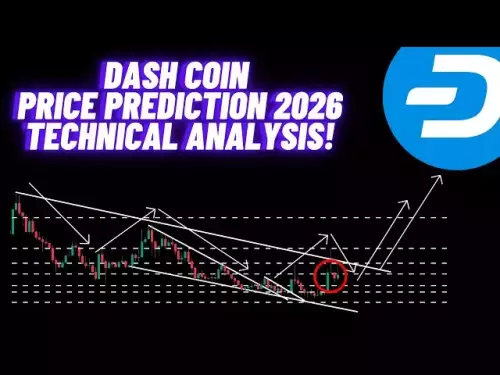
![THIS IS THE HARDEST COIN TO GET [POLY DASH]](/uploads/2026/01/31/cryptocurrencies-news/videos/origin_697e0319ee56d_image_500_375.webp "THIS IS THE HARDEST COIN TO GET [POLY DASH]")








-
 bitcoin
 $87959.907984 USD
1.34% - ethereum
$2920.497338 USD
3.04% - tether
$0.999775 USD
0.00% - xrp
$2.237324 USD
8.12% - bnb
$860.243768 USD
0.90% - solana
$138.089498 USD
5.43% - usd-coin
$0.999807 USD
0.01% - tron
$0.272801 USD
-1.53% - dogecoin
$0.150904 USD
2.96% - cardano
$0.421635 USD
1.97% - hyperliquid
$32.152445 USD
2.23% - bitcoin-cash
$533.301069 USD
-1.94% - chainlink
$12.953417 USD
2.68% - unus-sed-leo
$9.535951 USD
0.73% - zcash
$521.483386 USD
-2.87%











What are 'royalties' on NFT sales? Who gets that money when I sell my NFT?
NFT royalties—automated, smart-contract-enforced payments to creators on secondary sales—vary by chain, marketplace support, and contract design, offering ongoing income but facing technical, legal, and enforcement challenges.
Dec 17, 2025 at 10:00 am
Understanding Royalties in the NFT Ecosystem
1. Royalties refer to a predetermined percentage of the sale price that flows automatically to the original creator each time an NFT is resold on a secondary marketplace.
2. These payments are enforced through smart contracts deployed on blockchains like Ethereum, Solana, or Polygon at the time of minting.
3. The royalty rate is typically set by the creator before the NFT collection launches and can range from 2% to 10%, though some platforms allow up to 25%.
4. Unlike traditional art markets, where resale rights rarely benefit creators, NFT royalties introduce a structural mechanism for ongoing compensation.
5. Not all marketplaces honor royalties equally—some enforce them strictly, while others have disabled support due to protocol-level limitations or governance decisions.
Who Receives Royalty Payments?
1. The wallet address specified during contract deployment receives all royalty payouts unless modified via upgradeable contract logic.
2. In most cases, this is the creator’s personal or project treasury wallet, verified at mint time and immutable thereafter on non-upgradeable contracts.
3. If multiple contributors collaborated on the artwork or code, royalties may be split using multi-signature wallets or decentralized autonomous organization (DAO) treasuries.
4. Some collections implement dynamic royalty routing, directing portions to community funds, charity addresses, or staking reward pools based on predefined conditions.
5. Third-party services like Manifold or Zora enable creators to update royalty recipients post-deployment, offering flexibility not available on standard ERC-721 contracts.
Technical Enforcement and Limitations
1. On Ethereum, royalties rely on the EIP-2981 standard, which allows contracts to declare royalty information and recipient addresses in a standardized way.
2. Wallets and marketplaces must explicitly integrate EIP-2981 to trigger royalty transfers; absence of integration means no automatic payout occurs.
3. Certain layer-2 solutions and newer chains lack widespread EIP-2981 adoption, resulting in inconsistent royalty enforcement across ecosystems.
4. Flash loans and sandwich attacks have been used to bypass royalty logic in poorly audited contracts, exposing vulnerabilities in custom royalty implementations.
5. Marketplaces such as Blur and OpenSea have shifted toward optional or off-chain royalty handling, reducing guaranteed income for creators despite on-chain contract specifications.
Legal and Tax Implications of Royalty Income
1. Royalty earnings are treated as taxable income in jurisdictions including the United States, United Kingdom, and Germany, with valuation determined at the time of receipt in cryptocurrency.
2. Creators must track every secondary sale involving their NFTs using blockchain explorers or dedicated analytics tools like Rarity Sniper or Dune dashboards.
3. Cross-border royalty flows may trigger withholding tax obligations depending on the residency of the recipient and applicable double taxation treaties.
4. Smart contract-based royalties do not constitute legal contracts under most civil law systems, meaning enforcement outside the blockchain relies on jurisdiction-specific intellectual property frameworks.
5. Some creators assign royalty rights to entities like LLCs or foundations to manage liability, reporting, and distribution—especially when operating globally.
Frequently Asked Questions
Q: Do I get royalties if my NFT is sold peer-to-peer without a marketplace? A: Only if the buyer and seller use a wallet or tool that respects EIP-2981 and manually triggers the royalty transfer function. Most P2P transfers skip this step entirely.
Q: Can I change my royalty percentage after my NFT collection is live? A: Not on standard ERC-721 contracts. Upgradeable contracts or platforms like Manifold permit updates, but require explicit design choices made before launch.
Q: Are royalties paid in ETH, SOL, or the native token of the chain where the sale occurs? A: Royalties are paid in the same token used for the sale—whether it’s ETH on Ethereum, SOL on Solana, or USDC on Arbitrum—unless the contract enforces a specific denomination.
Q: What happens to royalties if the original creator’s wallet is lost or compromised? A: Funds continue routing to that address. Recovery depends solely on private key access or multisig governance rules—not on identity verification or centralized intervention.
Disclaimer:info@kdj.com
The information provided is not trading advice. kdj.com does not assume any responsibility for any investments made based on the information provided in this article. Cryptocurrencies are highly volatile and it is highly recommended that you invest with caution after thorough research!
If you believe that the content used on this website infringes your copyright, please contact us immediately (info@kdj.com) and we will delete it promptly.






- Crypto Coaster: Bitcoin Navigates Intense Liquidation Hunt as Markets Reel
- 2026-02-01 00:40:02
- Bitcoin Eyes $75,000 Retest as Early February Approaches Amid Shifting Market Sentiment
- 2026-02-01 01:20:03
- Don't Miss Out: A Rare £1 Coin with a Hidden Error Could Be Worth a Fortune!
- 2026-02-01 01:20:03
- Rare £1 Coin Error Could Be Worth £2,500: Are You Carrying a Fortune?
- 2026-02-01 00:45:01
- Navigating the Crypto Landscape: Risk vs Reward in Solana Dips and the Allure of Crypto Presales
- 2026-02-01 01:10:01
- NVIDIA CEO Jensen Huang's Take: Crypto as Energy Storage and the Evolving Role of Tech CEOs
- 2026-02-01 01:15:02
Related knowledge
How to understand gas wars and set priority fees? (Minting strategy)
Jan 29,2026 at 11:00am
Understanding Gas Wars in the Context of NFT Minting1. Gas wars occur when multiple users compete to have their transactions confirmed first on Ethere...
How to buy real estate using NFTs? (RWA tokenization)
Jan 29,2026 at 07:19am
Understanding Real Estate NFTs1. Real estate NFTs represent ownership stakes in physical properties through blockchain-based tokens. 2. Each NFT is mi...
How to participate in NFT raffles and giveaways? (Premint guide)
Jan 29,2026 at 11:39pm
Understanding NFT Raffle Mechanics1. NFT raffles operate as on-chain lotteries where participants submit entries during a defined window, often by con...
How to set up an NFT gallery in a virtual world? (OnCyber tutorial)
Jan 28,2026 at 07:19am
Understanding Virtual World Infrastructure1. Virtual worlds like Decentraland, Somnium Space, and OnCyber rely on blockchain-based land ownership, whe...
How to bridge NFTs across different blockchains? (Wormhole guide)
Jan 29,2026 at 05:20am
Understanding Cross-Chain NFT Bridging1. NFTs are inherently tied to the blockchain where they are minted, making them non-transferable by default acr...
How to spot wash trading in NFT collections? (Volume analysis)
Jan 30,2026 at 09:20am
Volume Distribution Patterns1. A small number of wallets consistently account for over 70% of total trading volume across multiple floor price transac...
How to understand gas wars and set priority fees? (Minting strategy)
Jan 29,2026 at 11:00am
Understanding Gas Wars in the Context of NFT Minting1. Gas wars occur when multiple users compete to have their transactions confirmed first on Ethere...
How to buy real estate using NFTs? (RWA tokenization)
Jan 29,2026 at 07:19am
Understanding Real Estate NFTs1. Real estate NFTs represent ownership stakes in physical properties through blockchain-based tokens. 2. Each NFT is mi...
How to participate in NFT raffles and giveaways? (Premint guide)
Jan 29,2026 at 11:39pm
Understanding NFT Raffle Mechanics1. NFT raffles operate as on-chain lotteries where participants submit entries during a defined window, often by con...
How to set up an NFT gallery in a virtual world? (OnCyber tutorial)
Jan 28,2026 at 07:19am
Understanding Virtual World Infrastructure1. Virtual worlds like Decentraland, Somnium Space, and OnCyber rely on blockchain-based land ownership, whe...
How to bridge NFTs across different blockchains? (Wormhole guide)
Jan 29,2026 at 05:20am
Understanding Cross-Chain NFT Bridging1. NFTs are inherently tied to the blockchain where they are minted, making them non-transferable by default acr...
How to spot wash trading in NFT collections? (Volume analysis)
Jan 30,2026 at 09:20am
Volume Distribution Patterns1. A small number of wallets consistently account for over 70% of total trading volume across multiple floor price transac...
See all articles


