















![Ultra Paracosm by IlIRuLaSIlI [3 coin] | Easy demon | Geometry dash](/uploads/2026/01/31/cryptocurrencies-news/videos/origin_697d592372464_image_500_375.webp "Ultra Paracosm by IlIRuLaSIlI [3 coin] | Easy demon | Geometry dash")








-
 bitcoin
 $87959.907984 USD
1.34% - ethereum
$2920.497338 USD
3.04% - tether
$0.999775 USD
0.00% - xrp
$2.237324 USD
8.12% - bnb
$860.243768 USD
0.90% - solana
$138.089498 USD
5.43% - usd-coin
$0.999807 USD
0.01% - tron
$0.272801 USD
-1.53% - dogecoin
$0.150904 USD
2.96% - cardano
$0.421635 USD
1.97% - hyperliquid
$32.152445 USD
2.23% - bitcoin-cash
$533.301069 USD
-1.94% - chainlink
$12.953417 USD
2.68% - unus-sed-leo
$9.535951 USD
0.73% - zcash
$521.483386 USD
-2.87%











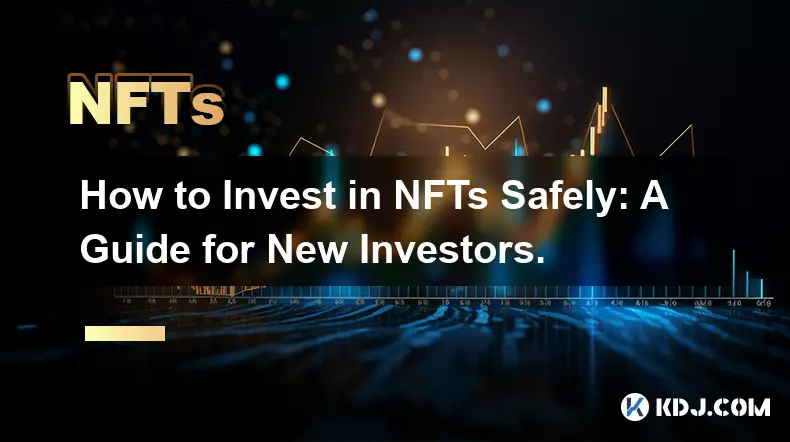
How to Invest in NFTs Safely: A Guide for New Investors.
NFTs are unique blockchain-verified digital assets—non-fungible, metadata-rich, and governed by immutable smart contracts, but ownership ≠ copyright.
Jan 14, 2026 at 06:59 am
Understanding NFT Fundamentals
1. Non-fungible tokens represent unique digital assets verified on blockchain networks, primarily Ethereum, Solana, and Polygon.
2. Each NFT contains metadata that distinguishes it from others, including creator signatures, provenance history, and ownership records.
3. Unlike cryptocurrencies such as Bitcoin or Ethereum, NFTs cannot be exchanged on a one-to-one basis due to inherent uniqueness.
4. Smart contracts govern minting, transfer, and royalty distribution—these are immutable once deployed on-chain.
5. Ownership is recorded publicly on the ledger, but possession does not automatically confer copyright or commercial usage rights.
Securing Your Digital Wallet
1. Use non-custodial wallets like MetaMask or Phantom to retain full control over private keys.
2. Never share seed phrases with anyone—even support personnel claiming to assist with recovery.
3. Enable hardware wallet integration for high-value holdings; Ledger and Trezor support multiple NFT-compatible chains.
4. Verify contract addresses manually before approving transactions; phishing sites often mimic legitimate marketplaces.
5. Disable browser extensions not actively used for NFT interaction to reduce attack surface.
Evaluating Marketplace Trustworthiness
1. OpenSea remains the largest secondary marketplace but has faced criticism over listing counterfeit collections and insufficient moderation.
2. Blur and Magic Eden offer real-time trading data and lower fees, yet require deeper familiarity with order book mechanics.
3. Check if platforms enforce verified creator badges and display on-chain sales history transparently.
4. Avoid newly launched marketplaces without audited smart contracts or public security incident reports.
5. Cross-reference collection floor prices across at least two independent aggregators before executing bids.
Analyzing Collection Viability
1. Review token supply distribution: heavily concentrated wallets may indicate wash trading or manipulation.
2. Examine community engagement metrics—not just Discord member count, but active daily contributors and moderator responsiveness.
3. Assess roadmap execution history; past deliverables like utility integrations or IP licensing agreements signal credibility.
4. Study artist or team background—prior successful launches or verifiable credentials add legitimacy.
5. Scrutinize royalty structures; collections enforcing consistent secondary sale royalties tend to sustain long-term ecosystem health.
Recognizing Common Threat Vectors
1. Rug pulls occur when developers abandon projects after liquidity extraction—check if contract code allows withdrawal of locked funds.
2. Fake minting pages mimic official links via typosquatting domains; always navigate directly from official social media bios.
3. “Giveaway” scams promise free NFTs in exchange for wallet approval—legitimate projects never request this.
4. Phishing emails impersonating exchanges or wallet services often contain malicious QR codes or embedded scripts.
5. Approving unlimited token allowances exposes your entire wallet balance to malicious contracts—always set custom limits.
Frequently Asked Questions
Q: Can I lose my NFT if the marketplace shuts down?A: No—ownership resides on-chain. You retain the asset even if the platform ceases operations, though resale may require migrating to another interface.
Q: Do gas fees apply when buying NFTs on all blockchains?A: Yes—every on-chain transaction incurs network fees. Solana typically charges fractions of a cent, while Ethereum mainnet fees fluctuate significantly during congestion.
Q: Is it safe to connect my wallet to NFT games?A: Only if the game’s smart contracts have undergone third-party audits by firms like CertiK or OpenZeppelin, and if permissions are restricted to specific contract interactions.
Q: How do I verify if an NFT’s metadata is stored permanently?A: Inspect the token URI—IPFS hashes prefixed with “ipfs://” or Arweave transaction IDs indicate decentralized storage; HTTP links suggest centralized servers vulnerable to takedown.
Disclaimer:info@kdj.com
The information provided is not trading advice. kdj.com does not assume any responsibility for any investments made based on the information provided in this article. Cryptocurrencies are highly volatile and it is highly recommended that you invest with caution after thorough research!
If you believe that the content used on this website infringes your copyright, please contact us immediately (info@kdj.com) and we will delete it promptly.






- White House Brokers Peace: Crypto, Banks, and the Future of Finance
- 2026-01-31 18:50:01
- Rare Royal Mint Coin Discovery Sparks Value Frenzy: What's Your Change Worth?
- 2026-01-31 18:55:01
- Pi Network's Mainnet Migration Accelerates, Unlocking Millions and Bolstering Pi Coin's Foundation
- 2026-01-31 18:55:01
- Lido's stVaults Revolutionize Ethereum Staking for Institutions
- 2026-01-31 19:25:01
- MegaETH's Bold Bet: No Listing Fees, No Exchange Airdrops, Just Pure Grit
- 2026-01-31 19:20:02
- BlockDAG Presale Delays Raise Questions on Listing Date Amidst Market Scrutiny
- 2026-01-31 19:15:01
Related knowledge
How to understand gas wars and set priority fees? (Minting strategy)
Jan 29,2026 at 11:00am
Understanding Gas Wars in the Context of NFT Minting1. Gas wars occur when multiple users compete to have their transactions confirmed first on Ethere...
How to buy real estate using NFTs? (RWA tokenization)
Jan 29,2026 at 07:19am
Understanding Real Estate NFTs1. Real estate NFTs represent ownership stakes in physical properties through blockchain-based tokens. 2. Each NFT is mi...
How to participate in NFT raffles and giveaways? (Premint guide)
Jan 29,2026 at 11:39pm
Understanding NFT Raffle Mechanics1. NFT raffles operate as on-chain lotteries where participants submit entries during a defined window, often by con...
How to set up an NFT gallery in a virtual world? (OnCyber tutorial)
Jan 28,2026 at 07:19am
Understanding Virtual World Infrastructure1. Virtual worlds like Decentraland, Somnium Space, and OnCyber rely on blockchain-based land ownership, whe...
How to bridge NFTs across different blockchains? (Wormhole guide)
Jan 29,2026 at 05:20am
Understanding Cross-Chain NFT Bridging1. NFTs are inherently tied to the blockchain where they are minted, making them non-transferable by default acr...
How to spot wash trading in NFT collections? (Volume analysis)
Jan 30,2026 at 09:20am
Volume Distribution Patterns1. A small number of wallets consistently account for over 70% of total trading volume across multiple floor price transac...
How to understand gas wars and set priority fees? (Minting strategy)
Jan 29,2026 at 11:00am
Understanding Gas Wars in the Context of NFT Minting1. Gas wars occur when multiple users compete to have their transactions confirmed first on Ethere...
How to buy real estate using NFTs? (RWA tokenization)
Jan 29,2026 at 07:19am
Understanding Real Estate NFTs1. Real estate NFTs represent ownership stakes in physical properties through blockchain-based tokens. 2. Each NFT is mi...
How to participate in NFT raffles and giveaways? (Premint guide)
Jan 29,2026 at 11:39pm
Understanding NFT Raffle Mechanics1. NFT raffles operate as on-chain lotteries where participants submit entries during a defined window, often by con...
How to set up an NFT gallery in a virtual world? (OnCyber tutorial)
Jan 28,2026 at 07:19am
Understanding Virtual World Infrastructure1. Virtual worlds like Decentraland, Somnium Space, and OnCyber rely on blockchain-based land ownership, whe...
How to bridge NFTs across different blockchains? (Wormhole guide)
Jan 29,2026 at 05:20am
Understanding Cross-Chain NFT Bridging1. NFTs are inherently tied to the blockchain where they are minted, making them non-transferable by default acr...
How to spot wash trading in NFT collections? (Volume analysis)
Jan 30,2026 at 09:20am
Volume Distribution Patterns1. A small number of wallets consistently account for over 70% of total trading volume across multiple floor price transac...
See all articles


