





















-
 bitcoin
 $87959.907984 USD
1.34% - ethereum
$2920.497338 USD
3.04% - tether
$0.999775 USD
0.00% - xrp
$2.237324 USD
8.12% - bnb
$860.243768 USD
0.90% - solana
$138.089498 USD
5.43% - usd-coin
$0.999807 USD
0.01% - tron
$0.272801 USD
-1.53% - dogecoin
$0.150904 USD
2.96% - cardano
$0.421635 USD
1.97% - hyperliquid
$32.152445 USD
2.23% - bitcoin-cash
$533.301069 USD
-1.94% - chainlink
$12.953417 USD
2.68% - unus-sed-leo
$9.535951 USD
0.73% - zcash
$521.483386 USD
-2.87%











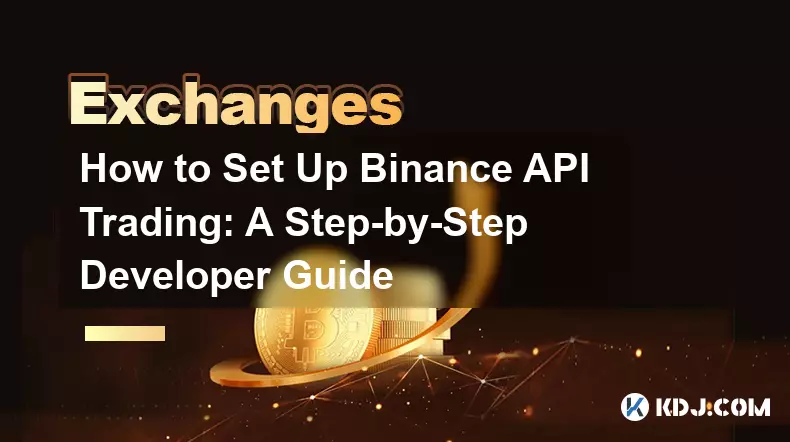
How to Set Up Binance API Trading: A Step-by-Step Developer Guide
Bitcoin’s 30-day realized profit/loss ratio dropped below 0.85, signaling a market-wide shift from trading to long-term accumulation—reflecting growing institutional holding and reduced speculative pressure.
Jul 08, 2026 at 11:39 pm
Market Volatility Patterns
1. Bitcoin’s price movements often reflect macroeconomic signals such as Federal Reserve interest rate decisions and inflation data releases.
2. Altcoin valuations frequently decouple from BTC during periods of low liquidity, leading to exaggerated swings in tokens like SOL and AVAX.
3. Exchange-traded fund inflows have introduced new institutional participation, altering traditional correlation structures between crypto assets and equities.
4. Whale wallet activity—tracked via on-chain analytics—has shown consistent timing alignment with sharp directional shifts across major trading pairs.
5. Stablecoin supply dynamics, particularly USDT and USDC issuance on Ethereum and Tron, serve as real-time indicators of market sentiment before broader price action unfolds.
On-Chain Behavior Metrics
1. Active addresses on Ethereum rose by 37% during the Q2 2024 memecoin surge, despite flat transaction fee revenue, suggesting speculative address proliferation.
2. The 30-day realized profit/loss ratio for BTC holders dropped below 0.85, signaling a shift toward accumulation rather than short-term trading.
3. Smart contract deployments surged over 220% on Base chain following its mainnet upgrade, with most contracts related to yield wrappers and tokenized real-world assets.
4. Miner outflows to exchanges spiked 68% in early July, coinciding with hash rate adjustments across multiple PoW networks including BTC and LTC.
5. NFT marketplace volume declined 41% quarter-on-quarter, while floor prices for blue-chip collections remained stable due to concentrated ownership patterns.
Regulatory Enforcement Trends
1. The SEC filed amended complaints against two major centralized exchanges citing unregistered securities offerings involving over 20 native tokens.
2. Japan’s FSA issued formal warnings to six offshore platforms operating without registration, targeting marketing practices aimed at Japanese retail investors.
3. EU’s MiCA framework entered enforcement phase for stablecoin issuers, requiring full reserve audits and quarterly public disclosures starting August 2024.
4. U.S. state-level actions intensified, with Texas and Wyoming introducing licensing pathways specifically for DeFi protocol operators engaging in custody or lending functions.
5. Cross-border coordination increased among financial intelligence units, resulting in shared blockchain tracing protocols used in three high-profile money laundering investigations.
Infrastructure Layer Developments
1. Rollup transaction throughput on Arbitrum One exceeded 4,200 TPS during peak memecoin trading hours, surpassing Ethereum L1 capacity by more than 12x.
2. Ethereum’s Pectra upgrade activated EIP-7685, enabling standardized deposit receipts that now underpin over 65% of staking derivatives on Coinbase and Kraken.
3. Zero-knowledge proof generation time decreased by 43% across zkSync and Starknet after adoption of new GPU-accelerated proving stacks.
4. Decentralized physical infrastructure networks reported 19% growth in node count, with bandwidth provisioning now supporting live video streaming use cases on Theta and Livepeer.
5. Interoperability bridges experienced 11 critical incidents in H1 2024, prompting coordinated security audits across LayerZero, Wormhole, and CCIP implementations.
Common Questions
Q: What determines whether a token is classified as a security under current U.S. regulatory interpretation?A: The Howey Test remains central—focusing on whether purchasers reasonably expect profits derived solely from the efforts of others, regardless of token utility claims or whitepaper language.
Q: How do decentralized exchanges handle KYC requirements when operating across jurisdictions?A: Most DEXs avoid direct KYC collection but comply indirectly through wallet screening tools, OFAC-listed address blocking, and integration with regulated fiat on-ramps that enforce identity verification.
Q: Why do some stablecoins maintain parity while others deviate significantly during market stress?A: Parity stability correlates strongly with reserve composition transparency, audit frequency, and jurisdictional backing—USDC and DAI exhibit tighter pegs due to diversified reserves and open-source attestation frameworks.
Q: Can on-chain data reliably predict short-term price direction?A: On-chain metrics show strong correlation with medium-term trends but lack predictive power for intraday moves; they function best as confirmation tools alongside order book depth and options skew analysis.
Disclaimer:info@kdj.com
The information provided is not trading advice. kdj.com does not assume any responsibility for any investments made based on the information provided in this article. Cryptocurrencies are highly volatile and it is highly recommended that you invest with caution after thorough research!
If you believe that the content used on this website infringes your copyright, please contact us immediately (info@kdj.com) and we will delete it promptly.






- Bitcoin, eCash Fork, and Airdrop Dynamics: A Deep Dive into Crypto's Latest Controversies
- 2026-05-03 12:55:01
- Consensus 2026 Miami: Web3, Blockchain, Cryptocurrency, NFTs, Metaverse, Conference, May 5th — Where Wall Street Meets the Digital Frontier
- 2026-05-02 12:45:01
- Fed Holds Rates Steady, Triggering Bitcoin Price Drop Amidst Geopolitical Tensions
- 2026-05-01 06:45:01
- Bitcoin Miners Electrify the Grid: Ohio Gas Plant Acquisition Powers Up a New Era for Digital Gold
- 2026-05-01 00:45:01
- MegaETH's MEGA Token Hits the Big Apple: Setting New Performance Benchmarks for Real-Time Blockchain
- 2026-05-01 00:55:01
- Solana's Slippery Slope: Price Prediction Points to Resistance Loss and Potential Further Drops
- 2026-05-01 06:45:01
Related knowledge
What Is Binance API Trading? Is It Safe to Use?
Jul 09,2026 at 04:00am
What Is Binance API Trading?1. Binance API trading refers to the programmatic interaction with Binance’s exchange infrastructure through its publicly ...
What Does Negative Funding Rate Mean on Bybit?
Jul 09,2026 at 04:20am
Negative Funding Rate Mechanics1. A negative funding rate emerges when the perpetual contract price trades persistently below the spot index price, in...
Why Did Binance Futures Funding Rate Become Negative?
Jul 09,2026 at 02:59am
Funding Rate Mechanics in Perpetual Contracts1. Funding rate serves as a price anchoring mechanism between perpetual futures and spot index prices. 2....
How to Pass Bybit KYC Verification Successfully?
Jul 09,2026 at 01:20am
Document Preparation Essentials1. Upload only original, unaltered identity documents—passport, national ID card, or driver’s license—with all four cor...
Why Did Binance Close My Futures Position Automatically?
Jul 09,2026 at 03:39am
Forced Liquidation Triggers1. When the margin ratio falls below the maintenance threshold, Binance initiates automatic position closure to prevent neg...
What Is MEXC Futures Funding Rate? How Is It Calculated?
Jul 09,2026 at 01:40am
Understanding MEXC Futures Funding Rate1. The funding rate on MEXC is a periodic payment mechanism applied to perpetual futures contracts to anchor th...
What Is Binance API Trading? Is It Safe to Use?
Jul 09,2026 at 04:00am
What Is Binance API Trading?1. Binance API trading refers to the programmatic interaction with Binance’s exchange infrastructure through its publicly ...
What Does Negative Funding Rate Mean on Bybit?
Jul 09,2026 at 04:20am
Negative Funding Rate Mechanics1. A negative funding rate emerges when the perpetual contract price trades persistently below the spot index price, in...
Why Did Binance Futures Funding Rate Become Negative?
Jul 09,2026 at 02:59am
Funding Rate Mechanics in Perpetual Contracts1. Funding rate serves as a price anchoring mechanism between perpetual futures and spot index prices. 2....
How to Pass Bybit KYC Verification Successfully?
Jul 09,2026 at 01:20am
Document Preparation Essentials1. Upload only original, unaltered identity documents—passport, national ID card, or driver’s license—with all four cor...
Why Did Binance Close My Futures Position Automatically?
Jul 09,2026 at 03:39am
Forced Liquidation Triggers1. When the margin ratio falls below the maintenance threshold, Binance initiates automatic position closure to prevent neg...
What Is MEXC Futures Funding Rate? How Is It Calculated?
Jul 09,2026 at 01:40am
Understanding MEXC Futures Funding Rate1. The funding rate on MEXC is a periodic payment mechanism applied to perpetual futures contracts to anchor th...
See all articles


