









 |
|
 |
|
 |
|
 |
|
 |
|
 |
|
 |
|
 |
|
 |
|
 |
|
 |
|
 |
|
 |
|
 |
|
 |
|
Articles d’actualité sur les crypto-monnaies
What are Bitcoin ATMs and why do they exist?
Jan 18, 2025 at 04:58 am
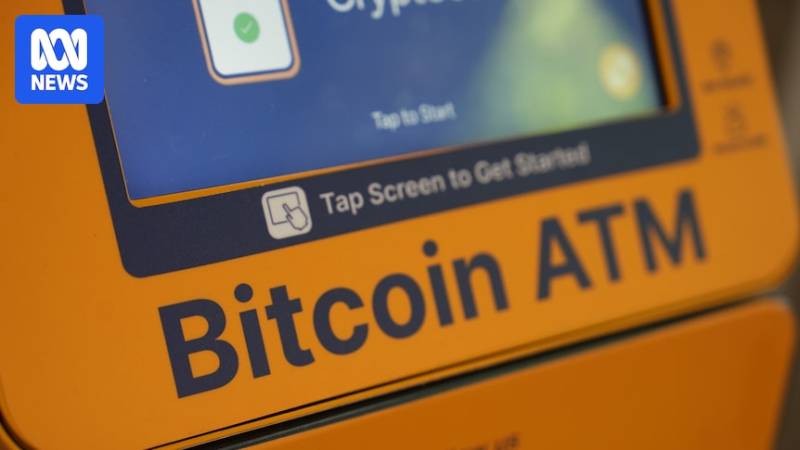
The Canberra region boasts an impressive network of approximately 39 cryptocurrency ATMs, catering to the growing demand for digital currencies. However, for locals who are yet to engage with cryptos, the presence of these ATMs can be puzzling.
To shed light on the matter, let's delve into the world of cryptocurrencies and explore the purpose, functionality, and usage patterns of cryptocurrency ATMs in Canberra.
What are cryptocurrencies and why do crypto ATMs exist?
Cryptocurrencies, also known as cryptos, are digital tokens that facilitate direct payments between individuals through an online system. These decentralized currencies aim to eliminate the middleman role of banks in financial transactions.
When transferring crypto, thousands of computers worldwide verify the transfer instead of a single bank. Bought and sold on digital marketplaces called exchanges, cryptocurrencies don't have any intrinsic monetary value. Instead, their value fluctuates based on what people are willing to pay for them in the market on a given day.
Currently, Bitcoin is both the most popular crypto and the crypto with the highest monetary value, at about $150,000 per coin. So if the main purpose of crypto is to be digital, why do crypto ATMs exist, and are they useful?
Crypto ATMs were created as an alternative payment method to remove the middleman of banks through a de-centralised system. They serve the primary function of converting real money into digital money, or vice versa.
How do crypto ATMs work and what are the limitations?
To use a crypto ATM, a person must already have a crypto wallet that can generate a QR code. At a crypto ATM, the digital currency can be bought, sold, or both, but most only offer access to between five and 10 of the major cryptocurrencies — almost always including Bitcoin.
Selling cryptocurrency through a crypto ATM entails swapping it for its current market value in cash or with a debit card. You can also buy cryptocurrency with cash or a debit card at a crypto ATM.
However, it's important to note that taking money out from some crypto ATMs is taxable, and it's up to a user to remember and file. So while crypto ATMs offer a convenient way to convert fiat currency into crypto or vice versa, their usefulness depends on several factors, including the exchanges a person invests in and the availability of the sell function.
Are Canberrans using Bitcoin ATMs and is there a demand?
There is no tangible data on how many Australians are accessing the ATMs, however as of last July, according to YouGov, about 1.3 million NSW residents, 801,000 Victorians, 850,000 Queenslanders, 294,000 South Australians, and 462,000 WA residents said they currently owned crypto.
This indicates a substantial presence of crypto ownership in Canberra, suggesting a potential demand for crypto ATMs in the region. Moreover, the maximum cash limit for crypto ATMs in the Canberra region is typically $25,000, catering to a wide range of users.
But despite the convenience and accessibility offered by crypto ATMs, it's crucial to be aware of potential scams or illegal activities that might be linked to their use. For instance, cryptocurrency offers a method to launder money by turning it into digital currency, which can then be sold to obtain clean funds.
Every crypto transaction is recorded on a blockchain — essentially a publicly available, online ledger — so to make the dirty money truly clean, the crypto is put through a mixer service. These services mix cryptocurrency together from a number of different users, which obscures the transaction trails and makes it very difficult to trace the original source.
This process allows the user to withdraw the mixed crypto from the service, effectively laundering the original dirty money. While this might be the intended purpose, it's also illegal.
Ultimately, crypto ATMs serve as a convenient entry point into the world of cryptocurrencies, but it's essential to use them responsibly and be wary of any potential scams or illegal activities that might be linked to their use.
Clause de non-responsabilité:info@kdj.com
Les informations fournies ne constituent pas des conseils commerciaux. kdj.com n’assume aucune responsabilité pour les investissements effectués sur la base des informations fournies dans cet article. Les crypto-monnaies sont très volatiles et il est fortement recommandé d’investir avec prudence après une recherche approfondie!
Si vous pensez que le contenu utilisé sur ce site Web porte atteinte à vos droits d’auteur, veuillez nous contacter immédiatement (info@kdj.com) et nous le supprimerons dans les plus brefs délais.
-

- Bitwise Bitcoin, Pepeto et Pepe Record : une minute new-yorkaise sur la course sauvage de la crypto
- Oct 31, 2026 at 04:05 am
- Bitwise fixe un objectif audacieux en matière de Bitcoin, tandis que Pepeto, une pièce mème très utile, vise à dépasser son prédécesseur, Pepe, en proposant un échange sans frais. Les investisseurs envisagent de gros gains.
-
- Circle CCTP domine les ponts cryptographiques, le volume de l'USDC monte en flèche dans un paysage inter-chaînes en évolution
- Oct 30, 2026 at 07:55 pm
- Le CCTP de Circle est en tête des ponts cryptographiques avec un volume USDC de 3,33 milliards de dollars, surpassant ses concurrents et soulignant l'évolution vers des solutions inter-chaînes centrées sur les pièces stables.
-
- Le CIP-0113 de la Fondation Cardano propulse les titres tokenisés sous le feu des projecteurs en Suisse
- Oct 30, 2026 at 07:55 pm
- La Fondation Cardano rejoint le CMTA, plaçant sa norme CIP-0113 au premier plan des titres tokenisés suisses, permettant l'émission d'actions conforme et marquant une étape importante pour la blockchain dans le domaine financier.
-
- La Banque de Russie choisit NAUFOR comme premier SRO crypto, ouvrant la voie à une nouvelle ère pour les échanges
- Oct 30, 2026 at 07:55 pm
- La Banque de Russie a nommé NAUFOR comme premier organisme d'autorégulation du pays pour les échanges cryptographiques, marquant une étape importante dans la mise en œuvre du cadre d'actifs numériques de la Russie.
-
- Ripple et World Liberty Financial unissent leurs forces à Tether et Circle pour geler les fonds au milieu des inquiétudes liées au piratage de Binance
- Oct 30, 2026 at 07:55 pm
- Un effort coordonné des principaux émetteurs de pièces stables, dont Ripple et World Liberty Financial, pour geler les actifs liés à un piratage présumé de Binance met en évidence la coopération croissante entre les entreprises dans la lutte contre la criminalité cryptographique.
-
- PEPE Memecoin : Binance Hacker Dump vs Whale Purchase – Un tour de montagnes russes
- Oct 30, 2026 at 07:55 pm
- PEPE memecoin navigue sur un marché turbulent alors qu'un pirate informatique de Binance déverse des milliards, tandis qu'une baleine légendaire effectue un achat stratégique, déclenchant d'intenses spéculations sur le marché.
-
- Le jeton MORPHO plonge : décodage du prix de Morpho en baisse dans un contexte de nervosité plus large du marché
- Oct 30, 2026 at 11:55 am
- Le jeton Morpho (MORPHO) a connu une baisse de 7,78 %, atteignant 2,01 $, principalement en raison d'un marché de cryptographie prudent plutôt que de problèmes spécifiques au protocole, les transactions de lavage brouillant les mesures de volume.
-
- Quantum Leap : Ethereum L2 BB84 redéfinit la sécurité Web3 avec des transactions et des clés de session sans signature
- Oct 30, 2026 at 04:05 am
- BB84, un Ethereum Layer 2, est le pionnier d'une approche sans signature des transactions utilisant des chaînes de hachage, luttant contre les menaces quantiques et améliorant l'expérience utilisateur en réduisant les frais de gaz et en rationalisant les interactions avec les clés de session.
-
- Finastra CTO tire la sonnette d'alarme sur les escroqueries basées sur l'IA : la détection des escroqueries basées sur l'IA nécessite un processus plutôt que la perfection
- Oct 30, 2026 at 04:05 am
- Mike Stawchansky, directeur technique de Finastra, souligne la sophistication croissante des escroqueries basées sur l'IA et souligne la nécessité de disposer de processus robustes plutôt que d'outils de détection pour les combattre.


