





![Schwarzer Donnerstag! Der Halbleiterindex fiel um fast 7 %, Bitcoin fiel einmal unter 81.000 und Spot-ETFs verzeichneten einen Nettoabfluss von 635 Millionen US-Dollar [Vic TALK Issue 1830]](/uploads/2026/10/23/cryptocurrencies-news/videos/origin_6adb210210914_image_500_375.webp "Schwarzer Donnerstag! Der Halbleiterindex fiel um fast 7 %, Bitcoin fiel einmal unter 81.000 und Spot-ETFs verzeichneten einen Nettoabfluss von 635 Millionen US-Dollar [Vic TALK Issue 1830]")






 |
|
 |
|
 |
|
 |
|
 |
|
 |
|
 |
|
 |
|
 |
|
 |
|
 |
|
 |
|
 |
|
 |
|
 |
|
Nachrichtenartikel zu Kryptowährungen
A dramatic turn of events took place that may delay one of the most important digital asset bills
May 04, 2025 at 02:20 pm
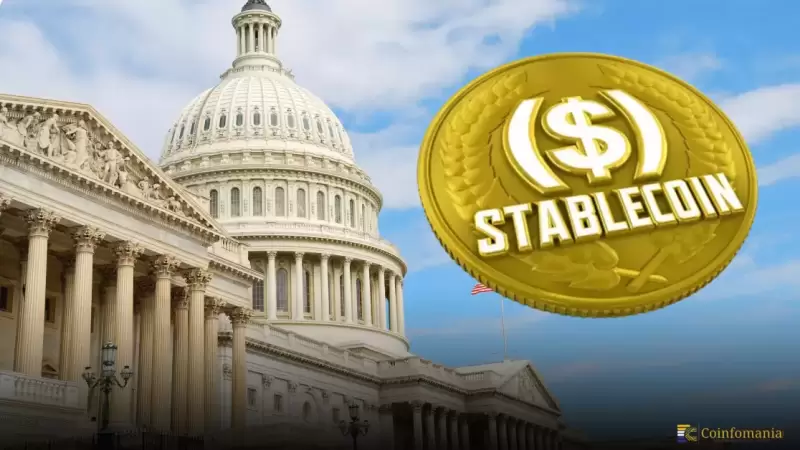
A dramatic turn of events took place that may delay one of the most important digital asset bills in recent memory. A coalition of nine Senate Democrats has announced their disagreement with the current version of the Republican-led stablecoin bill. This reversal comes just days before the Senate is set to vote on the measure, casting uncertainty over the bill’s fate.
This has resulted in a shaken-up political scenario and U.S. crypto regulations.
? JUST IN: 9 Senate Dems (6 of whom are members of Senate Banking Cmte.) signal new opposition to the GENIUS Act (Senate stablecoin bill).
The group says they are “unable to vote for cloture should the current version of the bill come to the floor.”https://t.co/u7z453L72p
— Ben White (@BenSWhite7) May 3, 2025
This disagreement took place on May 3, 2025, where the bill was spearheaded by Senator Bill Hagerty. He aims to create the first-ever regulatory framework for stablecoins. Stablecoins are digital currencies that are tied to fiat currencies like the U.S. dollar.
While the legislation cleared the Senate Banking Committee in March with some bipartisan backing. Recent statements from Democrats suggest that earlier support has now crumbled. If the bill is not revised significantly.
Democratic Support Wavers
This opposition to the Senate stablecoin bill was led by Sen.Ruben Gallego, who has previously voted for the bill during committee deliberations. It was co-signed by 8 other Senate Democrats: Mark Warner. Lisa Blunt Rochester, Andy Kim, Raphael Warnock, Catherine Cortez Masto, Ben Ray Lujan, John Hickenlooper, and Adam Schiff. Among these nine, four of them have initially supported the bill during its early stages.
Notably, 4 of the signatories (Sens. Rochester, Warner, Kim, and Gallego) previously voted to advance the bill through the Senate Banking Committee in March, but now say they won’t support the bill on the floor without changes.
Their collective message gave a clear indication that they would not be able to vote for cloture unless the bill underwent a major revision and changes. This statement alone could derail the legislation, which requires at least 60 votes in the Senate to overcome a tactical delay.
With only slim Republican margins and increasing Democratic hesitation. Reaching that threshold has suddenly become more complex.
Key Issues Raised
The senators highlighted the need for more robust safeguards in the bill. Their concerns include insufficient anti-money laundering provisions. A lack of strong oversight over foreign stablecoin issuers and the absence of strict enforcement. They also highlighted concerns related to broader national security and the importance of ensuring accountability among stablecoin operators.
They mentioned that there is a need for stronger protections. And they cannot pass and support the bill that leaves the financial system vulnerable. The legislators stressed that they remain open to compromise, noting that they are eager to continue working with colleagues to address the outlined shortcomings.
Trump Family’s Crypto Links Add Pressure
The U.S. crypto regulation atmosphere surrounding digital assets has grown more charged in recent months. Particularly as a member of the Trump family depends on their involvement in the crypto industry. A new stablecoin venture backed by the former president’s son has raised alarms among Democrats. Those who fear potential conflicts of interest and political bias.
While the Republic lawmakers hoped that the recent amendment to the bill was introduced specifically to address the Democratic concerns. These concerns would smooth the path for bipartisan approval; the latest opposition suggests those efforts fall short. Instead, the Democrats now appear poised to use their leverage to extract further concessions.
Notable Absences and GOP Response
Interestingly, two of the Democratic senators who are co-sponsoring the bill, Kirsten Gillibrand and Angela Alsobrooks, did not sign the opposition statement. Their continued support may provide a potential path forward if a new amendment is introduced that can rebuild a bipartisan coalition.
In response, Sen. Hagerty defended the bill and stated its broader vision. “We must advance legislation that enshrines American leadership in the digital asset space and protects the US dollar for centuries to come,” Hagerty said. “That time is now.”
Overall, the next procedural vote on the bill could come as early as next week. Whether Democrats and Republicans can strike a new deal may determine the immediate future of the stablecoin bill and U.S. crypto regulation.
Haftungsausschluss:info@kdj.com
Die bereitgestellten Informationen stellen keine Handelsberatung dar. kdj.com übernimmt keine Verantwortung für Investitionen, die auf der Grundlage der in diesem Artikel bereitgestellten Informationen getätigt werden. Kryptowährungen sind sehr volatil und es wird dringend empfohlen, nach gründlicher Recherche mit Vorsicht zu investieren!
Wenn Sie glauben, dass der auf dieser Website verwendete Inhalt Ihr Urheberrecht verletzt, kontaktieren Sie uns bitte umgehend (info@kdj.com) und wir werden ihn umgehend löschen.
-

- Kaspas Netzwerkdaten übertreffen Preisprobleme: Eine Analyse von Krypto-Assets
- Oct 24, 2026 at 04:05 am
- Trotz Marktunruhen zeigt die Netzwerkaktivität von Kaspa, gemessen am Transaktionsvolumen, eine bemerkenswerte Widerstandsfähigkeit, was zu einem tieferen Blick auf die Grundlagen seiner Krypto-Assets führt.
-
- Ripple Swell 2026 beleuchtet die Einführung von BlackRock Digital Assets und IWF-Stablecoins
- Oct 24, 2026 at 12:05 am
- Ripple Swell 2026 versammelt führende Finanzexperten, um über Strategien für digitale Vermögenswerte und die Einführung von Stablecoins zu diskutieren. Dabei treten wichtige Redner von BlackRock und dem IWF auf und läuten eine neue Ära für das institutionelle Engagement im Kryptobereich ein.
-
- Behauptungen über Hackerangriffe an der indischen Börse: CoinDCX bestreitet verdächtige Abflüsse in Höhe von 16 Millionen US-Dollar im Rahmen einer On-Chain-Prüfung
- Oct 23, 2026 at 08:05 pm
- Indiens größte Krypto-Börse, CoinDCX, ist in Kontroversen verwickelt, da Blockchain-Ermittler verdächtige Abflüsse in Höhe von 16 Millionen US-Dollar melden, was eine hitzige Debatte über einen möglichen indischen Börsen-Hack und frühere Verstöße auslöst.
-
- Bitcoin steht vor makroökonomischem Gegenwind, da der Brent-Rohölpreis stabil über 100 US-Dollar bleibt und Öl- und Bitcoin-bezogene Dynamiken auf dem Prüfstand stehen
- Oct 23, 2026 at 04:09 pm
- Der Aufwärtsdynamik von Bitcoin steht ein anhaltender Gegenwind gegenüber, da Brent-Rohöl über 100 US-Dollar bleibt, was auf makroökonomische Spannungen hindeutet.
-
- HSBC RedCoin befeuert Hongkongs digitale Zahlungen: Eine neue Ära für HKD-Stablecoins?
- Oct 23, 2026 at 04:05 pm
- HSBC RedCoin ist jetzt auf PayMe verfügbar und bietet Stablecoin-Zahlungen in Hongkong-Dollar an Millionen von Menschen an, was einen entscheidenden Moment für die digitale Finanzierung in der Region darstellt.
-
- KI-Krypto-Hacking: Mehr Hype als Schaden?
- Oct 23, 2026 at 12:05 pm
- Binance-Mitbegründer CZ argumentiert, dass die Befürchtungen vor KI-gesteuertem Krypto-Hacking übertrieben seien, und behauptet, dass die traditionelle Bank- und Internet-Infrastruktur mit vergleichbaren, wenn nicht sogar größeren kryptografischen Schwachstellen konfrontiert sei.
-
- Südkoreas Krypto-Gesetz schreitet voran, Bybit sichert sich Dubai-Lizenz und Bitcoin-ETF-Zuflüsse erreichen neue Höchststände
- Oct 23, 2026 at 11:55 am
- Südkoreas Krypto-Gesetz schreitet voran, Bybit erhält eine Dubai-Lizenz und Bitcoin-ETFs verzeichnen massive Zuflüsse, was auf große Veränderungen in der Krypto-Landschaft hindeutet.
-
- Bybit sichert sich bahnbrechende VARA-Lizenz in Dubai: ein Game-Changer für die Krypto-Austauschlandschaft
- Oct 23, 2026 at 11:45 am
- Die vollständige VASP-Lizenz von Bybit in Dubai stellt einen bedeutenden Schritt dar, da sie allen Anlegertypen regulierten Spothandel bietet und die Voraussetzungen für eine zukünftige Expansion der Derivate im dynamischen Kryptomarkt des Emirats schafft.
-
- CZ warnt Krypto-Benutzer: PHP-Schwachstellen lösen globales Sicherheitsproblem aus, Krypto-Firmen sind in höchster Alarmbereitschaft
- Oct 23, 2026 at 12:05 am
- Binance-Gründer CZ warnt Krypto-Benutzer eindringlich, da kritische PHP-Schwachstellen (CVE-2026-109618, CVE-2026-109619) weltweit Millionen von Exploit-Versuchen auslösen, schnelle Patches erfordern und in der gesamten digitalen Asset-Landschaft Bedenken hervorrufen.


