












 |
|
 |
|
 |
|
 |
|
 |
|
 |
|
 |
|
 |
|
 |
|
 |
|
 |
|
 |
|
 |
|
 |
|
 |
|
President Donald Trump announced Sunday he's ordered his administration to cease production of the 1-cent coin, whose buying power is long past its prime.
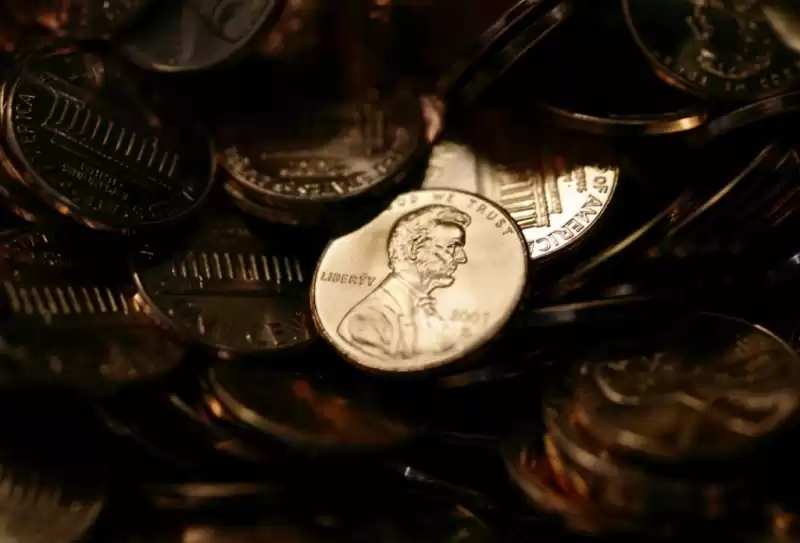
President Donald Trump announced Sunday he’s ordered his administration to cease production of the 1-cent coin, whose buying power is long past its prime.
The lowly penny, the forgotten mainstay of coin jars and car cupholders everywhere, may soon be no more.
Advocates for ditching the penny cite its high production cost — currently almost 4 cents per penny, according to the U.S. Mint — and limited utility. Fans of the penny cite its usefulness in charity drives and relative bargain in production costs compared with the nickel, which costs almost 14 cents to mint.
Trump’s surprise order comes after decades of unsuccessful efforts to pitch the penny.
“Only tradition explains our stubborn attachment to the penny. But sometimes traditions get ridiculous,” the Farmers’ Almanac said in its 1989 edition.
Here’s a look at some questions surrounding Trump’s order.
Can Trump really order the Treasury to stop minting pennies without Congress’ approval?
Yes, according to legal scholar Laurence H. Tribe, the Carl M. Loeb University Professor of Constitutional Law Emeritus at Harvard University.
U.S. code gives the Treasury Secretary the authority to mint and issue coins “in amounts the secretary decides are necessary to meet the needs of the United States.”
If Treasury Secretary Scott Bessent decides the amount necessary for the penny is zero, he’s within his legal rights, Tribe said.
“Unlike a lot of what the new administration has been doing pursuant to the flood of executive orders since Jan. 20, this action seems to me entirely lawful and fully constitutional,” Tribe said, referring to the aggressive executive action Trump’s taken on other issues since taking office.
Congress, which dictates currency specifications like the size and metal content of coins, could make Trump’s order permanent through law. But past congressional efforts to ditch the penny have failed.
Pennies are mostly made of zinc, and the American zinc lobby has been a major opponent to suggestions that the penny be eliminated.
How many pennies are in circulation?
It depends on what you mean by circulation.
Pennies are the most popular coin made by the U.S. Mint, which reported making 3.2 billion of them last year. That’s more than half of all the new coins it made last year.
MIT professor Jeff Gore, who founded Citizens to Retire the Penny, said coins are supposed to stay in circulation for about 30 years and that in the last three decades the U.S. Mint has made about 250 billion pennies.
But, he says, “because nobody wants to use pennies, they fall out of active circulation much faster than other coins.”
If pennies sit in drawer for a decade, Gore asks, “Does that qualify as being in circulation?”
Will Americans miss pennies?
The experience in other countries suggests no.
Related Articles
Canada started phasing out its penny a dozen years ago and urged store owners to round prices to the nearest nickel for cash transactions. Electronic purchases were still billed to the nearest cent. The move came after New Zealand, Australia, the Netherlands, and others dropped their lowest-denomination coins.
After dropping the penny or its equivalent, those countries have not looked back.
What comes next?
Trump’s order, which he announced in a social media post as he was departing New Orleans after watching the first half of the Super Bowl, was the latest in his administration’s rapid-fire efforts to cut government costs.
“Let’s rip the waste out of our great nation’s budget, even if it’s a penny at a time,” Trump wrote in his post, which was light on details about plans for a post-penny future.
After Canada stopped minting new pennies, it began recycling them for their “valuable” copper and zinc, according to a 2022 report from the Canadian Mint.
Disclaimer:info@kdj.com
The information provided is not trading advice. kdj.com does not assume any responsibility for any investments made based on the information provided in this article. Cryptocurrencies are highly volatile and it is highly recommended that you invest with caution after thorough research!
If you believe that the content used on this website infringes your copyright, please contact us immediately (info@kdj.com) and we will delete it promptly.
-

- Bybit Card Unlocks Crypto-Paid Airport Lounge Access, Elevating Travel Experience for European Users
- Nov 18, 2026 at 08:05 am
- Bybit Card holders can now purchase airport lounge passes directly in-app using cryptocurrencies, enhancing travel convenience for users within the EEA, leveraging Bybit EU's MiCA authorization.
-
- Ethereum Futures Market Sees Significant Dip as Open Interest Plummets; Price Predictions Remain Divided
- Nov 18, 2026 at 08:05 am
- Ethereum's futures market is experiencing a notable cooldown, with open interest hitting multi-month lows. This analysis delves into the implications for ETH price predictions amidst evolving market dynamics.
-
- S&P Global Ratings Sounds Alarm: Blockchain Hacking Losses & Governance Failures Threaten Institutional Adoption
- Nov 18, 2026 at 08:05 am
- S&P Global Ratings highlights persistent blockchain hacking losses, largely due to governance failures, as a major hurdle for institutional adoption of digital assets. New on-chain risk assessments aim to boost confidence.
-
-
-
-
- Trezor Faces Third Partner Data Breach This Year: Customer Data, Partner Breach, and 3rd Party Breach Concerns Mount
- Nov 17, 2026 at 12:05 pm
- Trezor customer data, partner breach, and 3rd party breach incidents highlight significant risks for crypto holders. A recent breach at shipping partner Skladon exposed 27,000 orders, following previous incidents.
-
-


