









 |
|
 |
|
 |
|
 |
|
 |
|
 |
|
 |
|
 |
|
 |
|
 |
|
 |
|
 |
|
 |
|
 |
|
 |
|
Cryptocurrency News Articles
Bitcoin Correlation with Tech Stocks Soars Amid Market Optimism
May 18, 2024 at 03:05 pm
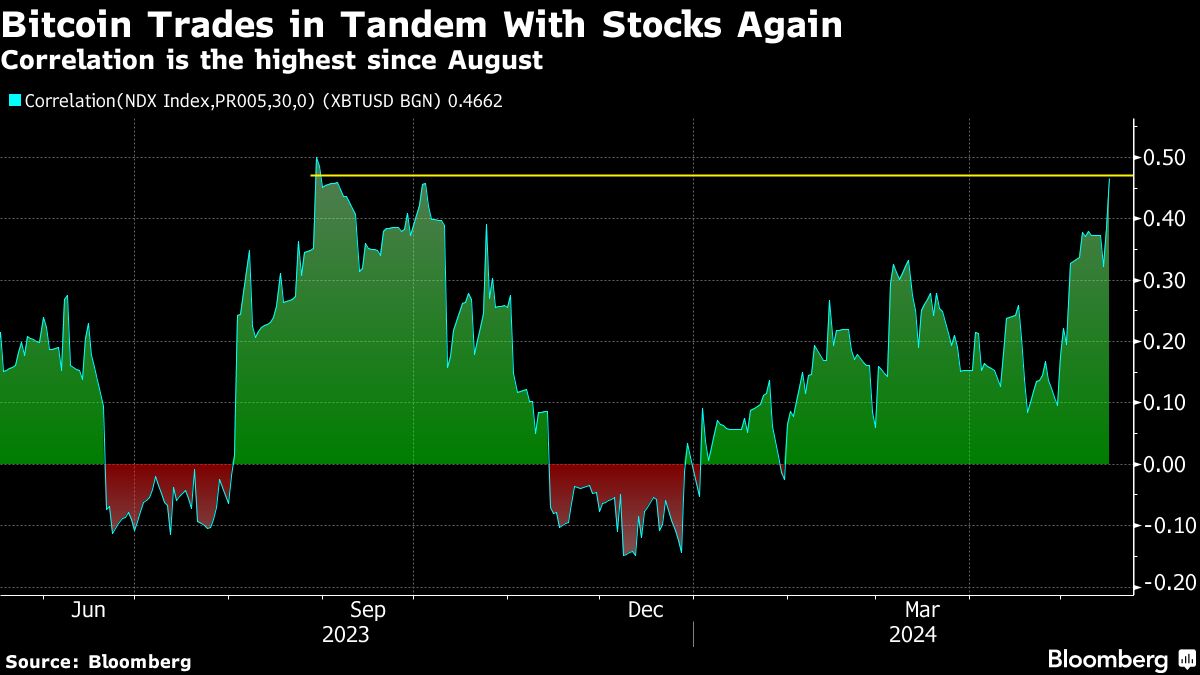
As the Federal Reserve's final tightening cycle concludes, advocates now see Bitcoin as akin to high-growth assets like technology stocks, with its correlation coefficient to the Nasdaq 100 index recently reaching its highest since August. This shift in perception stems from the token's increasing correlation to tech equities and its refocus as a growth asset representing community value, highlighting the potential influence of a potential interest rate reduction on the cryptocurrency.
Bitcoin's Correlation with Tech Stocks Intensifies Amidst Market Optimism
Bitcoin, the foremost cryptocurrency, has experienced a notable shift in its market behavior, aligning more closely with high-growth tech stocks. This correlation has intensified in recent times, particularly following the Federal Reserve's tightening cycle and the subsequent expectations of a potential reversal in interest rate hikes.
Correlation with Nasdaq 100 Index
The correlation between Bitcoin and the tech-heavy Nasdaq 100 index has reached its highest level since August 2022, with a 90-day correlation coefficient of 0.46. This indicates a significant degree of synchronous movement between the two assets. During the early stages of the Fed's interest rate increases, the correlation soared to over 0.8, reflecting the sensitivity of Bitcoin to macroeconomic conditions.
Shift from Speculative Investment to Growth Asset
Advocates of Bitcoin now suggest that its characteristics resemble those of high-growth tech stocks rather than speculative investments. Joshua Lim, co-founder of trading firm Arbelos Markets, highlights the perception of Bitcoin as a "growth asset" due to its underlying technology and potential as a value transfer mechanism.
Historical Narratives and Volatility
Historically, Bitcoin proponents have emphasized its uncorrelated nature, claiming it is independent of government influence and external market forces. However, the recent correlation with tech stocks challenges this narrative, particularly in light of its significant volatility over the years. The establishment of Bitcoin exchange-traded funds (ETFs) in the United States has introduced a new class of investors to the token.
Correlation with S&P 500 Index
Toby Winterflood, chief product officer of CCData, observes the recent positive correlation between Bitcoin and the S&P 500 index, which is a deviation from its historical perception as a store of value. He attributes the surge in Bitcoin's value to the maturity of Bitcoin ETFs, which have been among the fastest-growing in history.
ETFs and Market Sentiment
Since the launch of Bitcoin ETFs in January 2023, the token has experienced a considerable increase in value, reaching a record high of nearly $74,000 in March. However, the demand for these investment vehicles has waned, leading to a subsequent decline in the token's price. Nonetheless, Bitcoin retains a significant presence in the market, with a positive performance relative to the Nasdaq 100.
Macroeconomic Factors and Inflation
The broader macroeconomic environment, particularly the Federal Reserve's monetary policy, continues to influence Bitcoin's trajectory. Recent data indicating a slight easing of underlying inflation in the United States has raised speculation that the Fed may consider lowering interest rates.
Fed Policy and Risk Appetite
Market participants anticipate that a potential shift in Fed policy towards rate cuts could have a positive impact on risk assets, including Bitcoin. However, Fed officials have indicated a cautious approach, seeking further evidence of easing inflation before making any significant changes.
Bitcoin's Resilience and Future Trajectory
Despite the significant correlation with tech stocks, CCData's analysis suggests that Bitcoin has maintained a level of stability and resilience since the launch of US ETFs. As the Federal Reserve navigates the complexities of monetary policy, the market will be closely monitoring Bitcoin's behavior to determine whether it will continue to mirror risky assets or evolve into a more traditional alternative asset.
Disclaimer:info@kdj.com
The information provided is not trading advice. kdj.com does not assume any responsibility for any investments made based on the information provided in this article. Cryptocurrencies are highly volatile and it is highly recommended that you invest with caution after thorough research!
If you believe that the content used on this website infringes your copyright, please contact us immediately (info@kdj.com) and we will delete it promptly.
-

- Navigating the Storm: Cryptocurrency Markets, Inflation Report, and Altcoin Performance Under the Microscope
- Oct 15, 2026 at 12:05 am
- Amidst a hot inflation report and shifting Fed policy, altcoin performance hangs in the balance, with liquidity and investor sentiment dictating the immediate future of digital assets.
-
-
-
-
- Anthropic's Dire Warning: AI Worms, Cryptographic Cracks, and the Looming Digital Threat
- Oct 14, 2026 at 11:45 am
- Anthropic warns of self-replicating 'AI worms' that could spread across devices, coupled with AI's potential to undermine crypto security, painting a picture of escalating digital risks.
-
-
-
- 2027 ASEAN SHOP Set to Revolutionize Retail in Southeast Asia, While Blur NFT Marketplace Fades
- Oct 14, 2026 at 04:09 am
- 2027 ASEAN SHOP gears up to be a pivotal event for smart retail in Southeast Asia, connecting innovators with a booming market, starkly contrasting with the recent shutdown of the Blur NFT marketplace.
-


