











 |
|
 |
|
 |
|
 |
|
 |
|
 |
|
 |
|
 |
|
 |
|
 |
|
 |
|
 |
|
 |
|
 |
|
 |
|
It's where internet culture meets economic psychology, and where the traditional concept of “rational investing” is tossed out the window
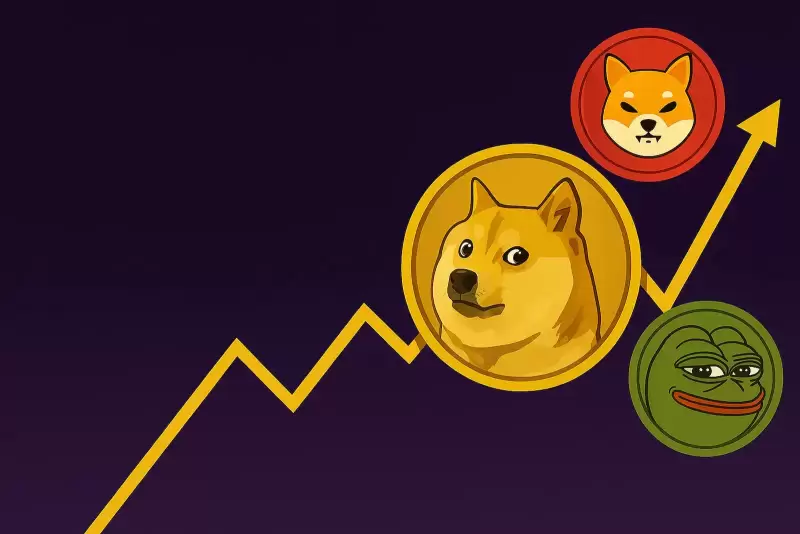
Let’s face it—finance has never been this entertaining. For decades, the world of investing was boxed in by terms like “market fundamentals,” “price-to-earnings ratios,” and “diversification strategies.” Then came meme coins—Dogecoin, Shiba Inu, PEPE—and they tore that box apart with a rocket emoji and a one-way ticket to the moon. But what’s really going on beneath the surface of this new wave of asset speculation?
Welcome to the world of Memeonomics. It’s where internet culture meets economic psychology, and where the traditional concept of “rational investing” is tossed out the window in favor of a community-driven, highly volatile, and deeply psychological journey through risk.
To understand meme coins, you have to understand the internet—and human nature.
Dogecoin started as a joke in 2013. Its logo was a Shiba Inu dog with Comic Sans text. There was no whitepaper, no team of Stanford grads pitching venture capitalists. Just vibes. And yet, Dogecoin went on to reach a market cap of over $80 billion in 2021. The punchline? The joke was on traditional finance.
The psychology behind meme coins is rooted in social validation and crowd behavior. When Reddit threads blow up and Elon Musk tweets rocket emojis, FOMO (Fear of Missing Out) becomes a powerful economic force. It’s not just about profits—it’s about belonging to something larger than yourself. A movement. A digital rebellion.
Let’s be real—buying meme coins isn’t like investing in index funds. It’s more like spinning a roulette wheel or betting on a wildcard poker hand. There’s risk, there’s drama, and there’s the promise of instant rewards. That’s why many compare trading meme coins to gambling.
Take PEPE coin, for example. It surged over 2000% within weeks of launching, driven entirely by hype and memes, not tech. No utility, no roadmap, just vibes. Investors (if we can call them that) weren’t looking at balance sheets—they were watching TikToks, checking Telegram groups, and riding the meme wave.
This high-stakes, high-reward energy is virtually identical to what you find in the online gambling world. Platforms like Razed, which operate on crypto, mirror this experience almost perfectly. Users don’t just gamble—they play. And just like meme coins, the entire experience is gamified.
One of the biggest psychological pulls of meme coins is gamification. You’re not just buying an asset—you’re leveling up. It’s the same dopamine loop seen in mobile games and slot machines: risk, suspense, reward.
Trading meme coins offers users a rollercoaster of emotions. You’re refreshing CoinMarketCap every five minutes, you’re deep in Discord chats analyzing candle patterns that mean absolutely nothing, and you’re hoping the next tweet from a billionaire will send your portfolio sky-high.
This behavioral loop is eerily similar to the experience of playing at a crypto casino. You deposit a few tokens, maybe Bitcoin or Ethereum, and you spin the digital reels. There’s anticipation, exhilaration, and yes—sometimes regret. But above all, there’s entertainment. And entertainment is a currency of its own in the meme coin economy.
While most traditional assets are evaluated based on fundamentals, meme coins rely on community strength. If enough people believe in it—or more accurately, if enough people believe others will believe in it—it can gain value.
Reddit, Twitter (X), Telegram, TikTok—these platforms are the new Wall Street floors for meme investors. It’s a game of narratives, memes, and movements. And that’s not necessarily a bad thing.
Look at how GameStop stock was memed into relevance. It’s proof that collective action, even fueled by humor and irony, can have very real market consequences.
This is the million-dollar question (or billion, depending on the day). Meme coins are notoriously volatile. The same crowd that pushes them to the moon can just as quickly move on to the next trend, leaving late adopters holding the bag.
But that doesn’t mean they’re going away. Like gambling, meme coins fulfill a psychological need. They offer an escape, a fantasy, and a shot at glory. They tap into the same risk-reward systems that casinos have leveraged for centuries.
Even major exchanges like Binance and Coinbase have begun listing meme coins, not because they believe in their fundamentals, but because they understand their audience.
And that brings us to a broader truth: the future of finance isn’t just about returns—it’s about experience.
Whether you’re tossing Dogecoin into your wallet or betting ETH on SpinBet’s roulette wheel, the core experience is the same: calculated risk, emotional thrill, and social belonging.
Memeonomics shows
Disclaimer:info@kdj.com
The information provided is not trading advice. kdj.com does not assume any responsibility for any investments made based on the information provided in this article. Cryptocurrencies are highly volatile and it is highly recommended that you invest with caution after thorough research!
If you believe that the content used on this website infringes your copyright, please contact us immediately (info@kdj.com) and we will delete it promptly.
-

-
-
-
-
-
- Cosmos Price Prediction: $ATOM Eyes Major Breakout Amidst Multi-Chain Momentum – IMP Levels Revealed!
- Sep 08, 2026 at 08:05 pm
- Cosmos's ATOM token is breaking out, fueled by its multi-chain vision. Key support at $1.608 is crucial for a potential push towards $1.806 and beyond, marking a critical moment for its future price.
-
- Solana's V1 Transaction Upgrade Unleashes ZK Proofs and Enhanced Transaction Capacity, Reshaping Blockchain Privacy and Scaling
- Sep 08, 2026 at 07:55 pm
- Solana's latest network upgrade, activating on September 9th, dramatically increases transaction capacity to 4,096 bytes. This expansion, coupled with the new v1 transaction format, paves the way for advanced cryptographic workloads, including zero-knowledge proofs, to drive unprecedented privacy and scaling solutions on the blockchain.
-
-
- Liquid Federation Recovers Majority of Stolen Bitcoin After Blockstream Patches Vulnerability, Speculation on 'White Hat' Motives
- Sep 08, 2026 at 12:05 pm
- Following a security incident where ~4,000 BTC was withdrawn from the Liquid Federation wallet, over 3,400 BTC has been returned. Blockstream announced patches to affected nodes, sparking discussions on the nature of the recovery.


