









 |
|
 |
|
 |
|
 |
|
 |
|
 |
|
 |
|
 |
|
 |
|
 |
|
 |
|
 |
|
 |
|
 |
|
 |
|
Cryptocurrency News Articles
Altcoins: The Ultimate Guide to Alternative Cryptocurrencies
Nov 05, 2024 at 10:25 pm
Altcoins, or alternative cryptocurrencies, have emerged to fill gaps and introduce new capabilities in the cryptocurrency space. Here's the ultimate guide to altcoins.
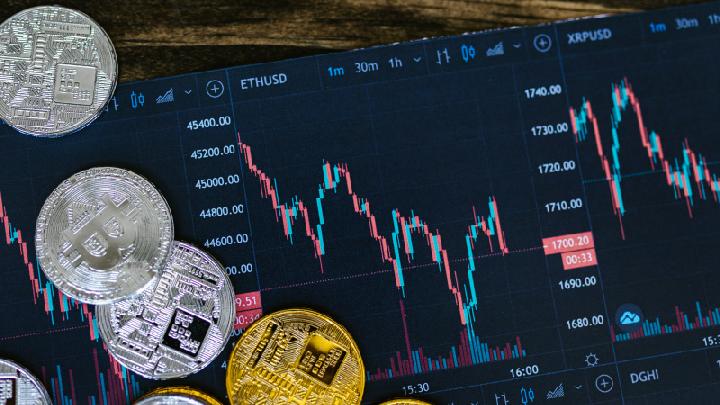
Bitcoin has been around since 2009, and in that time, it has spawned a whole new market for digital currencies. But what exactly are altcoins? And how do they differ from Bitcoin?
Altcoins are simply any cryptocurrency other than Bitcoin. They aim to provide alternatives to Bitcoin, offering diverse features and potential advantages.
Let's take a look at what altcoins are, taken from Investopedia and Business Insider.
What is an Altcoin?
Investopedia explains that the term “altcoin” is short for “alternative coin”. They basically serve as an alternative, including any cryptocurrency and token, to Bitcoin. However, some define altcoins as cryptocurrencies that are not Bitcoin and Ethereum.
The journey of altcoins began in 2011 with the introduction of Namecoin, the first altcoin to enter the market. According to Business Insider, Namecoin was created using the same blockchain engine and code as Bitcoin.
Following the emergence of Namecoin, a number of altcoins were released, including Ethereum, Chainlink, Aave, Stellar Lumens, Uniswap, PotCoin, and Litecoin.
Despite being collectively referred to as altcoins, these cryptocurrencies possess unique characteristics and serve distinct purposes. This is because, as Investopedia elaborates, most altcoins are designed with different visions.
They also use diverse consensus mechanisms to validate transactions, open new blocks, or simply distinguish themselves from Bitcoin (and Ethereum).
Differences Between Bitcoin and Altcoins
While Bitcoin remains the leader in the cryptocurrency space, altcoins have emerged to fill gaps and introduce new capabilities. Here are some major differences between Bitcoin and altcoins, as highlighted by CNBC and 101 Blockchains:
a. Purpose
Bitcoin, the pioneering cryptocurrency, was primarily designed as an alternative to traditional financial systems. It enables secure peer-to-peer transactions and anonymity.
In contrast, altcoins serve a diverse range of purposes. For instance, stablecoins are designed to minimize price volatility.
b. Technology
Bitcoin uses the Proof of Work (PoW) consensus algorithm to validate transactions and is powered by blockchain technology. In contrast, altcoins are built on different blockchain networks and can use different consensus algorithms, such as Proof of Stake and Proof of Authority.
c. Supply
Bitcoin, with its limited supply of 21 million coins, has established itself as a scarce digital asset. In contrast, the cryptocurrency market is teeming with thousands of altcoins, as reported by CNBC.
d. Popularity
Bitcoin is inarguably the most popular cryptocurrency, with a massive market capitalization of over US$1 trillion. Conversely, altcoins, as alternative digital currencies, are still striving to gain similar levels of market adoption and valuation.
Pros and Cons of Altcoins
Altcoins, while offering a diverse range of features and functionalities, come with their own set of advantages and drawbacks, depending on the currency and its intended purpose.
Pros of Altcoins:
Faster transaction speeds compared to Bitcoin
Lower transaction fees than Bitcoin
A wider range of use cases and applications than Bitcoin
Cons of Altcoins:
Can be more volatile than Bitcoin
Less liquidity than Bitcoin, making it harder to buy and sell quickly
May not be as widely accepted as Bitcoin
Types of Altcoins
Altcoins come in various forms, with each type offering distinct functions. Citing Investopedia, here are some of the primary categories of altcoins:
a. Stablecoins
The primary function of stablecoins is to reduce volatility by pegging their value to another asset. Tether’s USDT and USD Coin (USDC) are among the notable examples of stablecoins.
b. Payment Token
Payment tokens are used as currency to exchange value between parties. Bitcoin is a type of payment token since it serves the same function.
c. Utility Tokens
These altcoins grant users access to services or products within a network. Filecoin, for instance, allows users to purchase storage space on a decentralized network.
d. Meme Coins
As the name implies, meme coins like Dogecoin and Shiba Inu are inspired by internet memes or cultural phenomena. They gain popularity rapidly and are typically utilized for short-term purposes.
e. Security Tokens
Regulated by the Securities and Exchange Commission, security tokens represent fundraising efforts/ownership or tokenized assets that are built to act as securities.
f. Governance Tokens
Governance tokens are considered to be utility tokens, but they specifically function to allow holders certain rights within a blockchain, like voting for changes to protocols.
Editor's Choice: Top 7 Countries with the Highest Bitcoin Ownership
Click here to get the latest news updates from Tempo on Google News
Disclaimer:info@kdj.com
The information provided is not trading advice. kdj.com does not assume any responsibility for any investments made based on the information provided in this article. Cryptocurrencies are highly volatile and it is highly recommended that you invest with caution after thorough research!
If you believe that the content used on this website infringes your copyright, please contact us immediately (info@kdj.com) and we will delete it promptly.
-

- Starknet's Bold Leap: Eyeing Layer 1 Independence and Quantum-Resistant Cryptography by 2027
- Oct 15, 2026 at 07:55 am
- Starknet is exploring a monumental shift to an independent Layer 1 blockchain, with a futuristic 2027 target for quantum-resistant cryptography, marking a significant evolution in its architectural ambitions.
-
-
-
-
- Silver Price Prediction, Silver Analyst, Silver Market Trends: Experts Split on Metal's Next Move
- Oct 15, 2026 at 04:05 am
- Amidst fluctuating silver prices, analysts offer divergent predictions: some foresee a floor at $50, while others project a dramatic climb to $1,100 by 2030, highlighting the dynamic nature of silver market trends.
-
- CryptoQuant Insights: Is 'Uptober' Brewing a Cautious Bitcoin Optimism?
- Oct 15, 2026 at 04:05 am
- CryptoQuant's latest analysis suggests Bitcoin is forming a local bottom, driven by decreasing exchange reserves, stable whale holdings, and improving demand signals, hinting at cautious optimism for 'Uptober'.
-
- Navigating the Storm: Cryptocurrency Markets, Inflation Report, and Altcoin Performance Under the Microscope
- Oct 15, 2026 at 12:05 am
- Amidst a hot inflation report and shifting Fed policy, altcoin performance hangs in the balance, with liquidity and investor sentiment dictating the immediate future of digital assets.
-
-


