











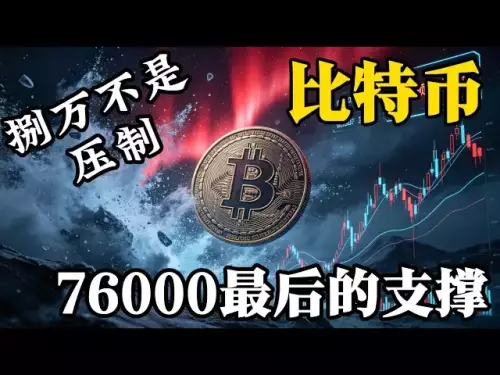


![There will be a violent washout of Bitcoin next. Don't buy the bottom too early. It won't stretch quickly in the short term. What you need to do now is to wait patiently for a good buying position, keep your bullets, and don't get hung up on it. When you buy the bottom, you will run out of bullets! Bitcoin market analysis [Issue 725]](/uploads/2026/08/23/cryptocurrencies-news/videos/origin_6a8afd33c749f_image_500_375.webp "There will be a violent washout of Bitcoin next. Don't buy the bottom too early. It won't stretch quickly in the short term. What you need to do now is to wait patiently for a good buying position, keep your bullets, and don't get hung up on it. When you buy the bottom, you will run out of bullets! Bitcoin market analysis [Issue 725]")






-
 bitcoin
 $77390.856017 USD
1.82% - ethereum
$2456.627593 USD
3.42% - tether
$0.999956 USD
0.00% - bnb
$699.463251 USD
2.55% - xrp
$1.480470 USD
2.68% - usd-coin
$1.000048 USD
0.00% - solana
$94.253862 USD
2.38% - tron
$0.344425 USD
0.70% - hyperliquid
$79.695030 USD
2.72% - dogecoin
$0.091914 USD
2.81% - zcash
$844.721786 USD
8.00% - chainlink
$11.522210 USD
3.50% - unus-sed-leo
$9.308855 USD
-1.85% - cardano
$0.219612 USD
2.36% - monero
$416.052091 USD
-3.62%











How to vet a crypto project team?
A strong, transparent team with verifiable expertise and active community engagement is crucial for a crypto project's long-term success.
Jul 24, 2025 at 01:00 pm
Understanding the Importance of the Team Behind a Crypto Project
In the world of cryptocurrency, the team behind a project is often the most critical factor in determining its long-term viability. Unlike traditional financial systems, crypto projects are often decentralized and rely heavily on the expertise and transparency of their creators. Therefore, vetting the team becomes a fundamental step for any investor or participant before committing resources. A strong team can steer a project toward success, while an anonymous or inexperienced group may signal potential red flags.
Researching Public Profiles and Backgrounds
One of the first steps in vetting a crypto team is reviewing the public profiles of its members. Platforms like LinkedIn, GitHub, and Twitter provide valuable insights into a team member's professional history and contributions to the blockchain space. Look for individuals with a proven track record in software development, cryptography, finance, or entrepreneurship. Be wary of vague or overly generic resumes that lack specific achievements or roles.
- Check if team members have contributed to other successful blockchain projects.
- Verify their educational background and any relevant certifications.
- Look for speaking engagements or published articles that showcase their expertise.
Analyzing Social Media and Community Engagement
Active and transparent communication with the community is a strong indicator of a legitimate and committed team. Follow the official social media accounts of the project and observe how frequently the team engages with users. Genuine teams often host AMAs (Ask Me Anything sessions), respond to concerns, and share updates about development progress.
- Review comments and questions from the community to gauge trust levels.
- Look for consistent updates on platforms like Telegram, Discord, and Reddit.
- Check for any negative sentiment or unresolved disputes that may point to credibility issues.
Validating Real-World Experience and Technical Skills
A crypto project requires deep technical knowledge, especially in areas like smart contract development, consensus mechanisms, and cybersecurity. Investors should look for evidence of technical contributions from the team, such as open-source code repositories on GitHub. The presence of well-documented, actively maintained code is a positive sign of a competent and transparent development team.
- Examine the frequency and quality of code commits.
- Assess whether the code is peer-reviewed or audited by third parties.
- Look for prior work in blockchain development or related fields.
Additionally, checking if team members have spoken at blockchain conferences or contributed to academic papers can further validate their expertise.
Scrutinizing the Whitepaper and Roadmap
The whitepaper and roadmap are critical tools for understanding the team’s vision and execution capability. A well-written whitepaper should clearly articulate the problem the project aims to solve, the technology it uses, and the team’s strategy for implementation. Vague or overly ambitious claims without technical backing may indicate a lack of genuine planning.
- Ensure the roadmap includes specific, time-bound milestones.
- Verify whether past milestones have been met as scheduled.
- Look for detailed explanations of tokenomics and use cases.
A team that updates the roadmap regularly and communicates delays transparently shows accountability and professionalism.
Checking for Red Flags and Due Diligence Tools
There are several red flags that investors should watch for when vetting a crypto team. Anonymous teams, lack of verifiable credentials, and unrealistic promises are common indicators of scams or poorly managed projects. Tools like CoinGecko, CoinMarketCap, and blockchain explorers can help verify token distribution, team token allocations, and contract audits.
- Use platforms like DappRadar to check the project’s activity and adoption.
- Review third-party audits from firms like CertiK or Hacken to assess security practices.
- Check forums and review sites for user feedback and expert opinions.
If a team refuses to disclose identities or avoids answering direct questions, it should raise serious concerns.
Conducting Reverse Image and Identity Checks
With the rise of fake team profiles, conducting reverse image searches on team photos is a crucial step. Tools like Google Images or TinEye can help detect whether the images used are stock photos or stolen from elsewhere. This kind of deception is common in rug pulls and scam projects, so investors must be vigilant.
- Perform reverse image searches on each team member’s profile picture.
- Verify LinkedIn and Twitter accounts for authenticity and activity.
- Cross-reference names with other online profiles to ensure consistency.
Frequently Asked Questions
What if the team remains anonymous?Some projects operate with anonymous teams for privacy or security reasons, especially in regions with strict regulations. However, anonymity should be accompanied by a strong track record, transparent development, and third-party audits to build trust.
How do I verify a team’s past projects?You can review GitHub repositories, search for their names in blockchain forums, and check blockchain explorers for wallet activity. Additionally, reaching out to communities where they may have participated can provide insights into their reputation.
Are team token allocations a concern?Yes, excessive token allocations to the team without vesting schedules can be a red flag. Investors should review tokenomics to ensure fair distribution and alignment with long-term project goals.
Can a new team still be trustworthy?Absolutely, new teams can be legitimate if they demonstrate competence, transparency, and a clear development plan. However, they must be held to the same scrutiny as established teams to avoid falling for hype-driven projects.
Disclaimer:info@kdj.com
The information provided is not trading advice. kdj.com does not assume any responsibility for any investments made based on the information provided in this article. Cryptocurrencies are highly volatile and it is highly recommended that you invest with caution after thorough research!
If you believe that the content used on this website infringes your copyright, please contact us immediately (info@kdj.com) and we will delete it promptly.






- Bitcoin, eCash Fork, and Airdrop Dynamics: A Deep Dive into Crypto's Latest Controversies
- 2026-05-03 12:55:01
- Consensus 2026 Miami: Web3, Blockchain, Cryptocurrency, NFTs, Metaverse, Conference, May 5th — Where Wall Street Meets the Digital Frontier
- 2026-05-02 12:45:01
- Fed Holds Rates Steady, Triggering Bitcoin Price Drop Amidst Geopolitical Tensions
- 2026-05-01 06:45:01
- Bitcoin Miners Electrify the Grid: Ohio Gas Plant Acquisition Powers Up a New Era for Digital Gold
- 2026-05-01 00:45:01
- MegaETH's MEGA Token Hits the Big Apple: Setting New Performance Benchmarks for Real-Time Blockchain
- 2026-05-01 00:55:01
- Solana's Slippery Slope: Price Prediction Points to Resistance Loss and Potential Further Drops
- 2026-05-01 06:45:01
Related knowledge
What Is Gas Fee in Crypto?
Aug 13,2026 at 03:20pm
Gas Fee Fundamentals1. Gas fee is the computational resource pricing mechanism embedded in blockchain protocols, particularly Ethereum and EVM-compati...
What Is a Crypto K-Line Chart?
Aug 14,2026 at 01:59am
Definition and Core Structure1. A crypto K-line chart is a visual representation of price movement over time for digital assets traded on cryptocurren...
How Do Crypto Exchanges Work?
Aug 13,2026 at 12:59pm
Order Matching Mechanisms1. Centralized exchanges rely on proprietary matching engines that process buy and sell orders in real time using price-time ...
What Is Crypto Transaction Fee? Why Are Network Fees Different?
Aug 12,2026 at 12:39pm
What Is a Crypto Transaction Fee?1. A crypto transaction fee is a small amount of cryptocurrency paid to miners or validators for processing and confi...
What Is Blockchain Confirmation? How Long Does a Transaction Take?
Aug 12,2026 at 05:00pm
What Is Blockchain Confirmation?1. Blockchain confirmation represents the collective validation by network participants that a transaction is legitima...
What Is Private Key in Crypto? Why Is It Important?
Aug 12,2026 at 05:20pm
Definition and Core Identity1. A private key is a cryptographically secure, randomly generated string of alphanumeric characters unique to each blockc...
What Is Gas Fee in Crypto?
Aug 13,2026 at 03:20pm
Gas Fee Fundamentals1. Gas fee is the computational resource pricing mechanism embedded in blockchain protocols, particularly Ethereum and EVM-compati...
What Is a Crypto K-Line Chart?
Aug 14,2026 at 01:59am
Definition and Core Structure1. A crypto K-line chart is a visual representation of price movement over time for digital assets traded on cryptocurren...
How Do Crypto Exchanges Work?
Aug 13,2026 at 12:59pm
Order Matching Mechanisms1. Centralized exchanges rely on proprietary matching engines that process buy and sell orders in real time using price-time ...
What Is Crypto Transaction Fee? Why Are Network Fees Different?
Aug 12,2026 at 12:39pm
What Is a Crypto Transaction Fee?1. A crypto transaction fee is a small amount of cryptocurrency paid to miners or validators for processing and confi...
What Is Blockchain Confirmation? How Long Does a Transaction Take?
Aug 12,2026 at 05:00pm
What Is Blockchain Confirmation?1. Blockchain confirmation represents the collective validation by network participants that a transaction is legitima...
What Is Private Key in Crypto? Why Is It Important?
Aug 12,2026 at 05:20pm
Definition and Core Identity1. A private key is a cryptographically secure, randomly generated string of alphanumeric characters unique to each blockc...
See all articles


