















![THIS IS THE HARDEST COIN TO GET [POLY DASH]](/uploads/2026/01/31/cryptocurrencies-news/videos/origin_697e0319ee56d_image_500_375.webp "THIS IS THE HARDEST COIN TO GET [POLY DASH]")








-
 bitcoin
 $87959.907984 USD
1.34% - ethereum
$2920.497338 USD
3.04% - tether
$0.999775 USD
0.00% - xrp
$2.237324 USD
8.12% - bnb
$860.243768 USD
0.90% - solana
$138.089498 USD
5.43% - usd-coin
$0.999807 USD
0.01% - tron
$0.272801 USD
-1.53% - dogecoin
$0.150904 USD
2.96% - cardano
$0.421635 USD
1.97% - hyperliquid
$32.152445 USD
2.23% - bitcoin-cash
$533.301069 USD
-1.94% - chainlink
$12.953417 USD
2.68% - unus-sed-leo
$9.535951 USD
0.73% - zcash
$521.483386 USD
-2.87%











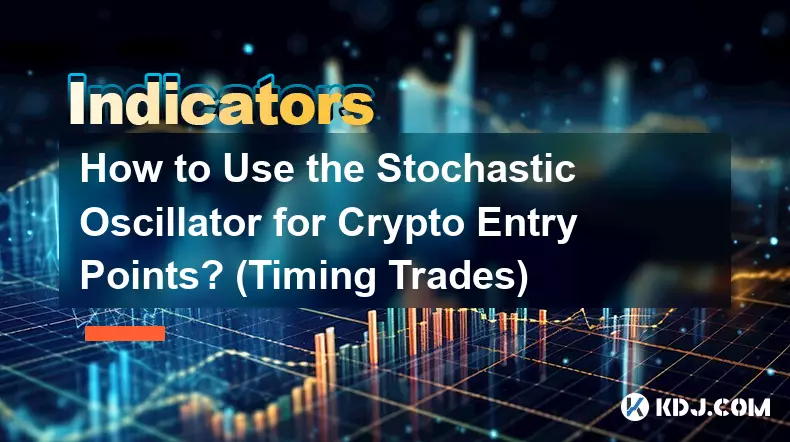
How to Use the Stochastic Oscillator for Crypto Entry Points? (Timing Trades)
The Stochastic Oscillator (%K and %D) identifies overbought (>80) and oversold (<20) conditions, with bullish/bearish crossovers gaining strength when aligned with support/resistance, volume, and divergence—especially in volatile crypto markets.
Jan 31, 2026 at 10:59 pm
Understanding the Stochastic Oscillator Mechanics
1. The Stochastic Oscillator consists of two lines: %K and %D, both oscillating between 0 and 100.
2. %K reflects the current closing price relative to the price range over a defined lookback period, typically 14 candles.
3. %D is a 3-period simple moving average of %K, acting as a signal line to smooth volatility.
4. Values above 80 indicate overbought conditions; values below 20 suggest oversold territory — though these thresholds are not absolute reversal signals in crypto markets.
5. Divergences between price action and oscillator movement often precede trend exhaustion, especially during sharp BTC or ETH moves.
Identifying High-Probability Bullish Entries
1. A bullish entry triggers when %K crosses above %D while both lines reside below 20, confirming momentum shift from extreme pessimism.
2. Price must simultaneously hold above a key intraday support level — such as the 50-period EMA on the 15-minute chart — to filter false bounces.
3. Volume expansion during the crossover adds validity, particularly when observed across major exchanges like Binance and Bybit order books.
4. Candlestick patterns like hammer or bullish engulfing appearing at the same time strengthen confluence.
5. Traders often place stop-loss orders just below the recent swing low formed during the oversold phase.
Recognizing Bearish Reversal Signals
1. A bearish crossover occurs when %K drops below %D while both lines remain above 80, signaling potential exhaustion of upward momentum.
2. This setup gains credibility if it coincides with rejection at a well-defined resistance zone — for example, the previous all-time high of a mid-cap altcoin.
3. Increased short interest on perpetual futures platforms alongside the oscillator signal reinforces downside pressure.
4. RSI showing divergence at the same time increases reliability, especially when BTC dominance index begins rising sharply.
5. Entry execution may occur on the close of the candle confirming the crossover, with stop-loss placed above the most recent swing high.
Adjusting Parameters for Volatility Regimes
1. During high-volatility events like ETF approval announcements or macroeconomic data releases, reducing the %K period from 14 to 7 sharpens responsiveness.
2. In ranging markets — such as prolonged sideways movement in SOL/USDT — extending the smoothing period for %D to 5 improves signal stability.
3. Using adaptive lookback windows tied to Average True Range (ATR) helps maintain sensitivity without excessive noise.
4. On lower timeframes like 5-minute charts, traders frequently combine the oscillator with Bollinger Band width contraction to anticipate breakout timing.
5. Backtesting across multiple assets — including BTC, ETH, and meme coins — reveals that optimal settings vary significantly based on liquidity depth and order book concentration.
Frequently Asked Questions
Q: Can the Stochastic Oscillator generate reliable signals during flash crashes?Yes, but only when combined with real-time order book depth analysis. Flash crashes often produce extreme readings below 5, yet recovery can be near-instantaneous if bid-side liquidity remains intact.
Q: How does exchange-specific slippage affect Stochastic-based entries?Slippage distorts effective entry prices, especially on low-volume altcoin pairs. A confirmed crossover on Coinbase Pro may lag by 2–3 seconds on KuCoin due to timestamp synchronization differences.
Q: Is there a minimum trading volume threshold required for valid Stochastic signals?Signals gain statistical significance when 24-hour spot volume exceeds $50 million for the asset pair, ensuring sufficient market participation to sustain follow-through.
Q: Do centralized exchange outages impact Stochastic interpretation?Yes. During API downtime, missing candles introduce interpolation gaps. Oscillator values calculated post-outage may misrepresent true momentum if raw tick data was not locally cached.
Disclaimer:info@kdj.com
The information provided is not trading advice. kdj.com does not assume any responsibility for any investments made based on the information provided in this article. Cryptocurrencies are highly volatile and it is highly recommended that you invest with caution after thorough research!
If you believe that the content used on this website infringes your copyright, please contact us immediately (info@kdj.com) and we will delete it promptly.






- Shiba Inu Developer Defends Leadership Amidst Price Criticism, Eyes Future Developments
- 2026-02-01 03:50:02
- Dogecoin's Volatile Dance: Navigating Hidden Opportunities Amidst Nuclear Risk
- 2026-02-01 04:25:01
- MEXC's Gold Launchpad Ignites Zero-Fee Investments in Tokenized Gold Amidst Gold's Record Rally
- 2026-02-01 04:40:02
- DOGEBALL Unleashes L2 Gaming Revolution with Explosive Crypto Presale
- 2026-02-01 04:35:01
- GPT-5's Foresight, Solana's Frontier, and Ethereum's Enduring Gauntlet: Navigating the New Crypto Epoch
- 2026-02-01 04:35:01
- Crypto Coaster: Bitcoin Navigates Intense Liquidation Hunt as Markets Reel
- 2026-02-01 00:40:02
Related knowledge
How to Use "Dynamic Support and Resistance" for Crypto Swing Trading? (EMA)
Feb 01,2026 at 12:20am
Understanding Dynamic Support and Resistance in Crypto Markets1. Dynamic support and resistance levels shift over time based on price action and movin...
How to Use "Negative Volume Index" (NVI) to Track Crypto Smart Money? (Pro)
Feb 01,2026 at 02:40am
Understanding NVI Mechanics in Crypto Markets1. NVI calculates cumulative price change only on days when trading volume decreases compared to the prio...
How to Use "Percent Price Oscillator" (PPO) for Crypto Comparison? (Strategy)
Feb 01,2026 at 01:59am
Understanding PPO Mechanics in Volatile Crypto Markets1. The Percent Price Oscillator calculates the difference between two exponential moving average...
How to Trade "Descending Triangles" During Crypto Consolidations? (Breakout Logic)
Jan 31,2026 at 08:39pm
Understanding Descending Triangle Formation1. A descending triangle emerges when price creates a series of lower highs while maintaining a consistent ...
How to Master "Inside Bar" Candlestick Patterns for Crypto? (Volatility Breakout)
Feb 01,2026 at 04:40am
Understanding the Inside Bar Structure1. An inside bar forms when the high and low of a candle are completely contained within the prior candle’s rang...
How to Trade "Rising Wedges" in a Crypto Bear Market? (Shorting Guide)
Jan 31,2026 at 09:40pm
Understanding Rising Wedge Formation1. A rising wedge appears when both the price highs and lows form upward-sloping, converging trendlines, with the ...
How to Use "Dynamic Support and Resistance" for Crypto Swing Trading? (EMA)
Feb 01,2026 at 12:20am
Understanding Dynamic Support and Resistance in Crypto Markets1. Dynamic support and resistance levels shift over time based on price action and movin...
How to Use "Negative Volume Index" (NVI) to Track Crypto Smart Money? (Pro)
Feb 01,2026 at 02:40am
Understanding NVI Mechanics in Crypto Markets1. NVI calculates cumulative price change only on days when trading volume decreases compared to the prio...
How to Use "Percent Price Oscillator" (PPO) for Crypto Comparison? (Strategy)
Feb 01,2026 at 01:59am
Understanding PPO Mechanics in Volatile Crypto Markets1. The Percent Price Oscillator calculates the difference between two exponential moving average...
How to Trade "Descending Triangles" During Crypto Consolidations? (Breakout Logic)
Jan 31,2026 at 08:39pm
Understanding Descending Triangle Formation1. A descending triangle emerges when price creates a series of lower highs while maintaining a consistent ...
How to Master "Inside Bar" Candlestick Patterns for Crypto? (Volatility Breakout)
Feb 01,2026 at 04:40am
Understanding the Inside Bar Structure1. An inside bar forms when the high and low of a candle are completely contained within the prior candle’s rang...
How to Trade "Rising Wedges" in a Crypto Bear Market? (Shorting Guide)
Jan 31,2026 at 09:40pm
Understanding Rising Wedge Formation1. A rising wedge appears when both the price highs and lows form upward-sloping, converging trendlines, with the ...
See all articles


