














![[Multi SUB] (Full Episode) In 1994, Chen Ye was in trouble when he returned home. His family property was misappropriated by his cousin. His fiancée changed his mind. The beast bell opened overseas channels. He understood the beast language and picked up mountain goods to get rich. He refused to get back with his ex-girlfriend! #Most Popular Short Drama Recommendation#Short Drama Complete Collection#Wonderful Mainland Short Drama](/uploads/2026/10/04/cryptocurrencies-news/videos/origin_6ac1ee0c8f3c7_image_500_375.webp "[Multi SUB] (Full Episode) In 1994, Chen Ye was in trouble when he returned home. His family property was misappropriated by his cousin. His fiancée changed his mind. The beast bell opened overseas channels. He understood the beast language and picked up mountain goods to get rich. He refused to get back with his ex-girlfriend! #Most Popular Short Drama Recommendation#Short Drama Complete Collection#Wonderful Mainland Short Drama")
![[Multi SUB] |A lottery jackpot revealed the ugliness of human nature. He was locked in a shark-proof cage by his wife and brothers and sank into the sea. The dragon girl bestows divine power, uses the power of the sea to accumulate wealth, avenges evildoers, and seizes the contract rights to the Golden Bay sea area to counterattack life. #剧energychargingstation#MiniDrama#Wonderful mainland short drama](/uploads/2026/10/04/cryptocurrencies-news/videos/origin_6ac1e6e7dd764_image_500_375.webp "[Multi SUB] |A lottery jackpot revealed the ugliness of human nature. He was locked in a shark-proof cage by his wife and brothers and sank into the sea. The dragon girl bestows divine power, uses the power of the sea to accumulate wealth, avenges evildoers, and seizes the contract rights to the Golden Bay sea area to counterattack life. #剧energychargingstation#MiniDrama#Wonderful mainland short drama")






-
 bitcoin
 $84983.781472 USD
0.46% - ethereum
$2694.973456 USD
0.56% - tether
$0.999791 USD
0.00% - bnb
$788.046610 USD
2.92% - xrp
$1.497927 USD
0.92% - usd-coin
$0.999901 USD
-0.01% - solana
$121.106954 USD
1.42% - tron
$0.335315 USD
0.01% - hyperliquid
$89.704131 USD
1.65% - zcash
$1329.062991 USD
1.20% - dogecoin
$0.093145 USD
0.27% - chainlink
$14.007792 USD
-0.11% - monero
$550.990156 USD
0.45% - cardano
$0.245120 USD
0.06% - unus-sed-leo
$8.923684 USD
-0.97%










What is contract trading and what is spot trading?
Contract trading involves future settlement and leverage, while spot trading finalizes transactions immediately and trades physical assets.
Oct 08, 2024 at 10:34 am
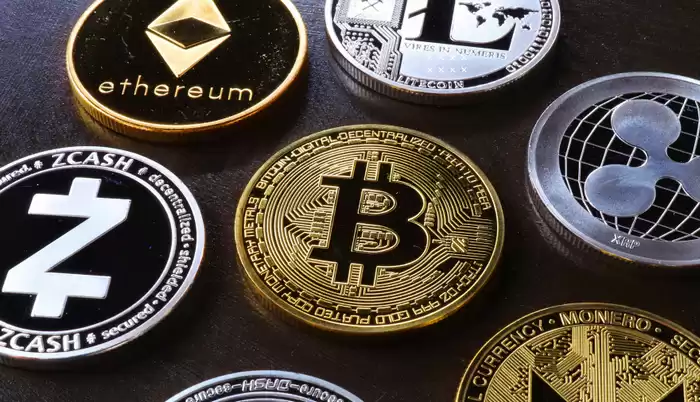
Contract trading involves the买卖of standardized contracts that represent ownership of an underlying asset, such as a commodity, currency, or stock index. These contracts specify the quantity, quality, and delivery date of the asset. Contract trading takes place on exchanges, where buyers and sellers match commitments to exchange the underlying asset at a specified price and date.
2. Definition of Spot TradingSpot trading is the immediate 买卖of an asset for cash settlement. It entails the physical exchange of the asset on the spot market at the current market price. Unlike contract trading, which involves contracts that can be settled in the future, spot trading finalizes transactions on the same day they are executed.
3. Key Differences Between Contract Trading and Spot TradingSettlement: Contract trading involves future settlement based on the specified contract date, while spot trading results in immediate settlement.
Market: Contract trading occurs on futures or options exchanges, while spot trading takes place on spot markets or over-the-counter platforms.
Contracts: In contract trading, standardized contracts represent the underlying asset, whereas in spot trading, the actual physical asset is traded.
Price: Contract prices reflect future market expectations, while spot prices represent current market conditions.
Leverage: Contract trading typically allows for leverage, enabling market participants to control a larger amount of assets with limited capital. Spot trading generally does not provide leverage, except in specific circumstances.
Contract Trading: Buying a futures contract for crude oil that expires in three months, with the commitment to purchase the underlying quantity of oil at the contract price on the expiration date.
Spot Trading: Purchasing gold bullion immediately for cash, where the transaction is settled and the physical gold is delivered to the buyer on the same day.
Allows for speculation on future asset prices
Provides leverage, increasing potential profits
Hedging against future price risk
Access to a wide range of underlying assets
Risk of losing money if market expectations are incorrect
Potential for large losses due to leverage
Settlement obligations can be complex
Immediate transaction settlement
Eliminates future settlement risk
Physical possession of the underlying asset
Greater transparency and price discovery
Limited scope for speculation (mainly follows current market prices)
May involve higher transaction costs
Not all assets are available for spot trading
Disclaimer:info@kdj.com
The information provided is not trading advice. kdj.com does not assume any responsibility for any investments made based on the information provided in this article. Cryptocurrencies are highly volatile and it is highly recommended that you invest with caution after thorough research!
If you believe that the content used on this website infringes your copyright, please contact us immediately (info@kdj.com) and we will delete it promptly.






- Shiba Inu (SHIB) Stages September Surge Recovery, But Key Resistance Looms
- 2026-10-04 16:35:01
- Microsoft X Account Hijack: Fake Clippy Comeback Fuels Crypto Scam Amidst AI Fraud Surge
- 2026-10-04 16:35:01
- Philippines Cracks Down: Crypto Wallets Frozen in Landmark Flood Scandal Investigation
- 2026-10-04 16:40:01
- Crypto Crossroads: Bitcoin & Ethereum Price Predictions Amidst ETF Inflows and Shifting Market Dynamics
- 2026-10-04 16:40:01
- Federal Reserve Reserves Fluctuate: H.4.1 Data Reveals Bank Reserve Balances Dip on Wednesday Snapshot, Average Rises
- 2026-10-04 12:35:01
- XRP Traders, Dark Defender, and the Ascent of Flight X589: A Deep Dive into XRP's Trajectory
- 2026-10-04 00:45:01
Related knowledge
How to use DOT funding rates when managing a leveraged futures position?
Oct 04,2026 at 10:59am
Bitcoin Halving Mechanics1. Bitcoin’s protocol enforces a fixed issuance schedule where block rewards are cut in half approximately every 210,000 bloc...
How to set a stop-loss and take-profit on a TRX perpetual contract?
Oct 03,2026 at 01:59am
Understanding Stop-Loss and Take-Profit Mechanics on TRX Perpetuals1. Stop-loss (SL) and take-profit (TP) orders on TRX perpetual contracts function a...
How to use LTC funding rates to manage a perpetual futures trade?
Oct 04,2026 at 05:59pm
Funding Rate Mechanics in Litecoin Perpetual Markets1. Funding rates in Litecoin perpetual futures are calculated every eight hours using the differen...
How to trade an LTC perpetual contract when price returns to support?
Oct 03,2026 at 10:40am
Support Zone Recognition1. Litecoin’s 60-day moving average at $68.40 has acted as a dynamic floor in five of the last seven weekly closes. 2. On-chai...
How to set an APT futures price alert near a key resistance level?
Oct 04,2026 at 02:00am
Identifying Key Resistance Levels for APT1. Examine historical price action on the 4-hour and daily charts to locate zones where APT repeatedly failed...
How to use APT open interest to identify a potential futures breakout?
Oct 02,2026 at 10:39am
Bitcoin Halving Mechanics1. Bitcoin’s protocol enforces a fixed issuance schedule where the block reward halves approximately every 210,000 blocks, or...
How to use DOT funding rates when managing a leveraged futures position?
Oct 04,2026 at 10:59am
Bitcoin Halving Mechanics1. Bitcoin’s protocol enforces a fixed issuance schedule where block rewards are cut in half approximately every 210,000 bloc...
How to set a stop-loss and take-profit on a TRX perpetual contract?
Oct 03,2026 at 01:59am
Understanding Stop-Loss and Take-Profit Mechanics on TRX Perpetuals1. Stop-loss (SL) and take-profit (TP) orders on TRX perpetual contracts function a...
How to use LTC funding rates to manage a perpetual futures trade?
Oct 04,2026 at 05:59pm
Funding Rate Mechanics in Litecoin Perpetual Markets1. Funding rates in Litecoin perpetual futures are calculated every eight hours using the differen...
How to trade an LTC perpetual contract when price returns to support?
Oct 03,2026 at 10:40am
Support Zone Recognition1. Litecoin’s 60-day moving average at $68.40 has acted as a dynamic floor in five of the last seven weekly closes. 2. On-chai...
How to set an APT futures price alert near a key resistance level?
Oct 04,2026 at 02:00am
Identifying Key Resistance Levels for APT1. Examine historical price action on the 4-hour and daily charts to locate zones where APT repeatedly failed...
How to use APT open interest to identify a potential futures breakout?
Oct 02,2026 at 10:39am
Bitcoin Halving Mechanics1. Bitcoin’s protocol enforces a fixed issuance schedule where the block reward halves approximately every 210,000 blocks, or...
See all articles


