














-
 bitcoin
 $86353.520310 USD
1.06% - ethereum
$2748.504094 USD
0.61% - tether
$0.999805 USD
0.00% - bnb
$789.713139 USD
0.35% - xrp
$1.621177 USD
6.50% - usd-coin
$0.999968 USD
-0.01% - solana
$118.732892 USD
1.75% - tron
$0.343839 USD
-1.32% - zcash
$1622.688363 USD
8.33% - hyperliquid
$97.151941 USD
2.83% - dogecoin
$0.101886 USD
2.10% - monero
$571.352536 USD
-0.93% - chainlink
$13.016236 USD
0.75% - cardano
$0.257732 USD
5.00% - unus-sed-leo
$8.985389 USD
0.15%











Web3 wallets and DEX: Transaction fees (gas fees) explained in detail
Transaction fees, known as "gas fees," are essential to process transactions on Web3 networks like Ethereum, securing the network and enabling the execution of complex transactions.
Oct 22, 2024 at 02:42 am
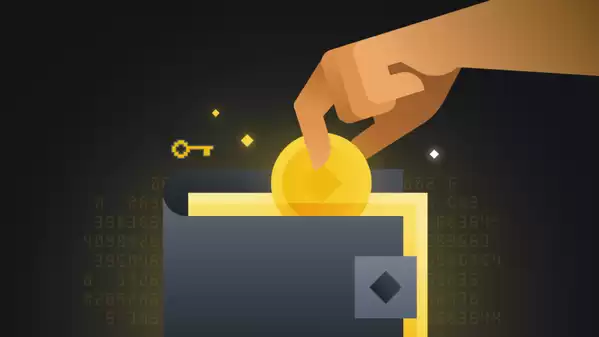
Transaction fees, commonly referred to as "gas fees," play a crucial role in Web3 applications. These fees are necessary to process and execute transactions on decentralized networks such as Ethereum and Polygon.
2. Gas Fees: The Fuel for Web3 TransactionsGas fees represent the computational resources required to validate and execute a transaction. They are a critical mechanism for ensuring network security and stability. The crypto-asset used for gas fees varies depending on the network, e.g., ETH for Ethereum and MATIC for Polygon.
3. Factors Influencing Gas FeesSeveral factors can influence gas fees, including:
- Network congestion - Higher demand for transactions can lead to increased gas fees.
- Transaction complexity - Complex transactions require more computational resources, resulting in higher fees.
- Time sensitivity - Transactions with higher priority are processed sooner but at a higher gas fee.
Gas fees are typically calculated as follows:
Gas Fee = Gas Price (gwei) x Gas Limit
- Gas price: The amount of crypto-asset paid per unit of gas.
- Gas limit: The maximum amount of gas willing to be spent on a transaction.
Despite the importance of gas fees, there are strategies to minimize them:
- Schedule transactions: Avoid transacting during peak network hours when gas fees are typically higher.
- Use alternative networks: Explore other decentralized networks with lower gas fees, such as Polygon or Optimism.
- Batch transactions: Group multiple transactions into a single batch to reduce the number of individual transactions and thus the overall gas fees.
OKX Wallet offers a user-friendly interface with competitive gas fee estimation. It supports both Ethereum and Polygon networks, allowing users to select the network with the lower gas fees.
MetaMaskMetaMask is a popular Web3 wallet that supports multiple EVM-compatible networks. It provides gas fee estimation and allows users to customize the gas price to adjust transaction speed and cost.
UniswapUniswap, a decentralized exchange (DEX), charges a trading fee of 0.3% on all trades. It also displays real-time gas fees for various transaction types, helping users make informed decisions.
By understanding transaction fees in Web3 and utilizing effective strategies to minimize them, users can optimize their Web3 experience while ensuring smooth and efficient transactions.
Disclaimer:info@kdj.com
The information provided is not trading advice. kdj.com does not assume any responsibility for any investments made based on the information provided in this article. Cryptocurrencies are highly volatile and it is highly recommended that you invest with caution after thorough research!
If you believe that the content used on this website infringes your copyright, please contact us immediately (info@kdj.com) and we will delete it promptly.






- BlackRock Spotlights AI's Undervalued Role in Driving Crypto Demand and Tokenized Compute Markets
- 2026-09-23 16:45:01
- Altcoins Set to Soar as Bitcoin Eyes $150K: What New Yorkers Need to Know About Price Predictions
- 2026-09-23 16:35:01
- Near.com and Ondo Finance Forge a New Frontier for Tokenized Stocks, ETFs, and Commodities
- 2026-09-23 05:05:01
- NEAR Protocol Solutions Tackle Lost Keys and Enhance Usability with Readable Accounts
- 2026-09-23 05:05:01
- Zcash Takes Center Stage: European ETP Launch Follows US ETF Approval, Igniting 'Bitcoin Alternative' Debate
- 2026-09-23 05:10:01
- 21Shares Expands Product Suite with New Zcash ETP, Enhancing European Investor Access
- 2026-09-23 04:50:01
Related knowledge

How to protect a Phantom Wallet from scams?
Sep 21,2026 at 10:00am
Bitcoin Halving Mechanics1. Bitcoin’s protocol enforces a fixed issuance schedule where block rewards are cut in half approximately every 210,000 bloc...

How to import a private key into MetaMask?
Sep 21,2026 at 06:00pm
Market Volatility Patterns1. Price swings exceeding 15% within a 24-hour window have occurred in over 68% of Bitcoin’s trading days since 2021. 2. Eth...

How to fix a failed transaction in Phantom Wallet?
Sep 21,2026 at 04:39am
Understanding Transaction Failures in Phantom Wallet1. Phantom Wallet relies on Solana’s RPC infrastructure to broadcast and confirm transactions. A f...
How to find a transaction ID in Phantom Wallet?
Sep 23,2026 at 10:20am
Finding Transaction ID in Phantom Wallet Interface1. Open the Phantom Wallet extension or mobile application and ensure you are logged into the correc...
How to switch from Ethereum to Arbitrum in MetaMask?
Sep 23,2026 at 07:39am
Adding Arbitrum Network to MetaMask1. Open the MetaMask extension in your browser and click the network selector located at the top of the interface. ...
How to add Solana network to Trust Wallet?
Sep 22,2026 at 05:20am
Adding Solana Network to Trust Wallet1. Open the Trust Wallet application on your iOS or Android device and ensure it is updated to the latest version...
How to protect a Phantom Wallet from scams?
Sep 21,2026 at 10:00am
Bitcoin Halving Mechanics1. Bitcoin’s protocol enforces a fixed issuance schedule where block rewards are cut in half approximately every 210,000 bloc...
How to import a private key into MetaMask?
Sep 21,2026 at 06:00pm
Market Volatility Patterns1. Price swings exceeding 15% within a 24-hour window have occurred in over 68% of Bitcoin’s trading days since 2021. 2. Eth...
How to fix a failed transaction in Phantom Wallet?
Sep 21,2026 at 04:39am
Understanding Transaction Failures in Phantom Wallet1. Phantom Wallet relies on Solana’s RPC infrastructure to broadcast and confirm transactions. A f...
How to find a transaction ID in Phantom Wallet?
Sep 23,2026 at 10:20am
Finding Transaction ID in Phantom Wallet Interface1. Open the Phantom Wallet extension or mobile application and ensure you are logged into the correc...
How to switch from Ethereum to Arbitrum in MetaMask?
Sep 23,2026 at 07:39am
Adding Arbitrum Network to MetaMask1. Open the MetaMask extension in your browser and click the network selector located at the top of the interface. ...
How to add Solana network to Trust Wallet?
Sep 22,2026 at 05:20am
Adding Solana Network to Trust Wallet1. Open the Trust Wallet application on your iOS or Android device and ensure it is updated to the latest version...
See all articles


