











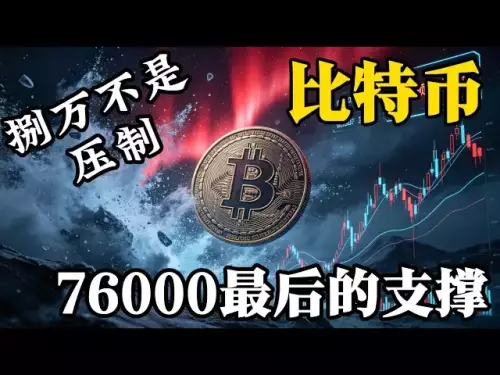


![There will be a violent washout of Bitcoin next. Don't buy the bottom too early. It won't stretch quickly in the short term. What you need to do now is to wait patiently for a good buying position, keep your bullets, and don't get hung up on it. When you buy the bottom, you will run out of bullets! Bitcoin market analysis [Issue 725]](/uploads/2026/08/23/cryptocurrencies-news/videos/origin_6a8afd33c749f_image_500_375.webp "There will be a violent washout of Bitcoin next. Don't buy the bottom too early. It won't stretch quickly in the short term. What you need to do now is to wait patiently for a good buying position, keep your bullets, and don't get hung up on it. When you buy the bottom, you will run out of bullets! Bitcoin market analysis [Issue 725]")






-
 bitcoin
 $76009.435780 USD
-1.53% - ethereum
$2375.311573 USD
-2.24% - tether
$0.999942 USD
0.01% - bnb
$682.047535 USD
-2.01% - xrp
$1.441787 USD
-5.55% - usd-coin
$1.000052 USD
0.00% - solana
$92.061879 USD
-1.80% - tron
$0.342038 USD
-0.93% - hyperliquid
$77.587999 USD
-1.41% - dogecoin
$0.089327 USD
-2.08% - zcash
$782.134934 USD
-0.71% - unus-sed-leo
$9.484522 USD
0.92% - chainlink
$11.132242 USD
-5.45% - monero
$431.110612 USD
0.39% - cardano
$0.214545 USD
-7.12%











What if Trust Wallet shows smart contract error?
Smart contract errors in Trust Wallet can arise from incorrect parameters, network congestion, or contract issues; check error messages and adjust settings to resolve them.
Apr 18, 2025 at 02:36 am

When using Trust Wallet, encountering a smart contract error can be frustrating and confusing. These errors typically occur when interacting with decentralized applications (dApps) or executing transactions that involve smart contracts. Understanding the reasons behind these errors and knowing how to resolve them can help you navigate the world of cryptocurrencies more effectively.
Smart contract errors in Trust Wallet can stem from various issues, such as incorrect transaction parameters, network congestion, or problems with the smart contract itself. To address these errors, it's essential to first identify the specific error message you're seeing. This can provide clues about what went wrong and how to fix it.
Common Causes of Smart Contract Errors
There are several common reasons why you might encounter a smart contract error in Trust Wallet. Understanding these causes can help you troubleshoot more effectively.
Incorrect Transaction Parameters: If you enter incorrect values for gas limits, gas prices, or other transaction parameters, the smart contract execution might fail. Always double-check these values before submitting a transaction.
Network Congestion: During times of high network activity, transactions can fail due to insufficient gas or delays in processing. This is particularly common on networks like Ethereum during peak usage times.
Smart Contract Bugs: Sometimes, the smart contract itself might have bugs or vulnerabilities that cause transactions to fail. This is beyond your control but can be mitigated by using well-audited and reputable smart contracts.
Insufficient Funds: If your wallet doesn't have enough funds to cover the gas fees required for the transaction, you'll encounter a smart contract error. Ensure your wallet has sufficient balance before initiating a transaction.
Steps to Resolve Smart Contract Errors
When you encounter a smart contract error, follow these steps to troubleshoot and resolve the issue.
Check the Error Message: The first step is to carefully read the error message provided by Trust Wallet. This message can give you specific details about what went wrong.
Verify Transaction Parameters: Double-check the gas limit, gas price, and any other parameters you entered for the transaction. Adjust these if necessary and try the transaction again.
Check Network Status: Use a blockchain explorer to check the current status of the network. If it's congested, you might need to wait and try again later or increase your gas price to expedite the transaction.
Ensure Sufficient Funds: Make sure your wallet has enough funds to cover the gas fees. If not, add more funds and retry the transaction.
Use a Different DApp or Contract: If the error persists, try using a different dApp or smart contract to see if the issue is specific to the one you're using.
Troubleshooting Specific Smart Contract Errors
Different smart contract errors can require different approaches to resolve. Here are some common error types and how to address them.
Out of Gas Error: This error occurs when the gas limit set for the transaction is too low. Increase the gas limit and retry the transaction.
Reverted Transaction: If a transaction is reverted, it means the smart contract execution failed. Check the transaction details on a blockchain explorer to see if there's a specific reason given for the revert. Adjust your transaction parameters accordingly.
Invalid Opcode Error: This error can indicate a problem with the smart contract itself. If you encounter this, it's best to avoid using that particular contract until it's fixed by the developers.
Preventing Smart Contract Errors
While it's not always possible to prevent smart contract errors entirely, there are steps you can take to minimize their occurrence.
Use Reputable Smart Contracts: Stick to well-audited and reputable smart contracts to reduce the risk of encountering bugs or vulnerabilities.
Monitor Network Conditions: Keep an eye on network congestion and adjust your transaction parameters accordingly. Tools like Etherscan can help you monitor network conditions.
Double-Check Transaction Details: Always review your transaction details, including gas limits and prices, before submitting them. This can help prevent errors due to incorrect parameters.
Keep Your Wallet Updated: Ensure your Trust Wallet app is up to date, as newer versions may include fixes for known issues.
Seeking Help for Smart Contract Errors
If you've tried the above steps and are still encountering smart contract errors, there are additional resources you can turn to for help.
Trust Wallet Support: Contact Trust Wallet's customer support for assistance. They can provide guidance specific to their platform and help resolve issues related to their app.
Community Forums: Engage with the cryptocurrency community on forums like Reddit or Stack Exchange. Other users may have encountered similar issues and can offer solutions or advice.
Developer Documentation: If the error is related to a specific smart contract or dApp, consult the developer's documentation or reach out to their support team for help.
Frequently Asked Questions
Q: Can smart contract errors result in loss of funds?A: While smart contract errors themselves do not directly cause loss of funds, they can lead to failed transactions. If you're not careful, you might resubmit a transaction with incorrect parameters, which could result in unnecessary gas fees or, in rare cases, unintended transactions. Always double-check your transaction details before resubmitting.
Q: How can I identify if a smart contract is safe to use?A: To identify if a smart contract is safe, look for smart contracts that have been audited by reputable firms. Check for transparency from the developers, such as open-source code and clear documentation. Additionally, community feedback and reviews can provide insights into the contract's reliability.
Q: What should I do if I encounter a smart contract error on a testnet?A: If you encounter a smart contract error on a testnet, follow the same troubleshooting steps as you would on the mainnet. However, since testnets use test cryptocurrencies, you can experiment more freely with different transaction parameters to resolve the issue without risking real funds.
Q: Are there any tools that can help me monitor smart contract activity and detect errors?A: Yes, several tools can help you monitor smart contract activity and detect errors. Blockchain explorers like Etherscan provide detailed transaction data and error logs. Additionally, tools like Tenderly offer smart contract monitoring and debugging services, which can be particularly useful for developers and advanced users.
Disclaimer:info@kdj.com
The information provided is not trading advice. kdj.com does not assume any responsibility for any investments made based on the information provided in this article. Cryptocurrencies are highly volatile and it is highly recommended that you invest with caution after thorough research!
If you believe that the content used on this website infringes your copyright, please contact us immediately (info@kdj.com) and we will delete it promptly.





- Bitcoin, eCash Fork, and Airdrop Dynamics: A Deep Dive into Crypto's Latest Controversies
- 2026-05-03 12:55:01
- Consensus 2026 Miami: Web3, Blockchain, Cryptocurrency, NFTs, Metaverse, Conference, May 5th — Where Wall Street Meets the Digital Frontier
- 2026-05-02 12:45:01
- Fed Holds Rates Steady, Triggering Bitcoin Price Drop Amidst Geopolitical Tensions
- 2026-05-01 06:45:01
- Bitcoin Miners Electrify the Grid: Ohio Gas Plant Acquisition Powers Up a New Era for Digital Gold
- 2026-05-01 00:45:01
- MegaETH's MEGA Token Hits the Big Apple: Setting New Performance Benchmarks for Real-Time Blockchain
- 2026-05-01 00:55:01
- Solana's Slippery Slope: Price Prediction Points to Resistance Loss and Potential Further Drops
- 2026-05-01 06:45:01
Related knowledge
How to Send ETH from Trezor to Binance? How to Transfer Ethereum from Hardware Wallet?
Aug 22,2026 at 11:20pm
Connecting Trezor to Binance via Ethereum Network1. Ensure your Trezor device is updated to the latest firmware version compatible with Ethereum mainn...
How to Transfer BTC from Trezor to Coinbase? How to Send Bitcoin from Trezor Wallet?
Aug 23,2026 at 09:20am
Understanding Trezor Wallet Architecture1. Trezor devices operate as hardware-based cold wallets, isolating private keys from internet-connected envir...
How to Send USDT from Ledger to Binance? How to Transfer Tether from Hardware Wallet?
Aug 19,2026 at 02:20am
Connecting Ledger to Binance Interface1. Ensure the Ledger device is fully updated with the latest firmware version compatible with USDT token standar...
How to Transfer BTC from Ledger to Coinbase? How to Send Bitcoin from Ledger Wallet?
Aug 20,2026 at 05:00am
Device Connection and Ledger Live Setup1. Connect the Ledger Nano S Plus or Nano X to a computer using the original USB cable. 2. Launch Ledger Live d...
How to Receive ETH in SafePal? How to Find Your Ethereum Deposit Address?
Aug 24,2026 at 02:00am
Accessing Your Ethereum Wallet in SafePal1. Open the SafePal mobile application and log in to your existing wallet or create a new one using a secure ...
How to Receive USDT in SafePal from OKX? How to Choose the Correct Chain?
Aug 23,2026 at 08:39pm
Understanding USDT Chain Variants1. USDT exists across multiple blockchain networks including Ethereum (ERC-20), Tron (TRC-20), BNB Smart Chain (BEP-2...
How to Send ETH from Trezor to Binance? How to Transfer Ethereum from Hardware Wallet?
Aug 22,2026 at 11:20pm
Connecting Trezor to Binance via Ethereum Network1. Ensure your Trezor device is updated to the latest firmware version compatible with Ethereum mainn...
How to Transfer BTC from Trezor to Coinbase? How to Send Bitcoin from Trezor Wallet?
Aug 23,2026 at 09:20am
Understanding Trezor Wallet Architecture1. Trezor devices operate as hardware-based cold wallets, isolating private keys from internet-connected envir...
How to Send USDT from Ledger to Binance? How to Transfer Tether from Hardware Wallet?
Aug 19,2026 at 02:20am
Connecting Ledger to Binance Interface1. Ensure the Ledger device is fully updated with the latest firmware version compatible with USDT token standar...
How to Transfer BTC from Ledger to Coinbase? How to Send Bitcoin from Ledger Wallet?
Aug 20,2026 at 05:00am
Device Connection and Ledger Live Setup1. Connect the Ledger Nano S Plus or Nano X to a computer using the original USB cable. 2. Launch Ledger Live d...
How to Receive ETH in SafePal? How to Find Your Ethereum Deposit Address?
Aug 24,2026 at 02:00am
Accessing Your Ethereum Wallet in SafePal1. Open the SafePal mobile application and log in to your existing wallet or create a new one using a secure ...
How to Receive USDT in SafePal from OKX? How to Choose the Correct Chain?
Aug 23,2026 at 08:39pm
Understanding USDT Chain Variants1. USDT exists across multiple blockchain networks including Ethereum (ERC-20), Tron (TRC-20), BNB Smart Chain (BEP-2...
See all articles


