











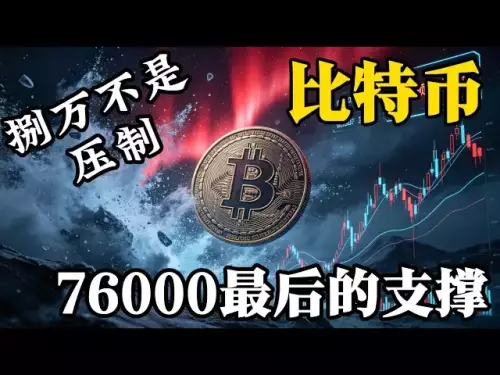


![There will be a violent washout of Bitcoin next. Don't buy the bottom too early. It won't stretch quickly in the short term. What you need to do now is to wait patiently for a good buying position, keep your bullets, and don't get hung up on it. When you buy the bottom, you will run out of bullets! Bitcoin market analysis [Issue 725]](/uploads/2026/08/23/cryptocurrencies-news/videos/origin_6a8afd33c749f_image_500_375.webp "There will be a violent washout of Bitcoin next. Don't buy the bottom too early. It won't stretch quickly in the short term. What you need to do now is to wait patiently for a good buying position, keep your bullets, and don't get hung up on it. When you buy the bottom, you will run out of bullets! Bitcoin market analysis [Issue 725]")






-
 bitcoin
 $76009.435780 USD
-1.53% - ethereum
$2375.311573 USD
-2.24% - tether
$0.999942 USD
0.01% - bnb
$682.047535 USD
-2.01% - xrp
$1.441787 USD
-5.55% - usd-coin
$1.000052 USD
0.00% - solana
$92.061879 USD
-1.80% - tron
$0.342038 USD
-0.93% - hyperliquid
$77.587999 USD
-1.41% - dogecoin
$0.089327 USD
-2.08% - zcash
$782.134934 USD
-0.71% - unus-sed-leo
$9.484522 USD
0.92% - chainlink
$11.132242 USD
-5.45% - monero
$431.110612 USD
0.39% - cardano
$0.214545 USD
-7.12%











How to participate in DeFi projects in imToken?
imToken offers DeFi access via its DApp browser, connecting users to various protocols like Uniswap & Aave. However, understanding risks, using strong security practices, and carefully navigating the interface are crucial for safe participation.
Mar 25, 2025 at 08:42 pm

- ImToken's integration with various DeFi protocols allows for diverse participation.
- Understanding the risks associated with DeFi is crucial before investment.
- Navigating the imToken interface for DeFi interactions requires familiarity with its features.
- Security best practices are paramount when using imToken for DeFi activities.
- Different DeFi protocols offer varying levels of complexity and risk.
imToken, a popular cryptocurrency wallet, provides access to a range of decentralized finance (DeFi) projects. However, participating requires understanding both the imToken interface and the inherent risks of DeFi. This guide outlines the process and addresses potential concerns.
Understanding DeFi within imTokenimToken doesn't directly host DeFi protocols; instead, it acts as a gateway. It connects users to various DeFi platforms through its DApp browser. This allows users to interact with protocols like Uniswap, Aave, and Compound directly from within the wallet. Before engaging, thoroughly research the chosen protocol. Understand its mechanics, risks, and associated fees.
Accessing DeFi Applications in imToken- Open the DApp Browser: Locate and open the DApp browser within your imToken application. This feature is usually prominently displayed on the main screen.
- Search for DeFi Protocols: Use the search bar within the DApp browser to find the specific DeFi platform you wish to use (e.g., Uniswap, Aave). Ensure you're using the official and verified DApp.
- Connect your Wallet: Once you've found the desired protocol, you'll need to connect your imToken wallet to the platform. This usually involves clicking a "Connect Wallet" button and authorizing the connection.
- Interact with the Protocol: After connecting, you can now interact with the DeFi protocol's functions. This could involve providing liquidity, borrowing/lending assets, or participating in yield farming. Always double-check all transaction details before confirmation.
DeFi involves inherent risks, including smart contract vulnerabilities and potential exploits. Therefore, prioritizing security is crucial:
- Use a Strong Password: Employ a complex and unique password for your imToken wallet. Never share your private keys or seed phrase with anyone.
- Enable Two-Factor Authentication (2FA): This adds an extra layer of security, making unauthorized access significantly more difficult.
- Only Use Verified DApps: Stick to official and verified DApps to minimize the risk of interacting with malicious or fraudulent platforms. Look for official links and community verification.
- Regularly Update imToken: Keeping your imToken app updated ensures you have the latest security patches and bug fixes. Outdated software can be vulnerable to exploits.
- Be Wary of Phishing Scams: Be vigilant about phishing attempts, which often mimic legitimate DeFi platforms or imToken itself. Never click on suspicious links or provide your private information.
Let's delve into examples of common DeFi interactions within imToken. These examples illustrate the process but are not exhaustive.
Liquidity Provision:- Find a decentralized exchange (DEX) like Uniswap via imToken's DApp browser.
- Select a trading pair you want to provide liquidity for.
- Deposit the required amounts of both tokens.
- Receive liquidity provider (LP) tokens representing your share of the pool. Remember, impermanent loss is a risk.
- Locate a yield farming platform through the DApp browser.
- Deposit supported tokens into the designated pools.
- Earn rewards in the form of platform tokens or other incentives. Understand the risks involved in yield farming strategies.
- Access lending protocols like Aave or Compound via imToken.
- Deposit collateral to borrow assets.
- Pay interest on borrowed assets. Maintain sufficient collateral to avoid liquidation.
A: imToken itself is a secure wallet, but the security of your DeFi interactions depends on your actions and the protocols you engage with. Following security best practices is crucial to mitigate risks.
Q: What are the fees involved in using DeFi through imToken?A: Fees vary depending on the specific DeFi protocol, network congestion (gas fees), and the transaction type. Always check the estimated fees before confirming any transaction.
Q: Can I lose money using DeFi through imToken?A: Yes, DeFi investments carry significant risks. Smart contract vulnerabilities, market volatility, and impermanent loss are all potential causes of financial losses. Thorough research and risk management are essential.
Q: What if I encounter problems while using DeFi in imToken?A: imToken offers support resources, but for issues related to specific DeFi protocols, you'll need to consult the protocol's documentation or community support channels.
Q: How do I choose which DeFi projects to participate in?A: Research thoroughly. Look at the project's whitepaper, audit reports (if available), community engagement, and the overall market conditions. Never invest more than you can afford to lose.
Disclaimer:info@kdj.com
The information provided is not trading advice. kdj.com does not assume any responsibility for any investments made based on the information provided in this article. Cryptocurrencies are highly volatile and it is highly recommended that you invest with caution after thorough research!
If you believe that the content used on this website infringes your copyright, please contact us immediately (info@kdj.com) and we will delete it promptly.






- Bitcoin, eCash Fork, and Airdrop Dynamics: A Deep Dive into Crypto's Latest Controversies
- 2026-05-03 12:55:01
- Consensus 2026 Miami: Web3, Blockchain, Cryptocurrency, NFTs, Metaverse, Conference, May 5th — Where Wall Street Meets the Digital Frontier
- 2026-05-02 12:45:01
- Fed Holds Rates Steady, Triggering Bitcoin Price Drop Amidst Geopolitical Tensions
- 2026-05-01 06:45:01
- Bitcoin Miners Electrify the Grid: Ohio Gas Plant Acquisition Powers Up a New Era for Digital Gold
- 2026-05-01 00:45:01
- MegaETH's MEGA Token Hits the Big Apple: Setting New Performance Benchmarks for Real-Time Blockchain
- 2026-05-01 00:55:01
- Solana's Slippery Slope: Price Prediction Points to Resistance Loss and Potential Further Drops
- 2026-05-01 06:45:01
Related knowledge
How to Send ETH from Trezor to Binance? How to Transfer Ethereum from Hardware Wallet?
Aug 22,2026 at 11:20pm
Connecting Trezor to Binance via Ethereum Network1. Ensure your Trezor device is updated to the latest firmware version compatible with Ethereum mainn...
How to Transfer BTC from Trezor to Coinbase? How to Send Bitcoin from Trezor Wallet?
Aug 23,2026 at 09:20am
Understanding Trezor Wallet Architecture1. Trezor devices operate as hardware-based cold wallets, isolating private keys from internet-connected envir...
How to Send USDT from Ledger to Binance? How to Transfer Tether from Hardware Wallet?
Aug 19,2026 at 02:20am
Connecting Ledger to Binance Interface1. Ensure the Ledger device is fully updated with the latest firmware version compatible with USDT token standar...
How to Transfer BTC from Ledger to Coinbase? How to Send Bitcoin from Ledger Wallet?
Aug 20,2026 at 05:00am
Device Connection and Ledger Live Setup1. Connect the Ledger Nano S Plus or Nano X to a computer using the original USB cable. 2. Launch Ledger Live d...
How to Receive ETH in SafePal? How to Find Your Ethereum Deposit Address?
Aug 24,2026 at 02:00am
Accessing Your Ethereum Wallet in SafePal1. Open the SafePal mobile application and log in to your existing wallet or create a new one using a secure ...
How to Receive USDT in SafePal from OKX? How to Choose the Correct Chain?
Aug 23,2026 at 08:39pm
Understanding USDT Chain Variants1. USDT exists across multiple blockchain networks including Ethereum (ERC-20), Tron (TRC-20), BNB Smart Chain (BEP-2...
How to Send ETH from Trezor to Binance? How to Transfer Ethereum from Hardware Wallet?
Aug 22,2026 at 11:20pm
Connecting Trezor to Binance via Ethereum Network1. Ensure your Trezor device is updated to the latest firmware version compatible with Ethereum mainn...
How to Transfer BTC from Trezor to Coinbase? How to Send Bitcoin from Trezor Wallet?
Aug 23,2026 at 09:20am
Understanding Trezor Wallet Architecture1. Trezor devices operate as hardware-based cold wallets, isolating private keys from internet-connected envir...
How to Send USDT from Ledger to Binance? How to Transfer Tether from Hardware Wallet?
Aug 19,2026 at 02:20am
Connecting Ledger to Binance Interface1. Ensure the Ledger device is fully updated with the latest firmware version compatible with USDT token standar...
How to Transfer BTC from Ledger to Coinbase? How to Send Bitcoin from Ledger Wallet?
Aug 20,2026 at 05:00am
Device Connection and Ledger Live Setup1. Connect the Ledger Nano S Plus or Nano X to a computer using the original USB cable. 2. Launch Ledger Live d...
How to Receive ETH in SafePal? How to Find Your Ethereum Deposit Address?
Aug 24,2026 at 02:00am
Accessing Your Ethereum Wallet in SafePal1. Open the SafePal mobile application and log in to your existing wallet or create a new one using a secure ...
How to Receive USDT in SafePal from OKX? How to Choose the Correct Chain?
Aug 23,2026 at 08:39pm
Understanding USDT Chain Variants1. USDT exists across multiple blockchain networks including Ethereum (ERC-20), Tron (TRC-20), BNB Smart Chain (BEP-2...
See all articles


