














-
 bitcoin
 $76464.156879 USD
0.86% - ethereum
$2445.495804 USD
1.91% - tether
$0.999058 USD
-0.01% - bnb
$725.991560 USD
1.93% - xrp
$1.303704 USD
0.85% - usd-coin
$0.999942 USD
0.00% - solana
$100.064497 USD
3.06% - tron
$0.335357 USD
0.24% - zcash
$1358.632097 USD
14.53% - hyperliquid
$79.355311 USD
2.37% - dogecoin
$0.081165 USD
1.50% - monero
$495.294239 USD
-2.55% - chainlink
$11.205049 USD
3.83% - unus-sed-leo
$8.932502 USD
0.55% - cardano
$0.198341 USD
1.78%











What is a candlestick chart and what role does it play in crypto market analysis?
The K-line chart is an important tool for analyzing the cryptocurrency market, which can identify trends, determine support resistance levels, analyze market sentiment, and formulate trading strategies.
Apr 03, 2025 at 02:26 pm
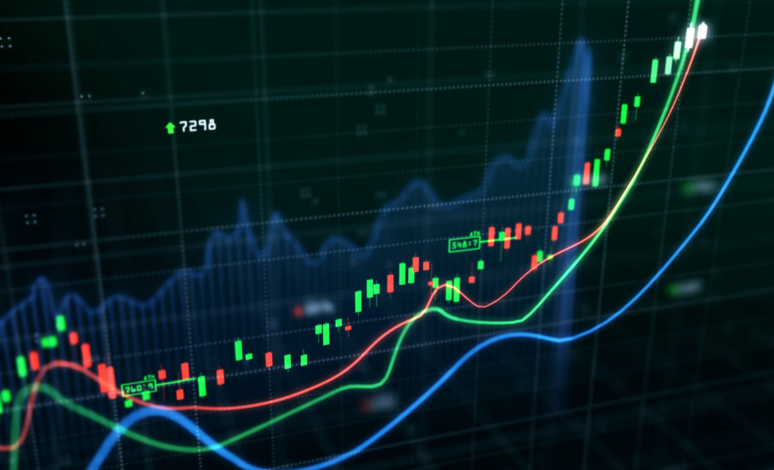
K-line chart, also known as candle chart, is a form of chart used to display changes in the price of financial products. In the cryptocurrency market, K-line charts are widely used to analyze the price trends of digital assets such as Bitcoin and Ethereum. This article will introduce in detail the basic structure, types of K-line charts and their specific role in encryption market analysis.
The basic structure of the K-line chart
The K-line chart consists of a series of figures called 'candles', each representing price changes over a period of time. Each candle contains the following key elements:
Opening price (Open): The price at the beginning of a period of time.
Close : The price at the end of a period of time.
Highest price : the highest price during this period.
Lowest price : the lowest price during this period.
According to the relationship between the closing price and the opening price, the K-line can be divided into the following two types:
Positive line : The closing price is higher than the opening price, usually represented by hollow or green, indicating that the price is rising.
Negative line : The closing price is lower than the opening price, usually represented in solid or red, indicating a price decline.
Types of K-line charts
K-line charts can be divided into various types according to different time frames, common ones include:
Minute chart : such as 1-minute chart, 5-minute chart, 15-minute chart, etc., suitable for short-term traders.
Hour chart : such as 1-hour chart, 4-hour chart, etc., suitable for medium- and short-term traders.
Daily chart : Daily price changes, suitable for medium and long-term traders.
Weekly and Monthly charts : suitable for long-term investors.
K-line charts with different time frames can help traders analyze market trends from different angles.
The role of K-line chart in crypto market analysis
In the cryptocurrency market, the K-line chart is an important tool for analyzing the market, and its role is mainly reflected in the following aspects:
Identify trends : By observing the K-line chart, traders can identify the upward trend, downward trend or consolidation trend of the market. For example, the continuous positive lines may indicate that the market enters an upward phase, while the continuous negative lines may indicate that the market enters a downward phase.
Determine support and resistance levels : A K-line chart can help traders identify important support and resistance levels that are often obstacles that prices encounter when they rise or fall. Support is a point that is difficult for the price to fall below, while resistance is a point that is difficult for the price to break through.
Analyze market sentiment : The K-line chart can reflect the sentiment of market participants. For example, a long upper shadow may indicate a greater selling pressure, while a long lower shadow may indicate a stronger buying force.
Formulate trading strategies : Through the analysis of the K-line chart, traders can formulate trading strategies that suit them. For example, use the K-line pattern (such as head and shoulders top, double bottom, etc.) to determine the entry and exit points.
Common K-line patterns and their significance
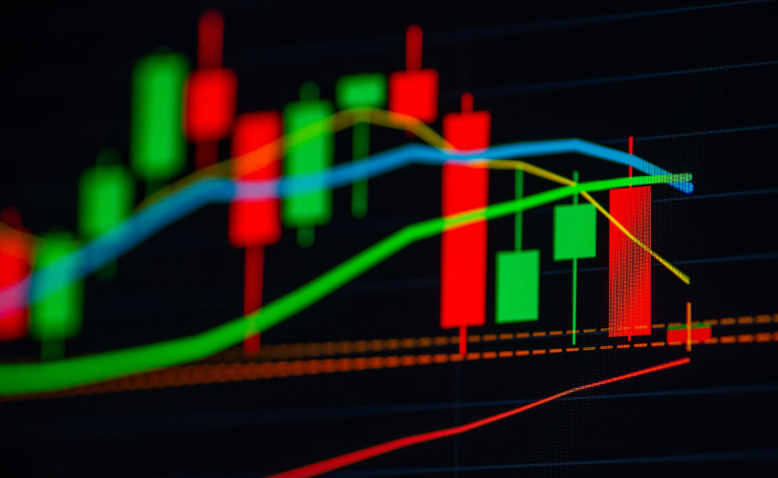
In crypto market analysis, identifying and understanding common K-line patterns is crucial to formulating trading strategies. The following are several common K-line patterns and their significance:
Hammer : Appears in a downtrend with a long lower shadow and small entities that indicate possible reversals.
Hanging Man : Appears in an upward trend, with a pattern similar to the hammer line, but indicates a possible decline.
Engulfing Pattern : It consists of two K-lines, and the latter K-line completely covers the entity of the previous K-line. The bullish engulf appears in the downward trend, and the bearish engulf appears in the upward trend.
Doji : The opening and closing prices are almost the same, indicating that the market may enter a consolidation stage or a reversal is about to occur.
How to use K-line charts on cryptocurrency trading platforms
In actual operation, traders can conduct market analysis through the K-line chart tool on the cryptocurrency trading platform. Here are the specific steps for using a K-line chart for analysis:
Select a time frame : Choose a suitable time frame according to your trading style, such as minute charts, hour charts, daily charts, etc.
Observe the K-line pattern : carefully observe the K-line chart and identify common K-line patterns, such as hammer lines, engulfing patterns, etc.
Combined with other technical indicators : In order to improve the accuracy of the analysis, other technical indicators can be combined, such as moving averages, relative strength index (RSI), etc.
Formulate a trading plan : Based on the analysis results of the K-line chart, formulate specific entry and exit strategies, including stop loss and take-profit points.
Disclaimer:info@kdj.com
The information provided is not trading advice. kdj.com does not assume any responsibility for any investments made based on the information provided in this article. Cryptocurrencies are highly volatile and it is highly recommended that you invest with caution after thorough research!
If you believe that the content used on this website infringes your copyright, please contact us immediately (info@kdj.com) and we will delete it promptly.





- HBO Max Reddit Account Hijacked for Crypto-Stealing Malware Attack: A New Wave of Sophisticated Scams
- 2026-09-17 12:50:01
- House Committee Advances Strategic Bitcoin Reserve Bill, Shaping Future of Federal Crypto Holdings
- 2026-09-17 12:40:01
- Crypto Tax Bill: Digital Assets Face New Tax Rules, But Clarity Remains Elusive
- 2026-09-17 09:10:02
- MemeToro Revolutionizes Memecoin Launches on BNB Chain with AI and Fair-Launch Smart Contracts
- 2026-09-17 09:10:01
- Bitcoin, Ether Brace for Continued Volatility as Fed's Unanimous Rate Hike Signals Hawkish Resolve
- 2026-09-17 09:20:02
- Navigating Crypto Presales Safely: Essential Tips for Buying Crypto, Trust Wallet Safety, and Verifying Contracts
- 2026-09-17 08:50:02
Related knowledge
How to Use Hyperliquid (HYPE) Trading Volume to Find Potential Breakout Opportunities?
Sep 15,2026 at 07:00am
Bitcoin Halving Mechanics1. Bitcoin’s protocol enforces a fixed issuance schedule where block rewards are cut in half approximately every 210,000 bloc...

How to Identify Hyperliquid (HYPE) Momentum Before a Major Price Move?
Sep 15,2026 at 09:20am
On-Chain Order Flow Patterns1. A sustained rise in net inflows to Hyperliquid’s native order book—measured by cumulative deposits into the HyperCore m...

How to Use Dogecoin (Doge) MACD Signals to Find Trading Opportunities?
Sep 13,2026 at 02:39am
Understanding MACD Mechanics in Dogecoin Charts1. The MACD indicator consists of three core components: the MACD line, signal line, and histogram. In ...

How to Identify Dogecoin (DOGE) Breakouts Using Trading Volume?
Sep 17,2026 at 04:59pm
Volume Spike Detection1. A genuine Dogecoin breakout is often preceded by a volume surge exceeding 200% of its 30-day average within a single 4-hour c...

How to Use DOGEcoin (Doge) RSI to Find Potential Rebound Opportunities?
Sep 15,2026 at 11:40pm
Understanding DOGE RSI Behavior Across Timeframes1. The weekly RSI for Dogecoin has dropped to levels last seen during the 2022 bear market and the 20...

How to Use BNB Moving Averages to Find Strong Trading Trends?
Sep 11,2026 at 04:59pm
Understanding BNB Moving Averages1. Moving averages smooth out price data over a specific period to filter out noise and highlight the underlying tren...
How to Use Hyperliquid (HYPE) Trading Volume to Find Potential Breakout Opportunities?
Sep 15,2026 at 07:00am
Bitcoin Halving Mechanics1. Bitcoin’s protocol enforces a fixed issuance schedule where block rewards are cut in half approximately every 210,000 bloc...
How to Identify Hyperliquid (HYPE) Momentum Before a Major Price Move?
Sep 15,2026 at 09:20am
On-Chain Order Flow Patterns1. A sustained rise in net inflows to Hyperliquid’s native order book—measured by cumulative deposits into the HyperCore m...
How to Use Dogecoin (Doge) MACD Signals to Find Trading Opportunities?
Sep 13,2026 at 02:39am
Understanding MACD Mechanics in Dogecoin Charts1. The MACD indicator consists of three core components: the MACD line, signal line, and histogram. In ...
How to Identify Dogecoin (DOGE) Breakouts Using Trading Volume?
Sep 17,2026 at 04:59pm
Volume Spike Detection1. A genuine Dogecoin breakout is often preceded by a volume surge exceeding 200% of its 30-day average within a single 4-hour c...
How to Use DOGEcoin (Doge) RSI to Find Potential Rebound Opportunities?
Sep 15,2026 at 11:40pm
Understanding DOGE RSI Behavior Across Timeframes1. The weekly RSI for Dogecoin has dropped to levels last seen during the 2022 bear market and the 20...
How to Use BNB Moving Averages to Find Strong Trading Trends?
Sep 11,2026 at 04:59pm
Understanding BNB Moving Averages1. Moving averages smooth out price data over a specific period to filter out noise and highlight the underlying tren...
See all articles


