










![[Ripple Outlook] Trump blocks Ripple’s payment network at dawn. If this continues, will all holders’ assets be in crisis?](/uploads/2026/09/20/cryptocurrencies-news/videos/origin_6aaed2a529e7a_image_500_375.webp "[Ripple Outlook] Trump blocks Ripple’s payment network at dawn. If this continues, will all holders’ assets be in crisis?")






-
 bitcoin
 $81131.293825 USD
4.61% - ethereum
$2629.223982 USD
5.70% - tether
$0.999644 USD
0.06% - bnb
$762.001372 USD
0.94% - xrp
$1.419903 USD
7.09% - usd-coin
$0.999900 USD
0.01% - solana
$111.987892 USD
5.89% - tron
$0.337691 USD
0.55% - zcash
$1568.013373 USD
5.10% - hyperliquid
$93.260937 USD
6.24% - dogecoin
$0.087155 USD
3.41% - monero
$565.955936 USD
6.55% - chainlink
$12.346409 USD
4.60% - cardano
$0.223297 USD
4.51% - unus-sed-leo
$8.875656 USD
-0.19%











can't mine ethereum anymore
With Ethereum's transition to proof-of-stake, the era of energy-intensive mining has come to an end, paving the way for a more environmentally friendly and scalable cryptocurrency.
Nov 02, 2024 at 09:30 pm
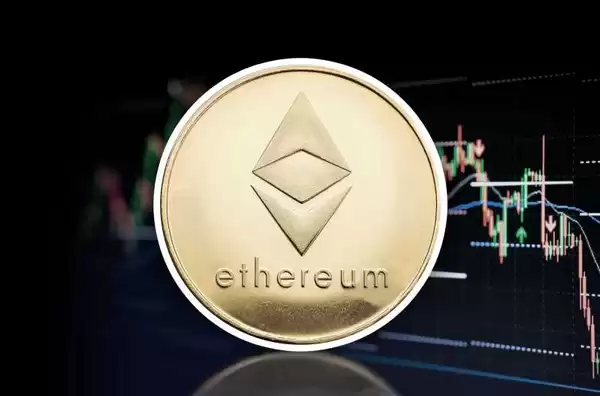
- Background: Ethereum, the second-largest cryptocurrency, has been mined using the energy-intensive proof-of-work (PoW) mechanism. This process requires miners to solve complex puzzles to create new blocks and verify transactions.
- The Ethereum Merge: On September 15, 2022, Ethereum transitioned to a proof-of-stake (PoS) mechanism, known as "The Merge." This shift replaced mining with a process where validators stake their ETH to validate transactions and earn rewards.
- No More Ethereum Mining: As a result of The Merge, mining Ethereum is no longer possible. The PoS consensus mechanism eliminates the need for specialized mining hardware and the energy-consuming PoW processes.
- Environmental Benefits: The transition to PoS significantly reduces Ethereum's energy consumption by an estimated 99.95%. This addresses concerns about the environmental impact of mining operations.
- Increased Transaction Speed and Scalability: PoS allows for faster transaction processing and increased scalability compared to PoW. Ethereum developers are working to further optimize the network for increased capacity and reduced gas fees.
- Impact on Graphics Card Market: The end of Ethereum mining has led to a decline in demand for high-powered graphics cards (GPUs). Miners who previously used GPUs will need to find alternative uses for their hardware.
- Validator Incentives: Validators on the Ethereum network receive ETH rewards for staking their coins and validating transactions. This creates an incentive to participate in the consensus process.
- Timeline for Ethereum 2.0: The Ethereum Merge was the first phase in the transition to Ethereum 2.0. Developers are continuing to work on upgrades to enhance the network's scalability, security, and privacy.
- Broader Implications: The shift to PoS by Ethereum is a major milestone in the cryptocurrency industry. It could accelerate the adoption of sustainable and efficient blockchain technologies.
Disclaimer:info@kdj.com
The information provided is not trading advice. kdj.com does not assume any responsibility for any investments made based on the information provided in this article. Cryptocurrencies are highly volatile and it is highly recommended that you invest with caution after thorough research!
If you believe that the content used on this website infringes your copyright, please contact us immediately (info@kdj.com) and we will delete it promptly.






- Polymarket Under Fire: South Korea Cracks Down on Alleged Illegal Gambling
- 2026-09-20 13:00:02
- Solana ETFs Notch 12-Week Inflow Streak Amidst Bitcoin's Quietest Week on Record
- 2026-09-20 13:10:02
- Solana Price Surges Past Descending Trendline Amid Record Network Activity
- 2026-09-20 13:00:01
- Polygon's Sandeep Nailwal Unveils 100M POL Burn Amidst Strong Revenue Figures, Challenges Rivals
- 2026-09-20 13:10:02
- Zcash, Zcash Price, Tax, and Custody: Navigating the Privacy Coin's Regulatory Labyrinth Amidst Price Surges
- 2026-09-20 13:20:02
- October 18, 2026: Russia Sanctions Deadline Looms, Crypto Market Braces for Impact
- 2026-09-20 12:55:01
Related knowledge

What Is the Best Crypto Mining Setup for Beginners?
Sep 10,2026 at 12:40pm
Understanding Entry-Level Mining Hardware1. Chia farming requires no GPU clusters or ASIC rigs—only spare disk space on standard SATA or NVMe drives. ...

How to Build a Profitable Crypto Mining Setup in 2026?
Sep 11,2026 at 11:20pm
Hardware Selection Criteria1. Antminer S21 Hydro units dominate the 2026 efficiency landscape with 120 J/TH power consumption and integrated liquid co...

How to Check the Real Profit of a Bitcoin Mining Rig?
Sep 10,2026 at 09:40am
Power Consumption Measurement1. Use a calibrated wattmeter connected between the rig’s power supply and the wall socket to record real-time energy dra...
How to Choose Between New and Used ASIC Miners?
Sep 19,2026 at 08:40am
Power Efficiency Metrics1. Antminer Z15 delivers 420 kSol/s at 1,510W under standard conditions, translating to 0.278 kSol/J — a benchmark rarely matc...

Is Buying a Used ASIC Miner Worth It in 2026?
Sep 13,2026 at 07:00am
Market Conditions Driving Used Miner Demand1. Bitcoin network hash rate remains elevated at 1.085 ZH/s, intensifying competition among miners and comp...

How to Calculate Crypto Mining ROI With Hardware Costs?
Sep 10,2026 at 03:00am
Understanding Mining ROI Fundamentals1. ROI in crypto mining is calculated as (Net Profit / Total Investment) × 100%, where Net Profit equals total re...
What Is the Best Crypto Mining Setup for Beginners?
Sep 10,2026 at 12:40pm
Understanding Entry-Level Mining Hardware1. Chia farming requires no GPU clusters or ASIC rigs—only spare disk space on standard SATA or NVMe drives. ...
How to Build a Profitable Crypto Mining Setup in 2026?
Sep 11,2026 at 11:20pm
Hardware Selection Criteria1. Antminer S21 Hydro units dominate the 2026 efficiency landscape with 120 J/TH power consumption and integrated liquid co...
How to Check the Real Profit of a Bitcoin Mining Rig?
Sep 10,2026 at 09:40am
Power Consumption Measurement1. Use a calibrated wattmeter connected between the rig’s power supply and the wall socket to record real-time energy dra...
How to Choose Between New and Used ASIC Miners?
Sep 19,2026 at 08:40am
Power Efficiency Metrics1. Antminer Z15 delivers 420 kSol/s at 1,510W under standard conditions, translating to 0.278 kSol/J — a benchmark rarely matc...
Is Buying a Used ASIC Miner Worth It in 2026?
Sep 13,2026 at 07:00am
Market Conditions Driving Used Miner Demand1. Bitcoin network hash rate remains elevated at 1.085 ZH/s, intensifying competition among miners and comp...
How to Calculate Crypto Mining ROI With Hardware Costs?
Sep 10,2026 at 03:00am
Understanding Mining ROI Fundamentals1. ROI in crypto mining is calculated as (Net Profit / Total Investment) × 100%, where Net Profit equals total re...
See all articles


