










![[Multi SUB] (Full Episode) In his new life, he bound to the system and not only had the ability to control the ocean, but he also broke off the engagement and married the school belle as his wife and counterattacked and became a tycoon! #counterattack#MiniDrama #Wonderful mainland short drama](/uploads/2026/09/14/cryptocurrencies-news/videos/origin_6aa78dc5b6f4f_image_500_375.webp "[Multi SUB] (Full Episode) In his new life, he bound to the system and not only had the ability to control the ocean, but he also broke off the engagement and married the school belle as his wife and counterattacked and became a tycoon! #counterattack#MiniDrama #Wonderful mainland short drama")






-
 bitcoin
 $77625.828729 USD
0.62% - ethereum
$2517.417853 USD
0.13% - tether
$0.999544 USD
-0.01% - bnb
$723.660100 USD
0.16% - xrp
$1.386011 USD
1.82% - usd-coin
$0.999860 USD
0.01% - solana
$101.519022 USD
0.20% - tron
$0.339380 USD
-0.12% - hyperliquid
$79.865341 USD
1.22% - zcash
$1136.272189 USD
-0.43% - dogecoin
$0.084270 USD
-0.24% - monero
$505.727561 USD
-4.73% - chainlink
$11.414119 USD
-0.35% - unus-sed-leo
$8.961937 USD
-1.04% - cardano
$0.209002 USD
0.75%











how long to hold leveraged etf
The holding period for leveraged ETFs depends on factors like risk tolerance, time horizon, and ETF structure, but long-term investments are generally not recommended due to compounding losses and higher management fees.
Oct 12, 2024 at 09:48 am
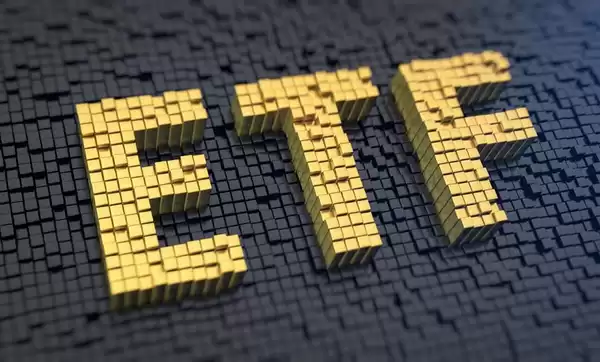
Leveraged exchange-traded funds (ETFs) offer investors the potential for magnified returns, but they also come with increased risk. Unlike traditional ETFs, which track the performance of an underlying index, leveraged ETFs utilize financial instruments to amplify the daily return of their benchmark. This can lead to significant gains, but also potentially large losses, if the underlying index moves in an unfavorable direction.
The holding period for leveraged ETFs depends on several factors, including the investor's risk tolerance, investment horizon, and the specific ETF in question. Here's a general guideline:
- Short-Term Trading: Leveraged ETFs can be used for short-term trading strategies by experienced investors who are comfortable with high risk. However, due to the potential for rapid and significant price fluctuations, it's typically not advisable to hold leveraged ETFs for more than a few days or weeks.
- Intermediate Holding Period: Investors with a longer investment horizon may hold leveraged ETFs for several months to capture potential long-term market gains. However, they should monitor the market closely and be prepared to adjust their positions if the underlying index experiences significant volatility.
- Long-Term Investment: Holding leveraged ETFs for extended periods is generally not recommended. The compounding effect of daily leverage can lead to amplified losses over time. Additionally, leveraged ETFs often incur higher management fees than traditional ETFs, which can erode returns over the long term.
Different leveraged ETFs have different structures and leverage ratios. For example:
- 3x ETFs: These ETFs provide three times the daily return of their underlying index.
- 2x ETFs: These ETFs provide twice the daily return of their underlying index.
- Inverse ETFs: These ETFs provide the opposite daily return of their underlying index.
The holding period should be adjusted accordingly based on the ETF's leverage ratio and inverse nature. Inverse ETFs, in particular, should be used only by sophisticated investors who understand the potential risks involved.
Conclusion:Determining the optimal holding period for leveraged ETFs requires careful consideration of the investor's individual circumstances and the specific ETF they are holding. Short-term trading strategies and intermediate holding periods may be suitable for some investors, while long-term investments are generally not recommended. It's crucial to monitor market conditions and adjust your positions accordingly to mitigate risk and maximize potential returns.
Disclaimer:info@kdj.com
The information provided is not trading advice. kdj.com does not assume any responsibility for any investments made based on the information provided in this article. Cryptocurrencies are highly volatile and it is highly recommended that you invest with caution after thorough research!
If you believe that the content used on this website infringes your copyright, please contact us immediately (info@kdj.com) and we will delete it promptly.






- Crypto Clarity Act, SEC, and CFTC: A New York State of Regulation
- 2026-09-14 13:05:01
- Oil Surges, Bitcoin Holds Steady, Gold Watches as Fed Decision Looms
- 2026-09-14 13:10:02
- Clarity Act Passage Odds: Conflicting Figures Cloud the Forecast
- 2026-09-14 13:05:01
- House Ways and Means Schedules Crypto Tax Bills Review, Focus on Mining and Staking Clarity
- 2026-09-14 12:55:02
- Clarity Act, Polymarket, Clarity Act Odds: A Shifting Legislative Landscape
- 2026-09-14 13:00:02
- Bitcoin Price Nears Bull Market Signal: Key Insights on Bitcoin's Bull Market Signal Amidst Shifting Cycles
- 2026-09-14 13:00:02
Related knowledge

What is a crypto ETF and why is it a big deal?
Nov 05,2025 at 10:20am
What Is a Crypto ETF?1. A crypto ETF, or exchange-traded fund, is an investment vehicle that tracks the price of one or more cryptocurrencies without ...
Is an ETF suitable for long-term holding?
Oct 01,2025 at 02:36am
Understanding ETFs in the Context of Cryptocurrency Investments1. Exchange-traded funds (ETFs) have gained significant traction in traditional financi...
What are ETF discounts and premiums?
Sep 29,2025 at 11:19pm
Understanding ETF Discounts and Premiums1. Exchange-traded funds (ETFs) are investment vehicles that trade on stock exchanges, much like individual st...

How do I evaluate an ETF?
Sep 22,2025 at 11:18am
Evaluating the Fundamentals of an ETF1. Examine the underlying index the ETF tracks to understand its investment focus. Whether it follows a broad mar...
What are the components of an ETF's fee structure?
Sep 30,2025 at 03:54am
Management Fees in ETFs1. Management fees, often referred to as the expense ratio, represent the primary cost investors pay for the operation of an ET...
What is ETF tracking error? How does it arise?
Sep 20,2025 at 03:18am
Understanding ETF Tracking Error in the Cryptocurrency Market1. Exchange-traded funds (ETFs) have become a significant bridge between traditional fina...
What is a crypto ETF and why is it a big deal?
Nov 05,2025 at 10:20am
What Is a Crypto ETF?1. A crypto ETF, or exchange-traded fund, is an investment vehicle that tracks the price of one or more cryptocurrencies without ...
Is an ETF suitable for long-term holding?
Oct 01,2025 at 02:36am
Understanding ETFs in the Context of Cryptocurrency Investments1. Exchange-traded funds (ETFs) have gained significant traction in traditional financi...
What are ETF discounts and premiums?
Sep 29,2025 at 11:19pm
Understanding ETF Discounts and Premiums1. Exchange-traded funds (ETFs) are investment vehicles that trade on stock exchanges, much like individual st...
How do I evaluate an ETF?
Sep 22,2025 at 11:18am
Evaluating the Fundamentals of an ETF1. Examine the underlying index the ETF tracks to understand its investment focus. Whether it follows a broad mar...
What are the components of an ETF's fee structure?
Sep 30,2025 at 03:54am
Management Fees in ETFs1. Management fees, often referred to as the expense ratio, represent the primary cost investors pay for the operation of an ET...
What is ETF tracking error? How does it arise?
Sep 20,2025 at 03:18am
Understanding ETF Tracking Error in the Cryptocurrency Market1. Exchange-traded funds (ETFs) have become a significant bridge between traditional fina...
See all articles


