










![[Ripple Outlook] Trump blocks Ripple’s payment network at dawn. If this continues, will all holders’ assets be in crisis?](/uploads/2026/09/20/cryptocurrencies-news/videos/origin_6aaed2a529e7a_image_500_375.webp "[Ripple Outlook] Trump blocks Ripple’s payment network at dawn. If this continues, will all holders’ assets be in crisis?")






-
 bitcoin
 $81131.293825 USD
4.61% - ethereum
$2629.223982 USD
5.70% - tether
$0.999644 USD
0.06% - bnb
$762.001372 USD
0.94% - xrp
$1.419903 USD
7.09% - usd-coin
$0.999900 USD
0.01% - solana
$111.987892 USD
5.89% - tron
$0.337691 USD
0.55% - zcash
$1568.013373 USD
5.10% - hyperliquid
$93.260937 USD
6.24% - dogecoin
$0.087155 USD
3.41% - monero
$565.955936 USD
6.55% - chainlink
$12.346409 USD
4.60% - cardano
$0.223297 USD
4.51% - unus-sed-leo
$8.875656 USD
-0.19%











does etf expire
ETFs provide continuous trading throughout the market day, offering investors flexibility in entering and exiting positions without worrying about fund expiration.
Oct 10, 2024 at 01:00 am
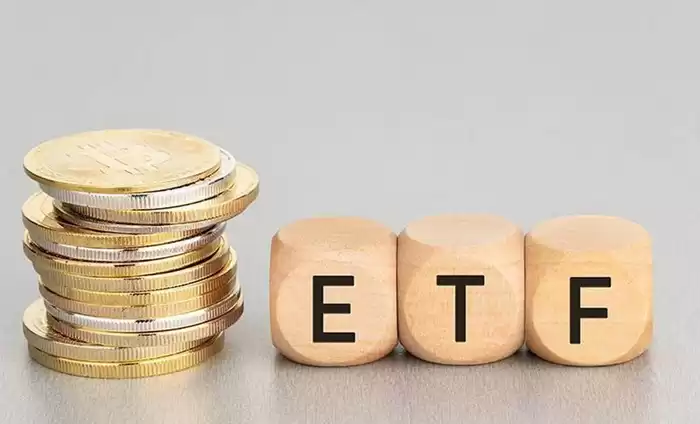
ETFs, or exchange-traded funds, are popular investment vehicles that provide exposure to a wide range of assets, such as stocks, bonds, commodities, and real estate. Unlike mutual funds, which are priced once per day after the market closes, ETFs are traded continuously throughout the trading day, much like individual stocks. However, unlike individual stocks, ETFs do not have a fixed maturity date or expiration date.
Here are the key points to understand about ETF expiration:
- ETFs do not expire: ETFs are designed to be long-term investment vehicles and do not have a set expiration date. Investors can hold ETFs for as long as they wish without worrying about the fund reaching maturity and liquidating.
- Continuous trading: ETFs are traded continually throughout the trading day, allowing investors to enter or exit their positions at any time during market hours.
- Underlying assets: While ETFs do not expire, the underlying assets that they invest in may mature or change. For example, an ETF that invests in government bonds may need to adjust its portfolio as bonds mature and new bonds are issued.
- Fund termination: It's rare, but it is possible for an ETF to be terminated or liquidated. This can occur if the fund is not meeting its investment objectives, has insufficient assets, or fails to attract a sufficient number of investors. If an ETF is terminated, investors will receive their proportionate share of the fund's assets.
- Taxation: The tax treatment of ETFs is similar to that of individual stocks. When an ETF is sold, any capital gains or losses are calculated based on the difference between the purchase price and sale price. ETFs held in a retirement account may be subject to different tax rules.
In summary, ETFs do not expire and provide investors with a convenient and flexible way to access a range of assets. While the underlying assets may change or mature, the ETF itself remains in existence, allowing investors to hold their positions for as long as desired.
Disclaimer:info@kdj.com
The information provided is not trading advice. kdj.com does not assume any responsibility for any investments made based on the information provided in this article. Cryptocurrencies are highly volatile and it is highly recommended that you invest with caution after thorough research!
If you believe that the content used on this website infringes your copyright, please contact us immediately (info@kdj.com) and we will delete it promptly.






- XRP Price Prediction: Analysts Eyeing $5.20 and $2.50 Amidst Technical Breakouts, Long-Term $333 Target Debated
- 2026-09-20 00:35:01
- What is FOMO, How to Use It, Detailed Guide: Unpacking Crypto's Social Trading Phenomenon
- 2026-09-20 00:35:01
- Very Network Launch: Unpacking Real Token Utility Beyond the VeryPunks Hype
- 2026-09-19 21:05:01
- Bitcoin Price Prediction: Navigating Fed Policy Shocks and CLARITY Act Clarity
- 2026-09-19 20:55:01
- Charles Hoskinson and Cardano's YouTube Hacked in Sophisticated YouTube Hacking Scam
- 2026-09-19 20:40:01
- XRP Price, Technical Analysis and Whale Mobility: What's Happening?
- 2026-09-19 20:40:01
Related knowledge

What is a crypto ETF and why is it a big deal?
Nov 05,2025 at 10:20am
What Is a Crypto ETF?1. A crypto ETF, or exchange-traded fund, is an investment vehicle that tracks the price of one or more cryptocurrencies without ...
Is an ETF suitable for long-term holding?
Oct 01,2025 at 02:36am
Understanding ETFs in the Context of Cryptocurrency Investments1. Exchange-traded funds (ETFs) have gained significant traction in traditional financi...
What are ETF discounts and premiums?
Sep 29,2025 at 11:19pm
Understanding ETF Discounts and Premiums1. Exchange-traded funds (ETFs) are investment vehicles that trade on stock exchanges, much like individual st...

How do I evaluate an ETF?
Sep 22,2025 at 11:18am
Evaluating the Fundamentals of an ETF1. Examine the underlying index the ETF tracks to understand its investment focus. Whether it follows a broad mar...
What are the components of an ETF's fee structure?
Sep 30,2025 at 03:54am
Management Fees in ETFs1. Management fees, often referred to as the expense ratio, represent the primary cost investors pay for the operation of an ET...
What is ETF tracking error? How does it arise?
Sep 20,2025 at 03:18am
Understanding ETF Tracking Error in the Cryptocurrency Market1. Exchange-traded funds (ETFs) have become a significant bridge between traditional fina...
What is a crypto ETF and why is it a big deal?
Nov 05,2025 at 10:20am
What Is a Crypto ETF?1. A crypto ETF, or exchange-traded fund, is an investment vehicle that tracks the price of one or more cryptocurrencies without ...
Is an ETF suitable for long-term holding?
Oct 01,2025 at 02:36am
Understanding ETFs in the Context of Cryptocurrency Investments1. Exchange-traded funds (ETFs) have gained significant traction in traditional financi...
What are ETF discounts and premiums?
Sep 29,2025 at 11:19pm
Understanding ETF Discounts and Premiums1. Exchange-traded funds (ETFs) are investment vehicles that trade on stock exchanges, much like individual st...
How do I evaluate an ETF?
Sep 22,2025 at 11:18am
Evaluating the Fundamentals of an ETF1. Examine the underlying index the ETF tracks to understand its investment focus. Whether it follows a broad mar...
What are the components of an ETF's fee structure?
Sep 30,2025 at 03:54am
Management Fees in ETFs1. Management fees, often referred to as the expense ratio, represent the primary cost investors pay for the operation of an ET...
What is ETF tracking error? How does it arise?
Sep 20,2025 at 03:18am
Understanding ETF Tracking Error in the Cryptocurrency Market1. Exchange-traded funds (ETFs) have become a significant bridge between traditional fina...
See all articles


