














-
 bitcoin
 $77146.398531 USD
-0.23% - ethereum
$2514.088317 USD
-0.37% - tether
$0.999674 USD
0.00% - bnb
$722.500739 USD
-1.34% - xrp
$1.361192 USD
-0.23% - usd-coin
$0.999776 USD
-0.01% - solana
$101.320251 USD
-0.42% - tron
$0.339801 USD
0.16% - hyperliquid
$78.899137 USD
-0.02% - zcash
$1141.149289 USD
-0.18% - dogecoin
$0.084480 USD
-0.05% - monero
$530.834712 USD
-1.66% - chainlink
$11.453705 USD
-0.73% - unus-sed-leo
$9.056535 USD
-0.61% - cardano
$0.207439 USD
-0.31%











can etf go out of business
Despite their popularity, exchange-traded funds (ETFs) carry the potential risk of closure due to factors such as low trading volume, lack of interest, mergers, and fund liquidations, potentially leading to loss of investment for shareholders.
Oct 12, 2024 at 05:53 pm
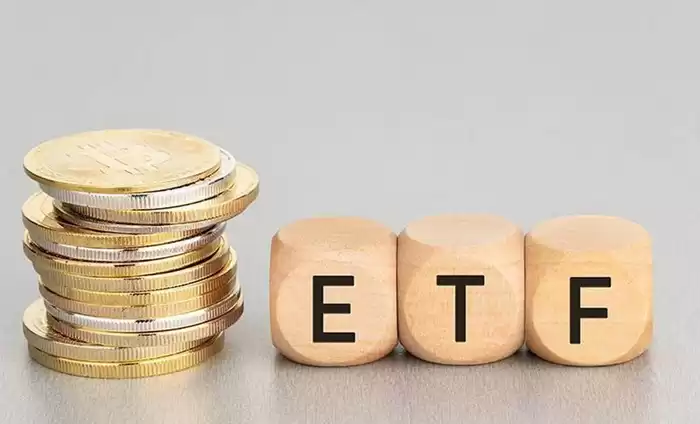
An exchange-traded fund (ETF) is an investment vehicle that tracks a basket of assets, such as stocks, bonds, or commodities. ETFs are traded on stock exchanges like stocks, but they offer diversification and low costs, making them popular among investors.
2. Can an ETF Close?Yes, an ETF can close. An ETF may close due to several reasons, including:
- Low Trading Volume: If anETF has very low trading volume, it may become too expensive for the fund manager to maintain the fund.
- Lack of Interest: If investors lose interest in an ETF, it may not have enough assets to cover its operating costs.
- Merger or Acquisition: An ETF may close if it merges with another ETF or is acquired by another investment company.
- Fund Liquidation: The fund manager may decide to liquidate an ETF if it no longer meets their investment objectives or if it faces significant losses.
When an ETF closes, it must distribute its remaining assets to shareholders. Shareholders will receive the proceeds from the sale of the ETF's assets, which may include cash, securities, or other investments.
4. Risks of ETF ClosureAlthough ETF closures are not common, investors should be aware of the potential risks.
- Loss of Investment: If an ETF closes, shareholders may lose their initial investment.
- Redemption Fees: Some ETFs may charge redemption fees if they are closed before a certain date.
- Tax Implications: If an ETF closes, shareholders may have to pay capital gains taxes on their gains.
Investors can minimize the risk of ETF closure by:
- Choosing ETFs with High Trading Volume: ETFs with higher trading volume are more likely to stay open.
- Researching the ETF Issuer: Check the reputation and history of the fund manager that manages the ETF.
- Diversifying Investments: Invest in multiple ETFs across different asset classes and sectors to reduce exposure to any one ETF.
- Monitoring ETF Performance: Track the performance of your ETFs regularly and make adjustments if necessary.
ETFs can be an excellent investment option, but it is important to understand the risks involved. ETF closures are rare, but they can happen. By following the steps outlined above, investors can minimize the risk of ETF closure and protect their investments.
Disclaimer:info@kdj.com
The information provided is not trading advice. kdj.com does not assume any responsibility for any investments made based on the information provided in this article. Cryptocurrencies are highly volatile and it is highly recommended that you invest with caution after thorough research!
If you believe that the content used on this website infringes your copyright, please contact us immediately (info@kdj.com) and we will delete it promptly.






- Japan, XRP, and the XRP Army: A Quiet Revolution in Global Finance?
- 2026-09-13 20:35:02
- Unconfirmed Buzz: Chainlink Whales, 10M LINK, and the 17% Correction – What's Really Going On?
- 2026-09-13 16:55:01
- Cardano Price Prediction, Analysis, and Movement: Navigating Market Volatility and Future Potential
- 2026-09-13 16:25:01
- Revolut Data Breach: Fake Government Requests Exploit Security Gaps, Exposing Customer Data
- 2026-09-13 09:00:02
- Blockstream, Liquid Network, Bitcoin: A Standoff Over 'Stolen' Funds
- 2026-09-13 08:35:01
- Ripple RLUSD Circulation Hits $2.4 Billion: A Closer Look at the Stablecoin's Trajectory
- 2026-09-13 04:50:01
Related knowledge

What is a crypto ETF and why is it a big deal?
Nov 05,2025 at 10:20am
What Is a Crypto ETF?1. A crypto ETF, or exchange-traded fund, is an investment vehicle that tracks the price of one or more cryptocurrencies without ...
Is an ETF suitable for long-term holding?
Oct 01,2025 at 02:36am
Understanding ETFs in the Context of Cryptocurrency Investments1. Exchange-traded funds (ETFs) have gained significant traction in traditional financi...
What are ETF discounts and premiums?
Sep 29,2025 at 11:19pm
Understanding ETF Discounts and Premiums1. Exchange-traded funds (ETFs) are investment vehicles that trade on stock exchanges, much like individual st...

How do I evaluate an ETF?
Sep 22,2025 at 11:18am
Evaluating the Fundamentals of an ETF1. Examine the underlying index the ETF tracks to understand its investment focus. Whether it follows a broad mar...
What are the components of an ETF's fee structure?
Sep 30,2025 at 03:54am
Management Fees in ETFs1. Management fees, often referred to as the expense ratio, represent the primary cost investors pay for the operation of an ET...
What is ETF tracking error? How does it arise?
Sep 20,2025 at 03:18am
Understanding ETF Tracking Error in the Cryptocurrency Market1. Exchange-traded funds (ETFs) have become a significant bridge between traditional fina...
What is a crypto ETF and why is it a big deal?
Nov 05,2025 at 10:20am
What Is a Crypto ETF?1. A crypto ETF, or exchange-traded fund, is an investment vehicle that tracks the price of one or more cryptocurrencies without ...
Is an ETF suitable for long-term holding?
Oct 01,2025 at 02:36am
Understanding ETFs in the Context of Cryptocurrency Investments1. Exchange-traded funds (ETFs) have gained significant traction in traditional financi...
What are ETF discounts and premiums?
Sep 29,2025 at 11:19pm
Understanding ETF Discounts and Premiums1. Exchange-traded funds (ETFs) are investment vehicles that trade on stock exchanges, much like individual st...
How do I evaluate an ETF?
Sep 22,2025 at 11:18am
Evaluating the Fundamentals of an ETF1. Examine the underlying index the ETF tracks to understand its investment focus. Whether it follows a broad mar...
What are the components of an ETF's fee structure?
Sep 30,2025 at 03:54am
Management Fees in ETFs1. Management fees, often referred to as the expense ratio, represent the primary cost investors pay for the operation of an ET...
What is ETF tracking error? How does it arise?
Sep 20,2025 at 03:18am
Understanding ETF Tracking Error in the Cryptocurrency Market1. Exchange-traded funds (ETFs) have become a significant bridge between traditional fina...
See all articles


