





















-
 bitcoin
 $87959.907984 USD
1.34% - ethereum
$2920.497338 USD
3.04% - tether
$0.999775 USD
0.00% - xrp
$2.237324 USD
8.12% - bnb
$860.243768 USD
0.90% - solana
$138.089498 USD
5.43% - usd-coin
$0.999807 USD
0.01% - tron
$0.272801 USD
-1.53% - dogecoin
$0.150904 USD
2.96% - cardano
$0.421635 USD
1.97% - hyperliquid
$32.152445 USD
2.23% - bitcoin-cash
$533.301069 USD
-1.94% - chainlink
$12.953417 USD
2.68% - unus-sed-leo
$9.535951 USD
0.73% - zcash
$521.483386 USD
-2.87%











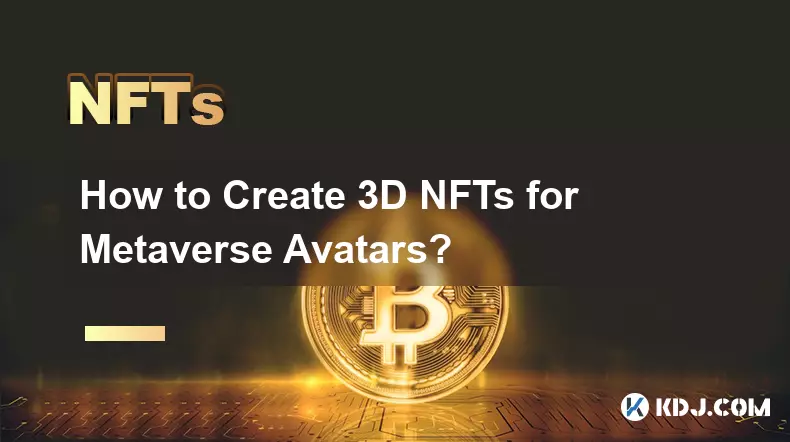
How to Create 3D NFTs for Metaverse Avatars?
A 3D NFT is a unique, interactive digital asset—like avatar wearables—with mesh, textures, rigging, and animation—minted on-chain (Ethereum/Polygon) and stored immutably via IPFS/Arweave.
Feb 05, 2026 at 12:00 pm
Understanding 3D NFT Fundamentals
1. A 3D NFT is a non-fungible token that represents a unique three-dimensional digital asset, often used as wearable gear or identity elements for avatars in metaverse platforms like Decentraland, The Sandbox, and Spatial.
2. Unlike 2D profile pictures, 3D NFTs contain mesh geometry, texture maps, skeletal rigging, and animation data—making them interactive and interoperable across compatible virtual environments.
3. These assets are minted on blockchains supporting smart contracts such as Ethereum, Polygon, or Solana, with metadata stored on decentralized file systems like IPFS or Arweave.
4. Ownership is verified cryptographically, allowing users to import, export, wear, trade, or even animate their 3D NFTs within supported metaverse clients.
Modeling and Rigging Workflow
1. Artists begin with modeling software including Blender, Maya, or Cinema 4D to construct low-poly meshes optimized for real-time rendering—typically under 50,000 polygons per model.
2. UV unwrapping ensures textures map correctly onto surfaces; PBR (Physically Based Rendering) materials define how light interacts with metallic, rough, or emissive surfaces.
3. Rigging involves placing a hierarchical bone structure inside the mesh so avatars can move naturally—especially critical for facial expressions and limb articulation.
4. Animation sequences such as idle, walk, or emote loops are exported in glTF 2.0 format, the industry standard for web-based 3D delivery and blockchain integration.
Tokenization and Metadata Standards
1. After finalizing the 3D model, creators generate a JSON metadata file compliant with ERC-1155 or ERC-721 standards, specifying name, description, image preview, animation URL, and attributes like rarity tiers.
2. The actual .glb or .gltf file must be uploaded to a persistent storage solution—IPFS CID generation is mandatory to guarantee immutability and verifiability on-chain.
3. Smart contract deployment occurs via tools like Manifold Studio, Thirdweb, or OpenSea’s collection manager, enabling customizable royalties and access control.
4. Each minted token references the off-chain 3D asset through its URI, ensuring wallets and metaverse SDKs retrieve correct visual and behavioral data at runtime.
Interoperability Constraints and Platform Requirements
1. Decentraland enforces strict limits: models must be under 10 MB, use only one material per mesh part, and avoid unsupported shaders or physics simulations.
2. The Sandbox mandates FBX exports with baked animations and prohibits dynamic lighting calculations during runtime to maintain performance consistency.
3. Spatial.io supports USDZ and GLB but requires all textures to be embedded—not referenced externally—to prevent loading failures in AR contexts.
4. Cross-platform compatibility remains fragmented; developers often maintain multiple variants of the same asset to satisfy distinct engine requirements (Unity vs. Unreal vs. Three.js).
Frequently Asked Questions
Q: Can I use copyrighted 3D models from Unity Asset Store in my NFT project? No. Commercial redistribution rights do not extend to on-chain tokenization unless explicitly granted by the original licensor. Violations risk takedown requests and legal action.
Q: Do I need to code to deploy a 3D NFT collection? Not necessarily. Platforms like Rarible, Mintbase, and Crossmint offer no-code interfaces for uploading models, setting royalties, and launching collections on supported chains.
Q: Why does my GLB file fail validation on OpenSea? Common causes include unembedded textures, unsupported extensions like KHR_materials_transmission, or missing animation samplers in the glTF schema. Validation tools like glTF Validator identify exact structural errors.
Q: Are animated 3D NFTs more expensive to mint? Yes. Larger file sizes increase gas costs due to higher storage fees on Ethereum. Using compressed Draco geometry or quantized animations reduces payload size and lowers transaction expense.
Disclaimer:info@kdj.com
The information provided is not trading advice. kdj.com does not assume any responsibility for any investments made based on the information provided in this article. Cryptocurrencies are highly volatile and it is highly recommended that you invest with caution after thorough research!
If you believe that the content used on this website infringes your copyright, please contact us immediately (info@kdj.com) and we will delete it promptly.






- Bitcoin, eCash Fork, and Airdrop Dynamics: A Deep Dive into Crypto's Latest Controversies
- 2026-05-03 12:55:01
- Consensus 2026 Miami: Web3, Blockchain, Cryptocurrency, NFTs, Metaverse, Conference, May 5th — Where Wall Street Meets the Digital Frontier
- 2026-05-02 12:45:01
- Fed Holds Rates Steady, Triggering Bitcoin Price Drop Amidst Geopolitical Tensions
- 2026-05-01 06:45:01
- Bitcoin Miners Electrify the Grid: Ohio Gas Plant Acquisition Powers Up a New Era for Digital Gold
- 2026-05-01 00:45:01
- MegaETH's MEGA Token Hits the Big Apple: Setting New Performance Benchmarks for Real-Time Blockchain
- 2026-05-01 00:55:01
- Solana's Slippery Slope: Price Prediction Points to Resistance Loss and Potential Further Drops
- 2026-05-01 06:45:01
Related knowledge
What are the best methods to track NFT whale wallets?
Jul 03,2026 at 11:59am
On-Chain Data Aggregation Platforms1. Nansen delivers real-time wallet labeling and behavioral clustering, enabling users to filter addresses by categ...
How do NFT governance tokens influence ecosystem decisions?
Jul 03,2026 at 02:40pm
NFT Governance Token Mechanics1. Governance tokens embedded in NFT projects grant holders voting rights over protocol upgrades, treasury allocations, ...
What makes NFT collections like Bored Ape Yacht Club maintain cultural relevance?
Jun 29,2026 at 12:39am
Cultural Signaling Through Digital Ownership1. Holding a BAYC NFT functions as a visible marker of participation in elite crypto-native circles, espec...
How do NFT holder counts impact project credibility?
Jun 30,2026 at 10:00pm
Holder Distribution Patterns1. A concentrated holder base—where fewer than 100 addresses control over 50% of total supply—often triggers skepticism am...
What are the psychological factors behind NFT FOMO?
Jun 28,2026 at 10:00pm
Neurological Reward Mechanisms1. The brain’s ventral tegmental area activates upon viewing rare or time-bound NFT listings, releasing dopamine in anti...
How do NFT marketplaces like OpenSea rank trending assets?
Jul 07,2026 at 11:20pm
Algorithmic Sorting Mechanisms1. OpenSea applies real-time transaction velocity metrics to determine asset prominence. Assets with rapid sequential sa...
What are the best methods to track NFT whale wallets?
Jul 03,2026 at 11:59am
On-Chain Data Aggregation Platforms1. Nansen delivers real-time wallet labeling and behavioral clustering, enabling users to filter addresses by categ...
How do NFT governance tokens influence ecosystem decisions?
Jul 03,2026 at 02:40pm
NFT Governance Token Mechanics1. Governance tokens embedded in NFT projects grant holders voting rights over protocol upgrades, treasury allocations, ...
What makes NFT collections like Bored Ape Yacht Club maintain cultural relevance?
Jun 29,2026 at 12:39am
Cultural Signaling Through Digital Ownership1. Holding a BAYC NFT functions as a visible marker of participation in elite crypto-native circles, espec...
How do NFT holder counts impact project credibility?
Jun 30,2026 at 10:00pm
Holder Distribution Patterns1. A concentrated holder base—where fewer than 100 addresses control over 50% of total supply—often triggers skepticism am...
What are the psychological factors behind NFT FOMO?
Jun 28,2026 at 10:00pm
Neurological Reward Mechanisms1. The brain’s ventral tegmental area activates upon viewing rare or time-bound NFT listings, releasing dopamine in anti...
How do NFT marketplaces like OpenSea rank trending assets?
Jul 07,2026 at 11:20pm
Algorithmic Sorting Mechanisms1. OpenSea applies real-time transaction velocity metrics to determine asset prominence. Assets with rapid sequential sa...
See all articles


