














-
 bitcoin
 $86353.520310 USD
1.06% - ethereum
$2748.504094 USD
0.61% - tether
$0.999805 USD
0.00% - bnb
$789.713139 USD
0.35% - xrp
$1.621177 USD
6.50% - usd-coin
$0.999968 USD
-0.01% - solana
$118.732892 USD
1.75% - tron
$0.343839 USD
-1.32% - zcash
$1622.688363 USD
8.33% - hyperliquid
$97.151941 USD
2.83% - dogecoin
$0.101886 USD
2.10% - monero
$571.352536 USD
-0.93% - chainlink
$13.016236 USD
0.75% - cardano
$0.257732 USD
5.00% - unus-sed-leo
$8.985389 USD
0.15%











What Is an Altcoin Trader?
As altcoins gain popularity, individuals known as altcoin traders emerge to capitalize on price fluctuations and market inefficiencies by buying and selling these alternative cryptocurrencies.
Oct 22, 2024 at 10:48 am
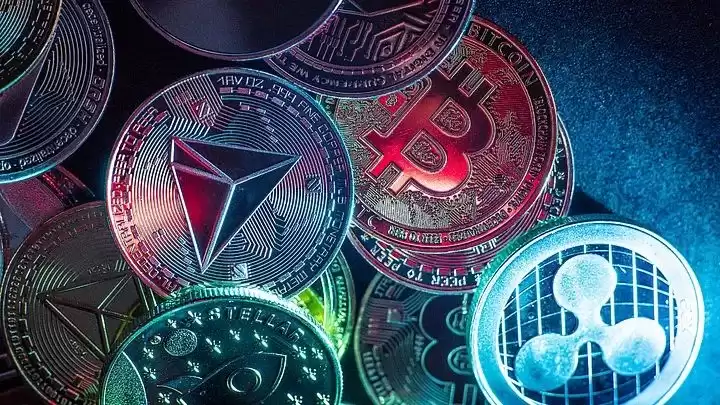
- Definition:
- An altcoin trader is an individual or organization that buys and sells alternative cryptocurrencies (altcoins) for profit.
- Altcoins are any cryptocurrencies other than Bitcoin.
- Role:
- Altcoin traders analyze market trends, identify promising coins, and execute trading strategies to capitalize on price fluctuations.
- They aim to buy low and sell high, leveraging market inefficiencies and volatility.
- Strategies:
- Day Trading: Buying and selling altcoins within a single trading day.
- Swing Trading: Holding altcoins for several days or weeks to capture larger price movements.
- Long-Term Investing: Buying and holding altcoins with the expectation of long-term appreciation.
- Scalping: Executing numerous small trades to accumulate tiny profits.
- Arbitrage: Exploiting price differences between different exchanges or trading pairs.
- Risks and Considerations:
- Volatility: Altcoin markets are notoriously volatile, posing significant risks to traders.
- Competition: Increasing competition in the altcoin space can make it challenging to find profitable opportunities.
- Market Manipulation: Some markets may be manipulated by large holders or insiders, potentially leading to price swings.
- Lack of Regulation: Many altcoin markets are unregulated, which can increase risks for traders.
- Essential Skills:
- Market Analysis: Understanding technical and fundamental indicators to identify trading opportunities.
- Risk Management: Implementing strategies to mitigate losses and protect capital.
- Financial Literacy: Strong knowledge of cryptocurrency markets and investment principles.
- Emotional Control: Managing emotions and avoiding impulsive trading decisions.
- Technical Proficiency: Familiarity with trading platforms and technology.
- Becoming an Altcoin Trader:
- Study cryptocurrency markets and trading strategies.
- Choose a reputable trading platform and wallet.
- Start with a small amount of capital and gradually increase as you gain experience.
- Seek mentorship or guidance from experienced traders.
- Continuously monitor market conditions and adapt strategies accordingly.
Disclaimer:info@kdj.com
The information provided is not trading advice. kdj.com does not assume any responsibility for any investments made based on the information provided in this article. Cryptocurrencies are highly volatile and it is highly recommended that you invest with caution after thorough research!
If you believe that the content used on this website infringes your copyright, please contact us immediately (info@kdj.com) and we will delete it promptly.






- SUI Price News: Huge Indicator Signals Bullish Reversal After Steep Decline
- 2026-09-24 00:45:01
- BlackRock Spotlights AI's Undervalued Role in Driving Crypto Demand and Tokenized Compute Markets
- 2026-09-23 16:45:01
- Altcoins Set to Soar as Bitcoin Eyes $150K: What New Yorkers Need to Know About Price Predictions
- 2026-09-23 16:35:01
- Near.com and Ondo Finance Forge a New Frontier for Tokenized Stocks, ETFs, and Commodities
- 2026-09-23 05:05:01
- NEAR Protocol Solutions Tackle Lost Keys and Enhance Usability with Readable Accounts
- 2026-09-23 05:05:01
- Zcash Takes Center Stage: European ETP Launch Follows US ETF Approval, Igniting 'Bitcoin Alternative' Debate
- 2026-09-23 05:10:01
Related knowledge

What Is DAI and How Is It Different From USDT?
Sep 08,2026 at 05:00pm
Market Volatility Patterns1. Price swings exceeding 15% within a 24-hour window have occurred in over 68% of Bitcoin’s trading days since 2021. 2. Eth...

USDT, USDC and DAI: How Are These Stablecoins Different?
Sep 20,2026 at 05:59am
Bitcoin Halving Mechanics1. Bitcoin’s protocol enforces a fixed issuance schedule where block rewards are cut in half approximately every 210,000 bloc...

Why Can a Stablecoin Lose Its $1 Peg?
Sep 08,2026 at 02:00am
Reserve Composition and Transparency Gaps1. Many stablecoins claim to be fully backed by cash or short-duration US Treasuries, yet reserve disclosures...

What Is Self-Custody in Crypto and Why Does It Matter?
Sep 10,2026 at 04:19am
Definition and Core Mechanics1. Self-custody refers to the practice where individuals retain full control over their private keys without delegating t...

Custodial vs Non-Custodial Wallets: What’s the Difference?
Sep 17,2026 at 03:19am
Custodial Wallets Defined1. A custodial wallet is a digital asset storage solution where a third-party service provider holds and manages users’ priva...

What Is a Multisig Wallet and When Is It Useful?
Sep 12,2026 at 02:20pm
Definition and Core Architecture1. A multisig wallet is a cryptographic construct that requires multiple private keys to authorize a single blockchain...
What Is DAI and How Is It Different From USDT?
Sep 08,2026 at 05:00pm
Market Volatility Patterns1. Price swings exceeding 15% within a 24-hour window have occurred in over 68% of Bitcoin’s trading days since 2021. 2. Eth...
USDT, USDC and DAI: How Are These Stablecoins Different?
Sep 20,2026 at 05:59am
Bitcoin Halving Mechanics1. Bitcoin’s protocol enforces a fixed issuance schedule where block rewards are cut in half approximately every 210,000 bloc...
Why Can a Stablecoin Lose Its $1 Peg?
Sep 08,2026 at 02:00am
Reserve Composition and Transparency Gaps1. Many stablecoins claim to be fully backed by cash or short-duration US Treasuries, yet reserve disclosures...
What Is Self-Custody in Crypto and Why Does It Matter?
Sep 10,2026 at 04:19am
Definition and Core Mechanics1. Self-custody refers to the practice where individuals retain full control over their private keys without delegating t...
Custodial vs Non-Custodial Wallets: What’s the Difference?
Sep 17,2026 at 03:19am
Custodial Wallets Defined1. A custodial wallet is a digital asset storage solution where a third-party service provider holds and manages users’ priva...
What Is a Multisig Wallet and When Is It Useful?
Sep 12,2026 at 02:20pm
Definition and Core Architecture1. A multisig wallet is a cryptographic construct that requires multiple private keys to authorize a single blockchain...
See all articles


