









 |
|
 |
|
 |
|
 |
|
 |
|
 |
|
 |
|
 |
|
 |
|
 |
|
 |
|
 |
|
 |
|
 |
|
 |
|
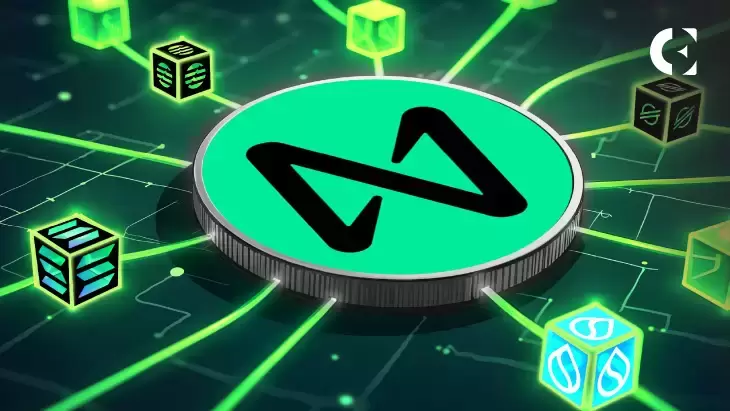
NEAR Protocol has upgraded its Chain Signatures framework to add support for EdDSA (Edwards-curve Digital Signature Algorithm), that will bring transaction control over multiple blockchains from a single NEAR account.
Solana, TON, SUI, Aptos, Stellar…You have been selected to be ABSTRACTED.The latest upgrade to NEAR’s Chain Signatures tech adds support for EdDSA signing enabling any chain that leverages that standard to be controlled directly from your NEAR Account.
The update, announced on April 30, will enable users and smart contracts to manage assets and interact with networks like Solana, Toncoin, Sui, Aptos, and Stellar without leaving the NEAR ecosystem or having to manage separate private key systems.
EdDSA Integration Built on Ed25519 Curve
At the heart of this release is support for EdDSA signatures based on the Ed25519 cryptographic curve. Widely used for its speed and resistance to side-channel attacks, the algorithm is used by several modern blockchain networks and will enable efficient signature verification, including support for batch processing.
Through this upgrade, NEAR’s smart contracts and accounts will be able to generate EdDSA-compliant signatures that are recognized by external chains, while keeping the private keys securely confined within NEAR’s trustless runtime.
Interoperability Across Top Chains Made Simpler
This new EdDSA implementation marks a major step toward blockchain interoperability. With this release, NEAR accounts will be able to directly initiate transactions on EdDSA-supported chains.
This includes networks like Solana (SOL), Toncoin (TON), Aptos (APT), Sui (SUI), and Stellar (XLM).
Those who use these networks will no longer need to rely on custodial bridges, manage multiple wallets, or juggle distinct cryptographic schemes to access assets across different blockchains. Instead, they will be able to use their single NEAR account to sign and execute transactions natively on external networks.
Streamlined Developer Experience for Multi-Chain dApps
Beyond the benefits for users, this update will also streamline the developer stack. With EdDSA now integrated, frontend and backend developers will be able to build multi-chain applications without needing to write custom cryptographic code for each chain.
Those working on DeFi, gaming, or token management dApps will be able to leverage NEAR’s new cryptographic layer to launch interoperable applications that can interact with assets across networks without needing unique integrations for every chain.
The integration opens new use cases for developers across multiple networks. For instance, Solana-based DeFi platforms will be able to enable cross-chain lending products that can interact with NEAR accounts, allowing users to stake SOL while borrowing NEAR.
Similarly, developers could build decentralized exchanges on NEAR that aggregate liquidity from chains like SUI, Aptos, and Solana, potentially increasing access to multi-chain swap functionalities.
Omnibridge implementations can also be expanded to include EdDSA-based chains without requiring unique modifications for each supported protocol. Additionally, the new architecture will permit smart contracts to create transaction flows across different blockchain environments using a common interface.
부인 성명:info@kdj.com
제공된 정보는 거래 조언이 아닙니다. kdj.com은 이 기사에 제공된 정보를 기반으로 이루어진 투자에 대해 어떠한 책임도 지지 않습니다. 암호화폐는 변동성이 매우 높으므로 철저한 조사 후 신중하게 투자하는 것이 좋습니다!
본 웹사이트에 사용된 내용이 귀하의 저작권을 침해한다고 판단되는 경우, 즉시 당사(info@kdj.com)로 연락주시면 즉시 삭제하도록 하겠습니다.


