









 |
|
 |
|
 |
|
 |
|
 |
|
 |
|
 |
|
 |
|
 |
|
 |
|
 |
|
 |
|
 |
|
 |
|
 |
|
Nachrichtenartikel zu Kryptowährungen
The technological foundations of Web3 gaming
May 01, 2025 at 12:57 am
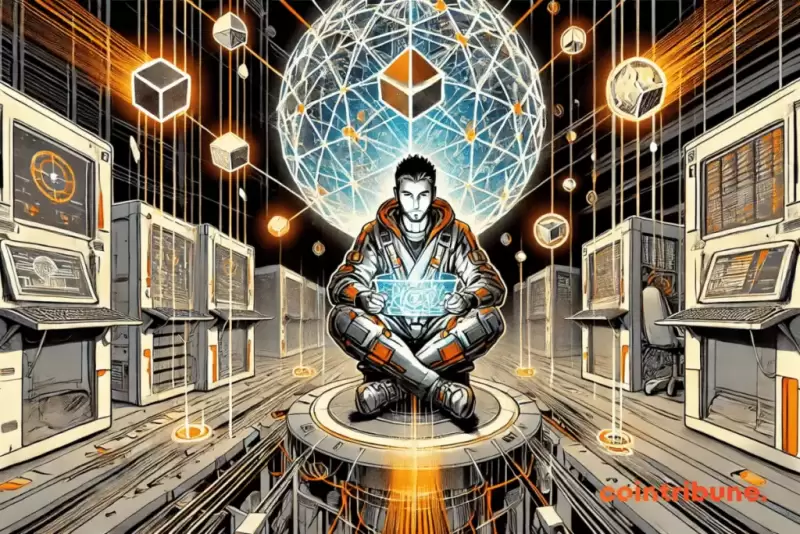
In essence, Web3 gaming relies on blockchain technology to provide a more transparent and autonomous gaming experience. This technology serves as a shared and immutable ledger where digital assets and transactions are securely recorded. In doing so, it offers an alternative to traditional gaming models, which are often centralized and opaque.
The promise of Web3 is to create a decentralized ecosystem where intermediaries are removed and players have true ownership of their virtual items. On their part, NFTs and smart contracts ensure this autonomy and promote an open economy within the game. However, this decentralization remains theoretical in many cases, as some games retain centralized elements or face technical difficulties that prevent them from achieving optimal decentralization.
This article delves into the reality of decentralization in Web3 gaming by examining its technological foundations, exploring specific games and their level of decentralization, and highlighting the limits and challenges that still need to be overcome.
The technological foundations of Web3 gaming
Web3 gaming relies on specific technologies that set it apart and ensure transparency and player autonomy. These technologies, such as blockchain and decentralized protocols, are the building blocks of this new gaming ecosystem.
Blockchain as a decentralized infrastructure
At the core of Web3 lies the blockchain, serving as a decentralized and immutable ledger. This technology records each transaction transparently and permanently, rendering it impossible to alter or forge any data. Every action performed in a Web3 game, be it purchasing a virtual item, transferring an asset between players, or engaging in-game activities, is inscribed on the blockchain. This approach creates a complete and transparent history of the game's activity.
The smart contracts play a key role in automating interactions and executing tasks without human intervention. They are small programs deployed on the blockchain that carry out predefined actions according to predetermined conditions. In a Web3 game, a smart contract can manage the allocation of game rewards, exchange assets between players, or perform specific in-game actions according to predefined rules. This automation ensures instant and secure transaction execution, streamlining the gaming experience.
The platforms and protocols of Web3
Among the various blockchains used in Web3 gaming, Ethereum is still widely used, mainly due to its ERC-721 standard, which enables the creation of NFTs. These NFTs are used to represent unique game objects, such as weapons, characters, or virtual real estate, providing players with verifiable ownership of these assets. However, Ethereum faces technical limitations, notably high transaction fees (gas) and relatively slow transaction speed, which can pose challenges for optimal gameplay.
To offer alternative solutions, other blockchains are emerging in the Web3 gaming landscape. Solana, for instance, is known for its better scalability, allowing it to handle a larger volume of transactions simultaneously, rendering transactions faster and smoother. Binance Smart Chain, on the other hand, is recognized for its lower transaction costs, making it an attractive option for Web3 gaming projects. Both blockchains offer specific advantages that could contribute to expanding the possibilities of Web3 games and rendering them more accessible to a wider audience by reducing technical constraints.
Furthermore, protocols like Polkadot promote interoperability between different blockchains. This protocol enables Web3 games to leverage multiple networks simultaneously, breaking down silos and facilitating the transfer of assets and characters between games without restriction. For instance, a player could seamlessly transfer an NFT character from one game to another or continue their adventure in a different game world while keeping their belongings. This interoperability enhances flexibility and expands the possibilities of a truly decentralized Web3 ecosystem, where players retain control over their assets and gaming experiences.
Some practical cases of Web3 games and their level of decentralization
To better understand how decentralization manifests in practice and the degree to which it is achieved in specific games, let's analyze two notable examples: Illuvium and Decentraland.
Illuvium: a decentralized gaming ecosystem
Illuvium is a game based on the Ethereum blockchain, combining elements of open-world role-playing and auto-battler. Players explore a vast universe, collecting creatures called Illuvials and engaging in strategic battles. The game caters to both casual gamers and users of decentralized finance (DeFi), offering various gameplay styles and economic opportunities.
In Illuvium, players truly own their digital assets, such as Illuvials or in-game items, which are represented by NFTs. These assets are not tied to a single game but can be transferred across the various games and applications in the Illuvium ecosystem, highlighting the interoperability offered by blockchain technology. This structure grants players complete control over their assets and ensures their durability, countering the risk of losing everything if a server shuts down or a game is no longer maintained. This ownership is a core aspect of decentralization in Web3 gaming.
Decentraland: a decentralized virtual world
Decentraland is a decentralized 3D virtual reality platform where users can buy, sell, and build on parcels of virtual land. The land in Decentraland is divided into 90,601 units, forming a vast and open world that users can explore and customize
Haftungsausschluss:info@kdj.com
Die bereitgestellten Informationen stellen keine Handelsberatung dar. kdj.com übernimmt keine Verantwortung für Investitionen, die auf der Grundlage der in diesem Artikel bereitgestellten Informationen getätigt werden. Kryptowährungen sind sehr volatil und es wird dringend empfohlen, nach gründlicher Recherche mit Vorsicht zu investieren!
Wenn Sie glauben, dass der auf dieser Website verwendete Inhalt Ihr Urheberrecht verletzt, kontaktieren Sie uns bitte umgehend (info@kdj.com) und wir werden ihn umgehend löschen.
-

- Vitalik Buterin stellt die Doom-Narrative der KI-Cybersicherheit in Frage und plädiert für eine formelle Verifizierung
- Sep 18, 2026 at 12:05 am
- Vitalik Buterin, Mitbegründer von Ethereum, widerlegt das „KI-Untergangsnarrativ“ in der Cybersicherheit und betont das Potenzial der KI, die Abwehr durch formelle Verifizierung zu stärken, eine Haltung, die durch die laufende Sicherheitsforschung von Ethereum untermauert wird.
-
- AML RightSource erhält renommierten Dobra-Sight Award für herausragende Compliance bei der Einhaltung digitaler Assets
- Sep 18, 2026 at 12:05 am
- AML RightSource erhält die Anerkennung von Dobra-Sight für seine zentrale Rolle bei der Führung von Unternehmen durch die komplexe Landschaft der Compliance bei digitalen Assets und der AML-Vorschriften.
-
- Solana und XRP steuern die wechselnden Gezeiten auf dem Kryptomarkt mit einer Anspielung auf umfassendere Tokenisierungstrends
- Sep 17, 2026 at 08:05 pm
- Solana und XRP stehen inmitten von Marktabschwüngen vor wichtigen Unterstützungsniveaus. Unterdessen bereitet sich Solana auf seine Londoner Konferenz vor und legt dabei den Schwerpunkt auf die Tokenisierung, während XRP über die FAssets von Flare neuen Nutzen findet. Ein Blick auf die sich entwickelnde Kryptolandschaft.
-
- HBO Max Reddit-Konto wegen Krypto-Diebstahl-Malware-Angriff gekapert: Eine neue Welle raffinierter Betrügereien
- Sep 17, 2026 at 12:05 pm
- Eine ausgeklügelte Malware-Kampagne namens PasteSwitch nutzte das verifizierte HBO-Max-Reddit-Konto, um kryptodiebstahlende Malware zu verbreiten und machte auf sich entwickelnde Bedrohungen für Benutzerkonten und digitale Vermögenswerte aufmerksam.
-
- Der Ausschuss des Repräsentantenhauses bringt einen strategischen Gesetzentwurf zur Bitcoin-Reserve voran, der die Zukunft der Krypto-Bestände des Bundes prägt
- Sep 17, 2026 at 12:05 pm
- Der Finanzdienstleistungsausschuss des Repräsentantenhauses genehmigte den American Reserve Modernization Act und brachte damit den Gesetzentwurf zur strategischen Bitcoin-Reserve voran, um Bundesvorräte an Bitcoin und digitalen Vermögenswerten einzurichten.
-
- Krypto-Steuergesetz: Für digitale Vermögenswerte gelten neue Steuervorschriften, aber Klarheit bleibt unklar
- Sep 17, 2026 at 08:05 am
- Das Repräsentantenhaus hat einen Gesetzesentwurf zur Kryptosteuer vorgelegt, der darauf abzielt, die Steuervorschriften für digitale Vermögenswerte an das traditionelle Finanzwesen anzupassen. Dies bietet zwar einige Erleichterungen, lässt aber wichtige Fragen, insbesondere in Bezug auf Mining und Staking, ungelöst.
-
- MemeToro revolutioniert Memecoin-Einführungen in der BNB-Kette mit KI und Fair-Launch-Smart-Contracts
- Sep 17, 2026 at 08:05 am
- MemeToro führt ein KI-gestütztes Launchpad und ein Fair-Launch-Treuhandkonto auf der BNB-Kette ein und setzt damit einen neuen Standard für Transparenz und Sicherheit in Memecoin-Nachrichten.
-
- Bitcoin und Ether bereiten sich auf anhaltende Volatilität vor, da die einstimmige Zinserhöhung der Fed eine restriktive Entschlossenheit signalisiert
- Sep 17, 2026 at 07:55 am
- Die einstimmige Zinserhöhung der Federal Reserve um einen Viertelpunkt am 16. September 2026 brachte Bitcoin und Ether ins Schwanken, da der Vorsitzende Kevin Warsh seinen Ansatz, bei dem die Inflation an erster Stelle steht, verdoppelte und damit den Grundstein für die weitere Neukalibrierung des Kryptomarktes legte.
-
- Sicher durch Krypto-Vorverkäufe navigieren: Wichtige Tipps für den Kauf von Krypto, die Sicherheit von Trust Wallets und die Überprüfung von Verträgen
- Sep 17, 2026 at 07:45 am
- Erfahren Sie, wie Sie Krypto-Vorverkäufe sicher kaufen, die Sicherheit von Trust Wallet gewährleisten und Smart Contracts verifizieren, um Betrug zu vermeiden. Ihr Leitfaden für sichere Krypto-Investitionen.


