












 |
|
 |
|
 |
|
 |
|
 |
|
 |
|
 |
|
 |
|
 |
|
 |
|
 |
|
 |
|
 |
|
 |
|
 |
|
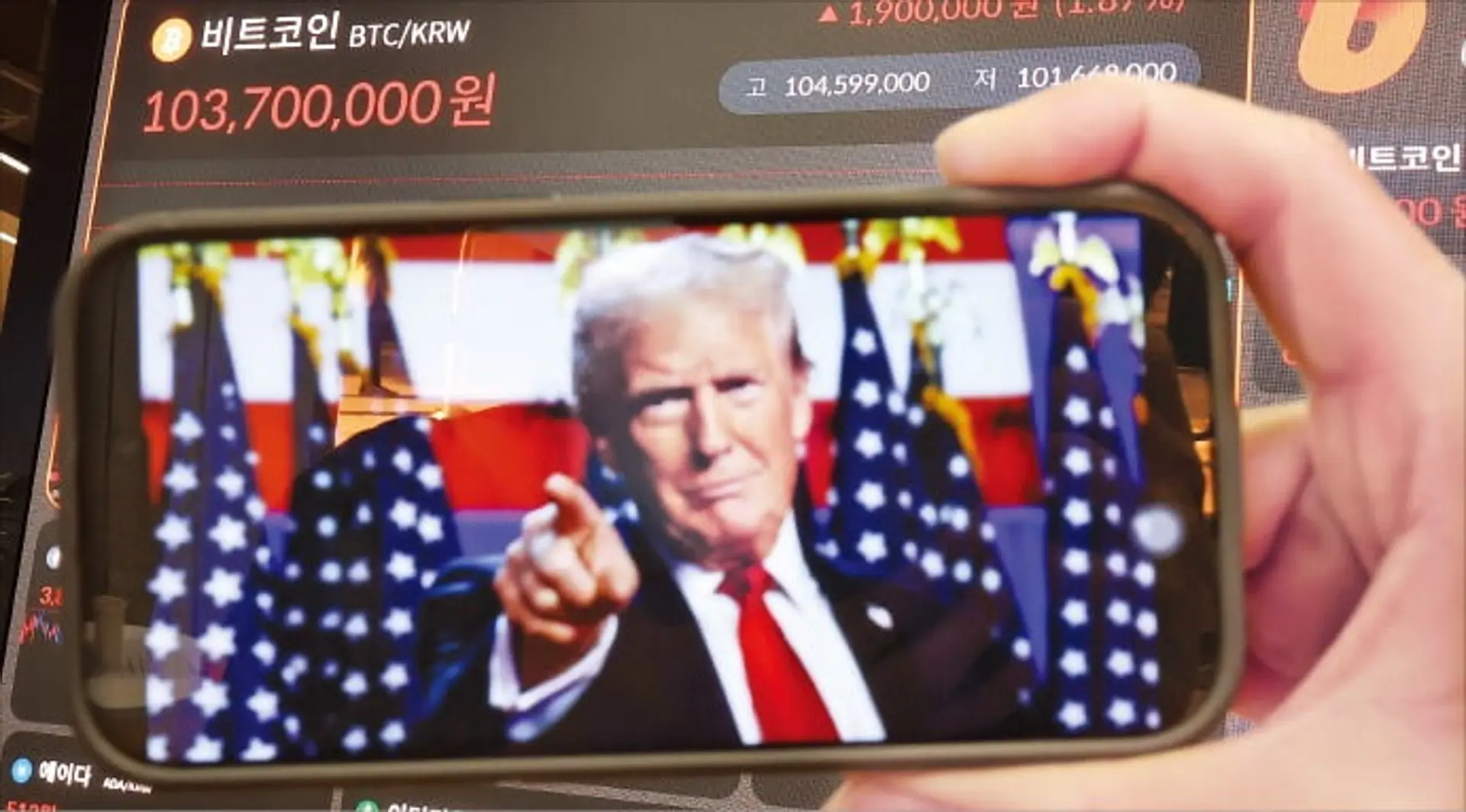
Bitcoin prices soared last year, and some are predicting that the cryptocurrency could reach $200,000 this year. Several factors are contributing to the positive outlook, including pro-crypto policies from the Trump administration, expanding corporate and pension fund investments, and sustained interest despite short-term adjustments. However, concerns remain regarding the impact of prolonged high-interest rates and the potential threat posed by quantum computer advancements.
According to Upbit, a domestic cryptocurrency exchange, the price of Bitcoin rose from 58,839,000 KRW at the beginning of last year to a peak of 157,198,000 KRW on the 17th of last month, marking an annual growth of approximately 160%. In overseas markets, Bitcoin also reached an all-time high of $108,249 at one point. These developments signify the end of the "crypto winter" (a prolonged period of decline in cryptocurrency prices) that began in the first half of 2022 and the entry into a new phase of growth.
The sharp increase in Bitcoin prices last year can be largely attributed to two positive factors. Firstly, the approval of the Bitcoin spot Exchange-Traded Fund (ETF) for listing on the U.S. stock market led to a substantial influx of new funds into the market. Secondly, the election of former President Trump, who declared himself the "crypto president," further stimulated buying activity among investors.
This year, the launch of the second Trump administration is a key aspect that cryptocurrency investors are paying close attention to. During his presidential campaign, President-elect Trump raised expectations by presenting specific pledges to revitalize the cryptocurrency market. These policies include △establishing strategic Bitcoin reserves △supporting the Bitcoin mining industry △repealing cryptocurrency regulations imposed by the Joe Biden administration △forming a presidential advisory committee on virtual assets.
Furthermore, President-elect Trump expressed his intention to dismiss Gary Gensler, председатель of the U.S. Securities and Exchange Commission (SEC), who is known for his opposition to cryptocurrencies, on his first day in office. In contrast, Paul Atkins, a former SEC commissioner and pro-crypto advocate, has been nominated for the role of SEC chairman. Additionally, pro-crypto figures, such as Vice President-elect JD Vance and Treasury Secretary nominee Scott Besant, hold significant positions within the second Trump administration.
Another highly anticipated development is the expansion of Bitcoin investment by global companies or financial institutions. While the Bitcoin spot ETF was listed last year, institutional investment is still considered to be in its early stages. Some speculate that U.S. retirement pensions (401K) may begin purchasing Bitcoin in the future.
"Financial institutions are also likely to invest in Bitcoin, which has a similar nature to gold, in the mid to long term," said Minho Lim, a researcher at Shinyoung Securities, adding, "The overhang risk (potential large-scale sell-off) from structural issues such as Mt. Gox and German government holdings has mostly been resolved."
There are also expectations that Bitcoin could rise to the $200,000 range this year. Matt Hougan, Chief Investment Officer (CIO) of Bitwise Asset Management, stated, "Considering the supply reduction due to the halving and the new buying trend from companies and government agencies, the upward trend of Bitcoin will continue for the time being," and "Bitcoin could exceed $200,000 by the end of this year."
However, the outlook for Bitcoin is not entirely rosy. Many are concerned that if the Trump administration's policies lead to prolonged high-interest rates, it could negatively impact Bitcoin prices. If Trump's pledges, such as imposing universal tariffs and large-scale tax cuts, become a reality, inflation could intensify and the fiscal deficit could widen, which could result in the U.S. benchmark interest rate being lowered more slowly than expected.
There is also a possibility that the pro-crypto policies announced by President-elect Trump may not be implemented. Last month, Jerome Powell, председатель of the U.S. Federal Reserve (Fed), drew a line regarding the 'strategic assetization of Bitcoin.' This publicly indicated that the Fed would not cooperate with President-elect Trump's plan to stockpile Bitcoin as a strategic asset. Shortly after Powell's remarks, Bitcoin prices fell below the $100,000 mark.
Recently, Google's announcement of the quantum computer 'Willow' also affected Bitcoin. Concerns that quantum computers could decrypt Bitcoin's encryption impacted the price decline. However, there is also a counterargument that it will take 10 to 20 years for quantum computers to reach a level that poses a direct security threat to Bitcoin.
Even if Bitcoin prices undergo short-term adjustments, many expect the upward trend to continue in the long term. Experts advise, "Bitcoin has little correlation with traditional assets such as stocks and
Haftungsausschluss:info@kdj.com
Die bereitgestellten Informationen stellen keine Handelsberatung dar. kdj.com übernimmt keine Verantwortung für Investitionen, die auf der Grundlage der in diesem Artikel bereitgestellten Informationen getätigt werden. Kryptowährungen sind sehr volatil und es wird dringend empfohlen, nach gründlicher Recherche mit Vorsicht zu investieren!
Wenn Sie glauben, dass der auf dieser Website verwendete Inhalt Ihr Urheberrecht verletzt, kontaktieren Sie uns bitte umgehend (info@kdj.com) und wir werden ihn umgehend löschen.
-

- Der Bitcoin-Preis stürzt aufgrund der Angst vor Zinserhöhungen der Federal Reserve und dem Krypto-Crash ab
- Nov 19, 2026 at 12:05 pm
- Die restriktiven Signale der Federal Reserve haben die Bitcoin-Preise fallen lassen, einen breiteren Absturz des Kryptomarktes ausgelöst und Ängste bei den Anlegern geweckt.
-
- Bewältigung geopolitischer Stürme: Portfolio-Resilienz, Vermögenserhaltung und die wechselnden Möglichkeiten des Zugangs
- Nov 19, 2026 at 11:55 am
- In einer Zeit eskalierender geopolitischer Risiken geht es beim Schutz von Vermögen nicht nur um den Vermögenswert, sondern auch um die Aufrechterhaltung des Zugangs. Anleger legen Wert auf Portfolio-Resilienz, Liquidität und Diversifizierung über verschiedene Jurisdiktionen hinweg, um potenzielle Störungen zu überstehen.
-
- Bain Capital Crypto führt die 110-Millionen-Dollar-Finanzierungsrunde von Variational an und bewertet die Plattform mit satten 1,5 Milliarden US-Dollar
- Nov 19, 2026 at 08:05 am
- Variational sichert sich die von Bain Capital Crypto angeführte Serie B im Wert von 110 Millionen US-Dollar und erreicht eine Bewertung von 1,5 Milliarden US-Dollar, da es den On-Chain-Handel mit der traditionellen Marktliquidität verbindet.
-
-
- Die Bybit-Karte ermöglicht den Zugang zur Flughafen-Lounge mit Krypto-Bezahlung und verbessert so das Reiseerlebnis für europäische Benutzer
- Nov 18, 2026 at 08:05 am
- Inhaber einer Bybit-Karte können jetzt Flughafen-Lounge-Pässe direkt in der App mit Kryptowährungen kaufen und so den Reisekomfort für Benutzer innerhalb des EWR erhöhen, indem sie die MiCA-Autorisierung von Bybit EU nutzen.
-
- Der Ethereum-Futures-Markt erlebt einen deutlichen Rückgang, da das Open Interest sinkt; Die Preisprognosen bleiben geteilt
- Nov 18, 2026 at 08:05 am
- Der Terminmarkt von Ethereum erlebt eine deutliche Abkühlung, wobei das offene Interesse auf Mehrmonatstiefs fällt. Diese Analyse befasst sich mit den Auswirkungen auf ETH-Preisprognosen inmitten der sich entwickelnden Marktdynamik.
-
- S&P Global Ratings schlägt Alarm: Blockchain-Hacking-Verluste und Governance-Fehler gefährden die institutionelle Akzeptanz
- Nov 18, 2026 at 08:05 am
- S&P Global Ratings betont, dass anhaltende Verluste durch Blockchain-Hacker, die größtenteils auf Governance-Versagen zurückzuführen sind, eine große Hürde für die institutionelle Einführung digitaler Vermögenswerte darstellen. Neue On-Chain-Risikobewertungen sollen das Vertrauen stärken.
-
-
- Aufmerksamkeit, Nachaufmerksamkeit und der KI-Mechanismus: Navigieren in der New Economy
- Nov 18, 2026 at 04:00 am
- Die Ära der KI-Agenten ist da und verändert die Art und Weise, wie wir bezahlen und bezahlt werden. Entdecken Sie den bahnbrechenden Wandel von aufmerksamkeitsbasierten Modellen hin zu transaktionsgesteuerten Finanzen und die entscheidende Rolle von KI-Mechanismen.


